
Bernie & Kinder
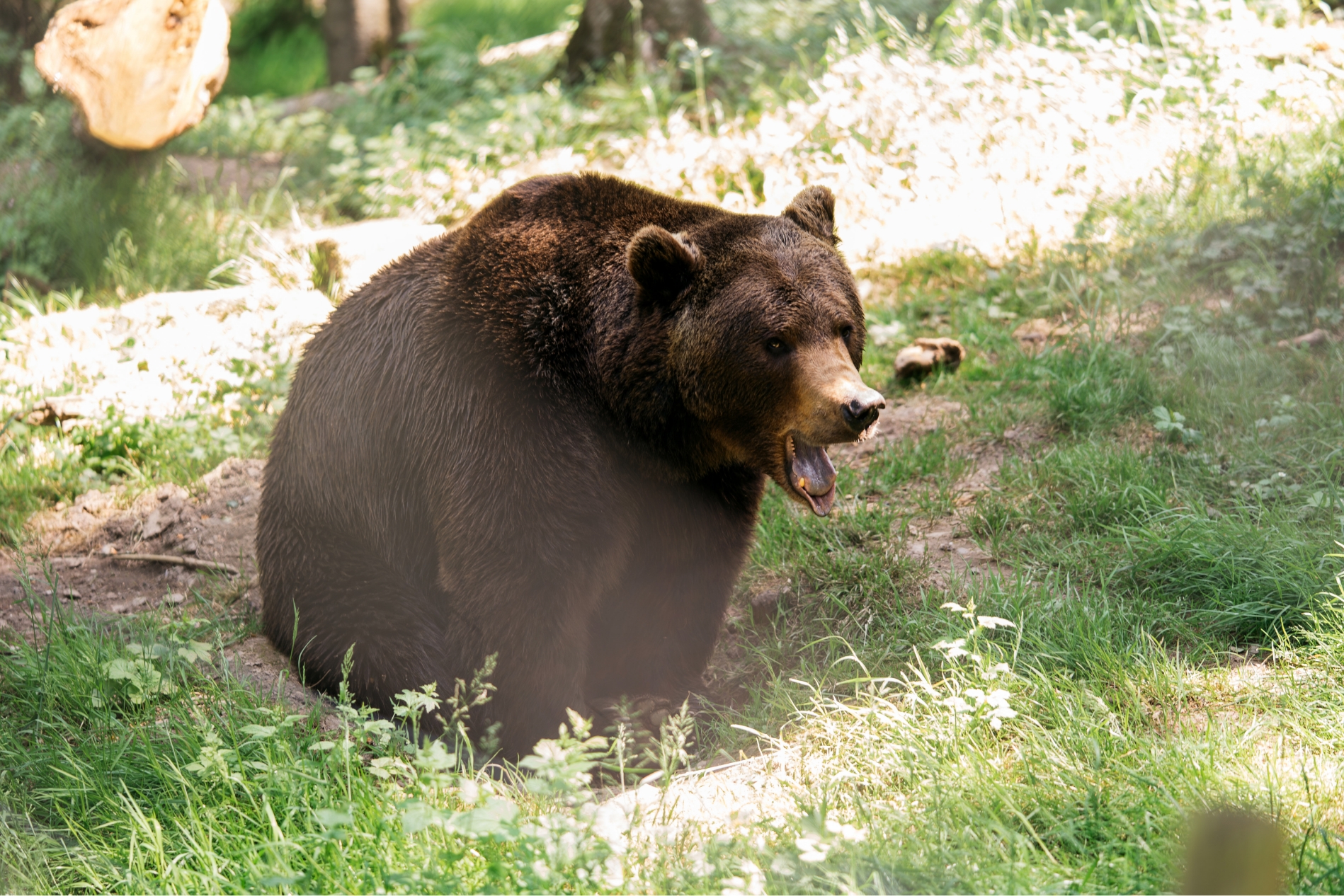
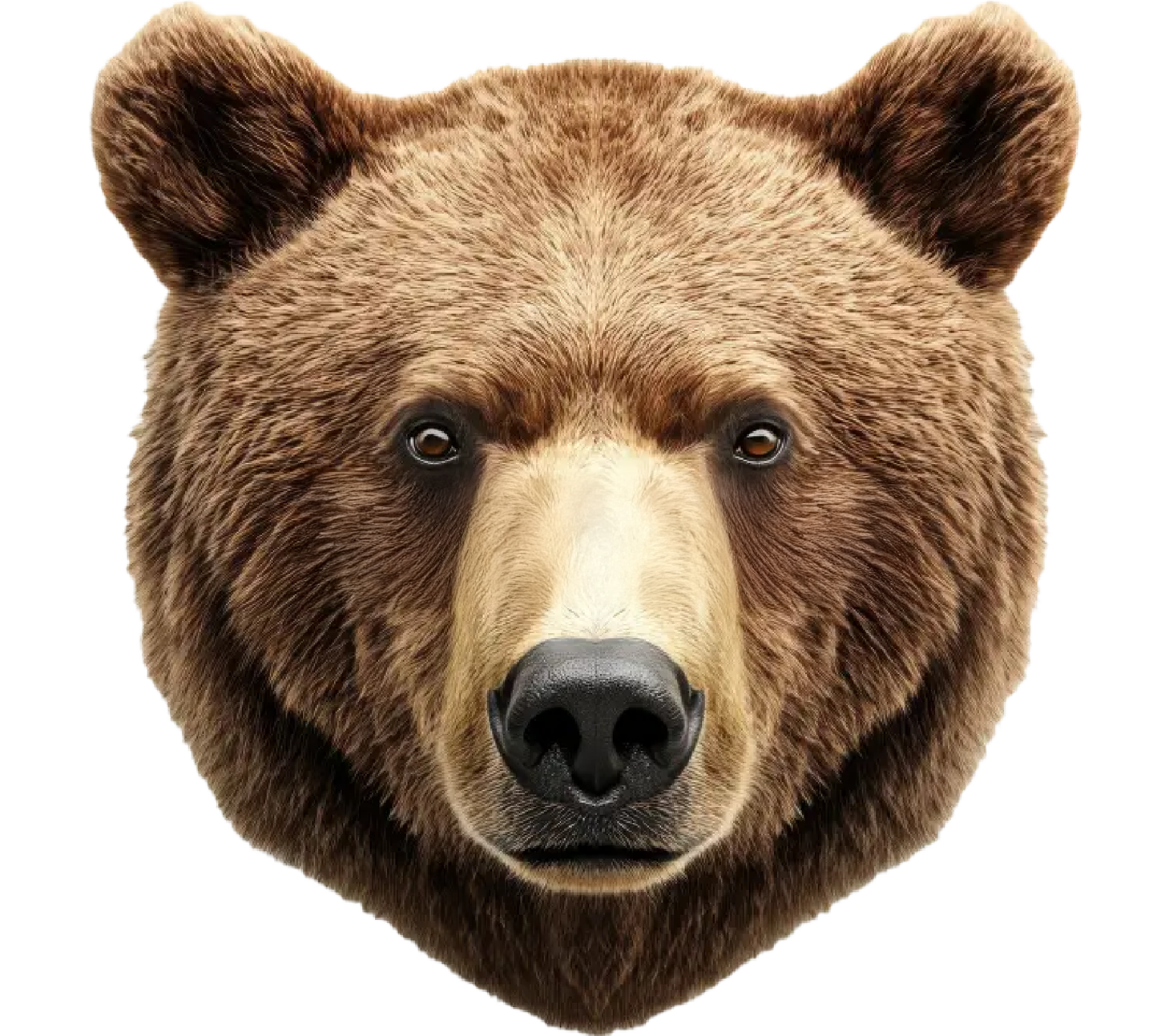
Our brown bears
Size: Height: 1.5-3.0 m – Weight 120-700 kg – Longevity: 30 years – Class: Mammalia – Order: Carnivora – Family: Ursidae – Genus: Ursus – Species: Ursus arctos – Distribution: Europe – Habitat: Coniferous forests, deciduous forests and mountains – Social structure: Solitary – Gestation: 56 days – Number of offspring: 1-4 – Diet: Omnivore – IUCN conservation status: LC, least concern, but threatened by: hunting, habitat destruction, global warming
ANECDOTE
Kinder, our female bear born on 10 January 2010, was named after the Kinder surprise. Both her parents were thought to be infertile and were not expected to have offspring. Bernie, our male bear born in 2012, comes from a park in Switzerland and was named after the Swiss capital, Bern.
Gnougnou & Co
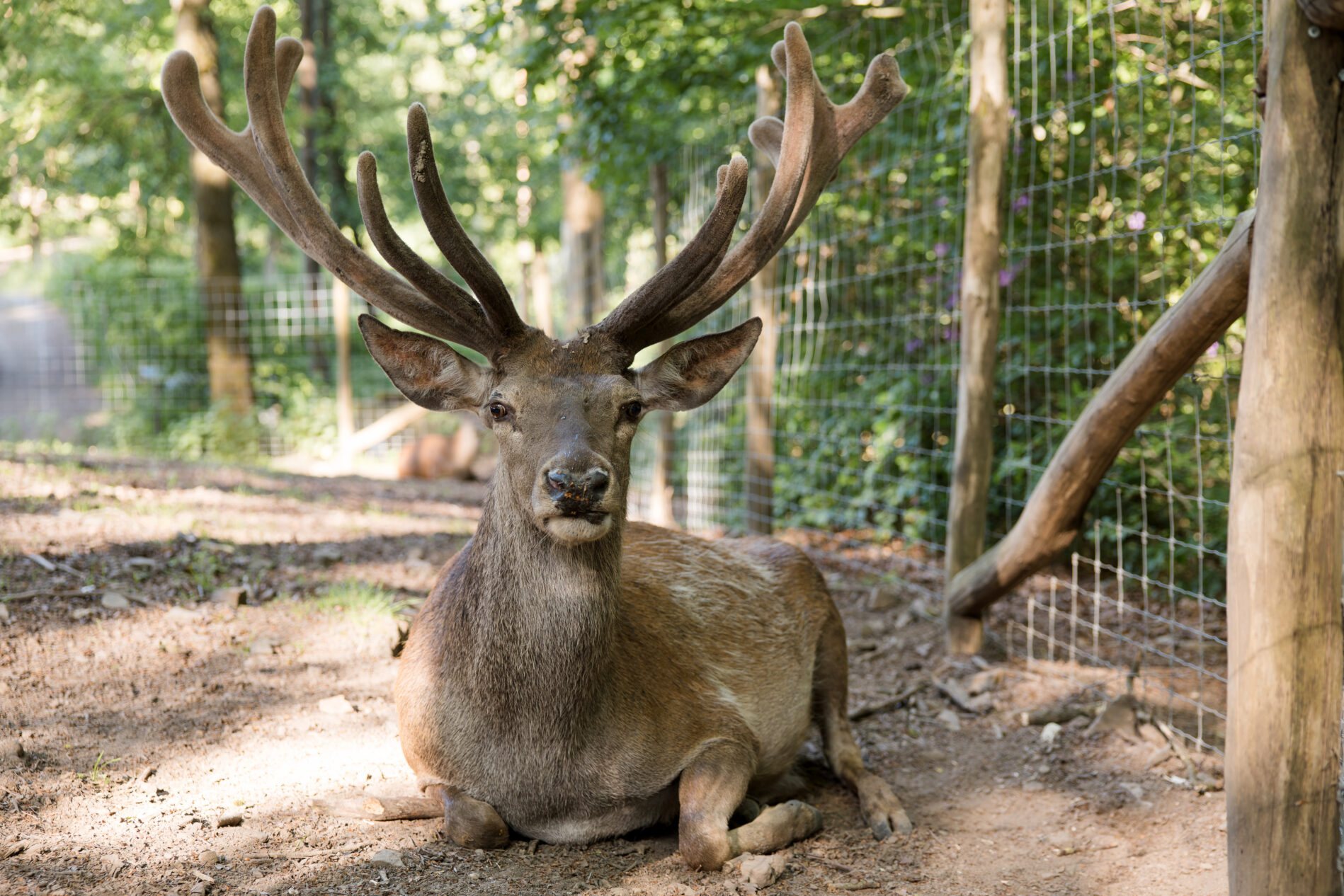
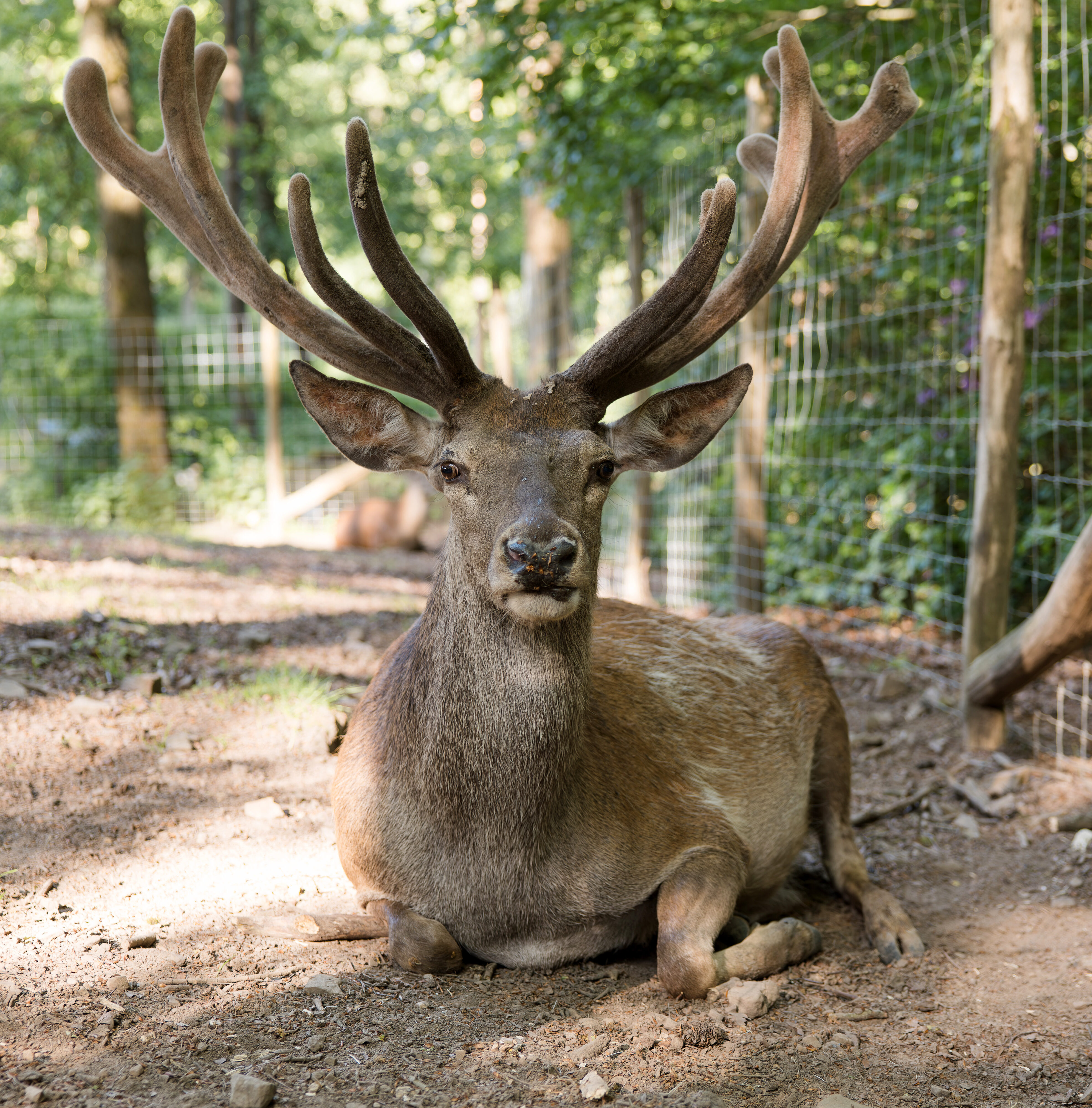
Our red deer
Size: Height at the withers: 1.1-1.6 m Length: 1.3-2.1 m – Weight: 80-300 kg – Longevity: 20 years – Class: Mammalia – Order: Artiodactyla – Family: Cervidae – Genus: Cervus – Species: Cervus Elaphus – Distribution: Europe, Asia – Habitat: Deciduous forests, coniferous forests, plains – Social structure: Herd – Gestation: 8 months – Number of offspring: 1 – Diet: Herbivore – IUCN conservation status: LC, least concern
ANECDOTE
Deer shed their antlers at the same time each year. These grow back larger a few months later. The rutting season for deer is known as the bellowing season. It takes place every year in September/October and is a game of intimidation between the males, with the strongest becoming the leader and breeder of the herd.
Charlotte, James, Georges & William
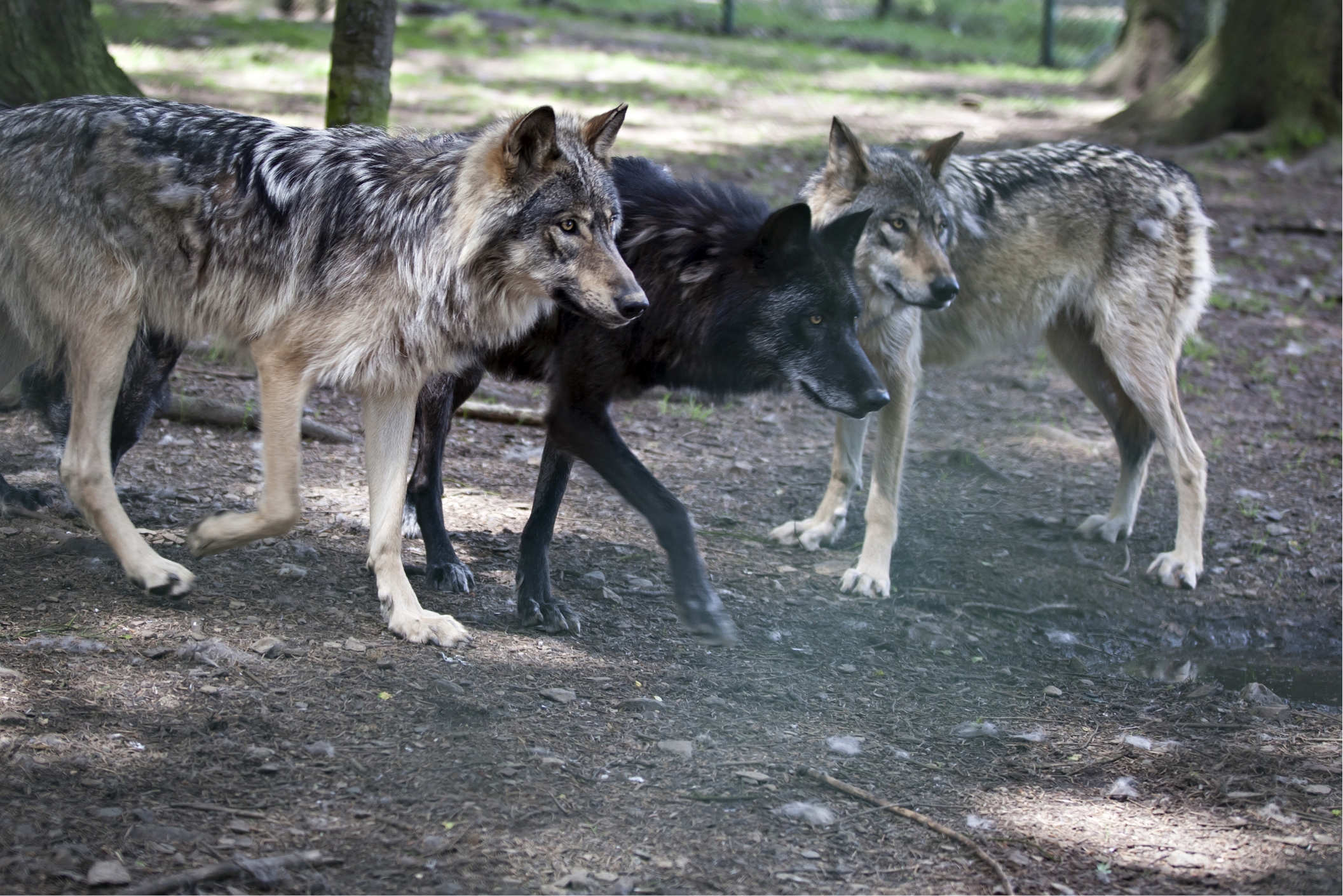
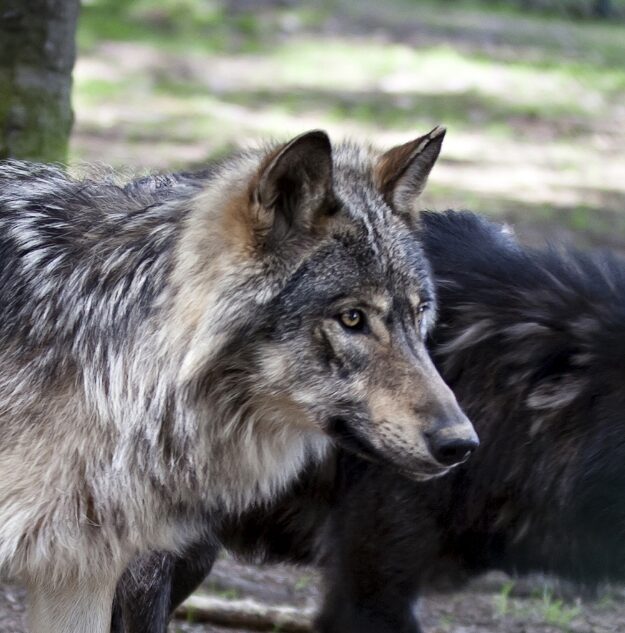
Our Canadian wolves
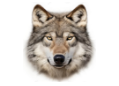
Size: Height: 60-90 cm Length: 1-1.5 m – Weight: 25-60 kg – Longevity: 10 years – Class: Mammalia – Order: Carnivora – Family: Canidae – Genus: Canis – Species: Canis lupus occidentalis – Distribution: North America – Habitat: Coniferous forests, boreal forests – Social structure: Pack – Gestation: 63-68 days – Number of offspring: 1-8 – Diet: Carnivore – IUCN conservation status: Not endangered
ANECDOTE
Canadian wolves can be completely black, a variety of grey colours or, more rarely, entirely white.
Philippe, Mathilde, Gabriel & Co
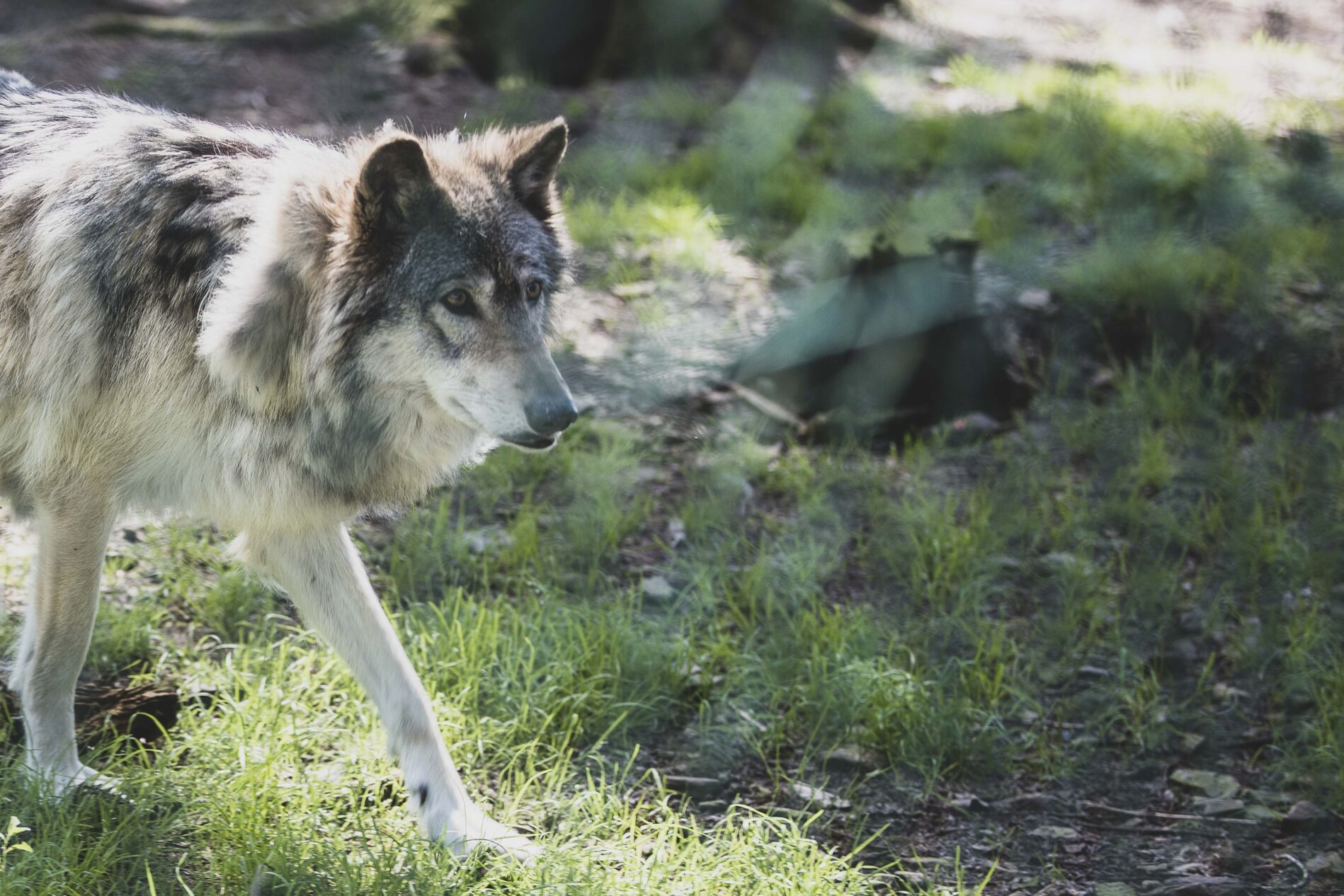
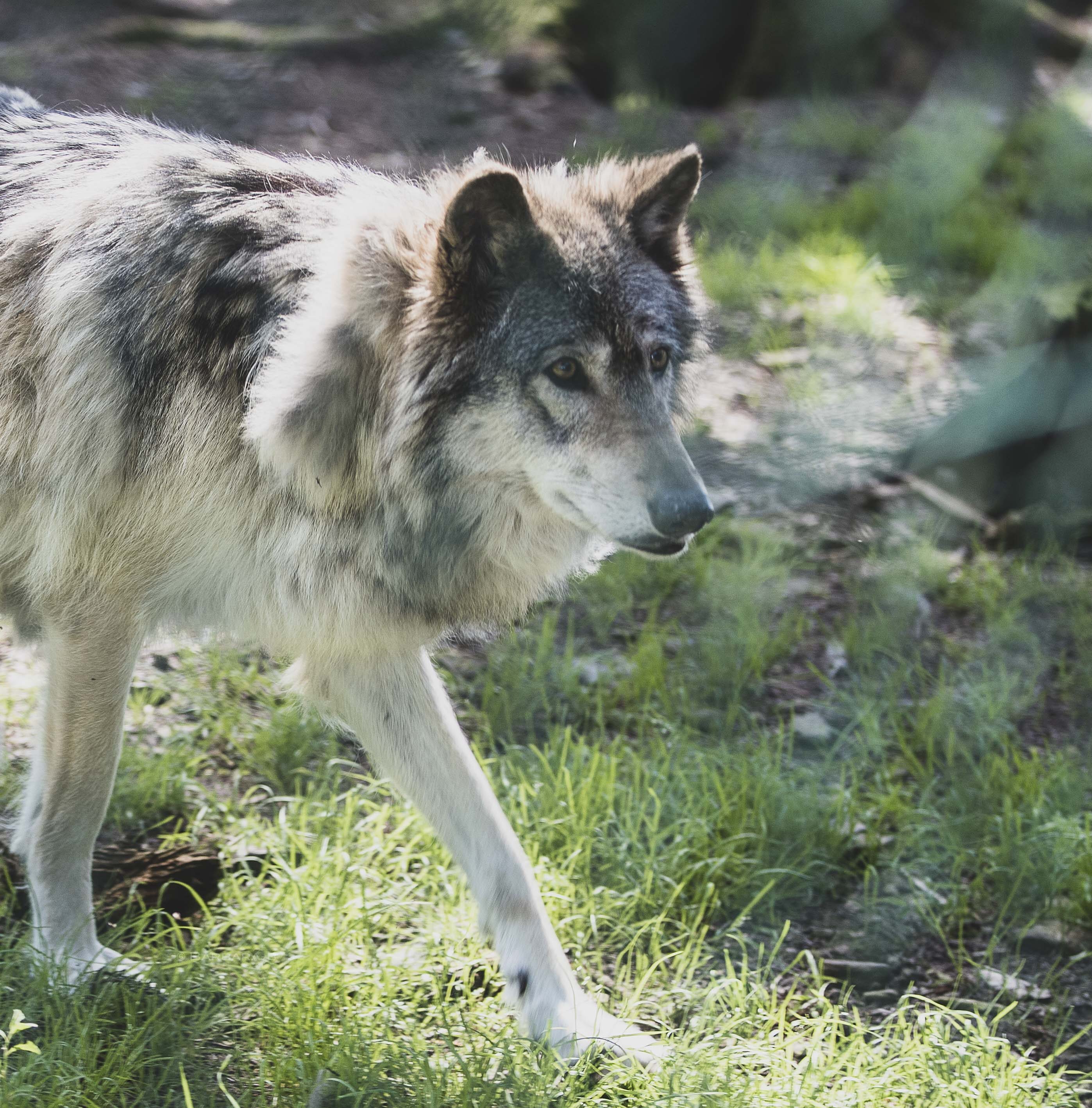
Our European wolves
Size: Height: 60-80 cm Length: 1-1.5 m – Weight: 20-60 kg – Longevity: 14 years – Class: Mammalia – Order: Carnivora – Family: Canidae – Genus: Canis – Species: Canis lupus – Distribution: Europe – Habitat: Natural areas – Social structure: Pack – Gestation: 63 days – Number of offspring: 1-8 – Diet: Carnivore – IUCN conservation status: LC, least concern
ANECDOTE
Among wolves, there’s always a dominant pair called the ALPHA pair. Wolves are often demonised in stories and legends, even though they are no more dangerous than any other animal.
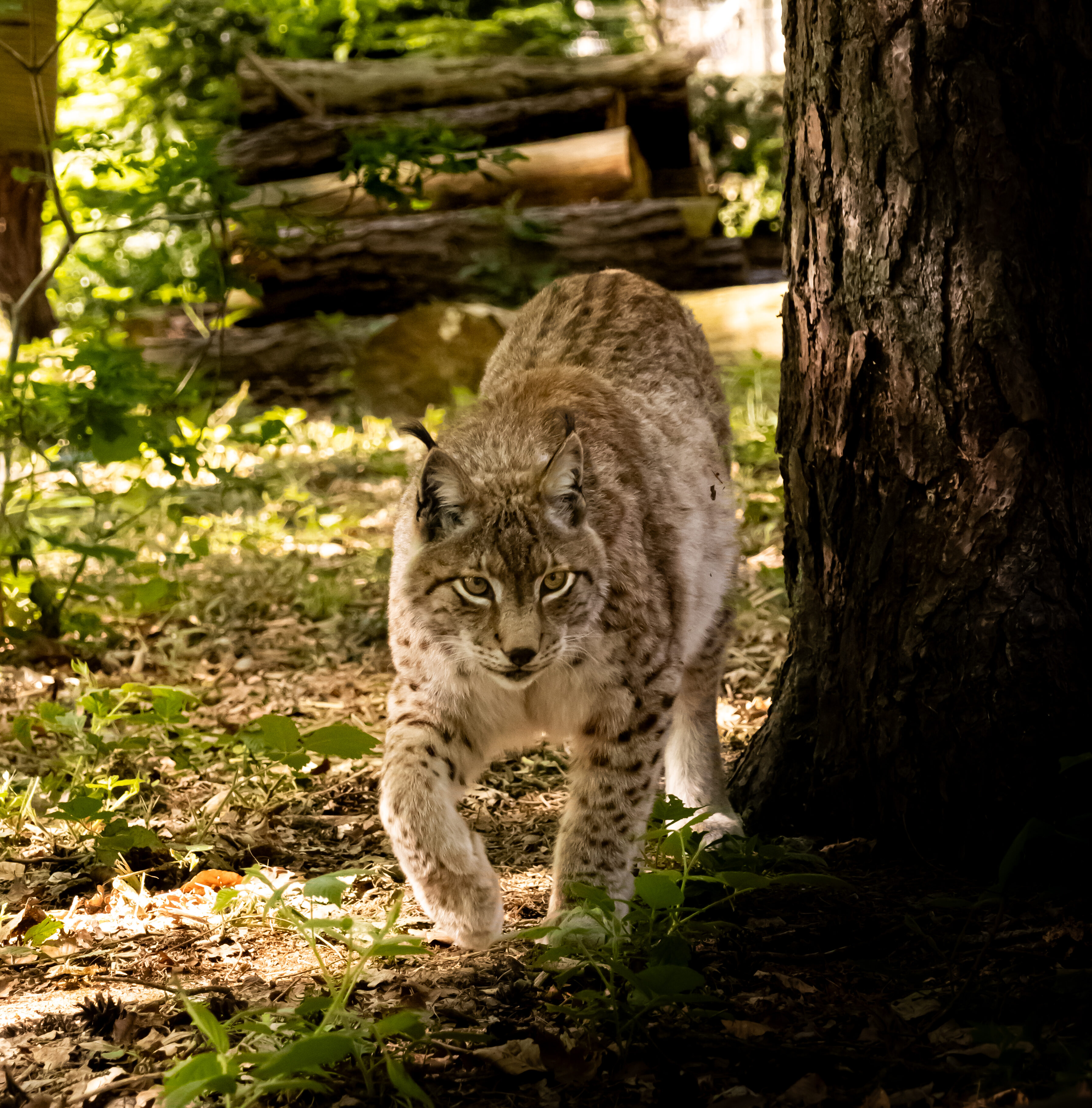
Ati & Tiny
Size: Height: 60-75 cm Length: 80 cm-1.35 m – Weight: 9-35 kg – Longevity: 15-20 years – Class: Mammalia – Order: Carnivora – Family: Felidae – Genus: Lynx – Species: lynx lynx – Distribution: Europe, Asia – Habitat: Forest and woodlands – Social structure: Solitary – Gestation: 60-75 days – Number of offspring: 1-4 – Diet: Carnivore – IUCN conservation status: LC, least concern
ANECDOTE
The lynx has tufts on its ears to detect sounds!
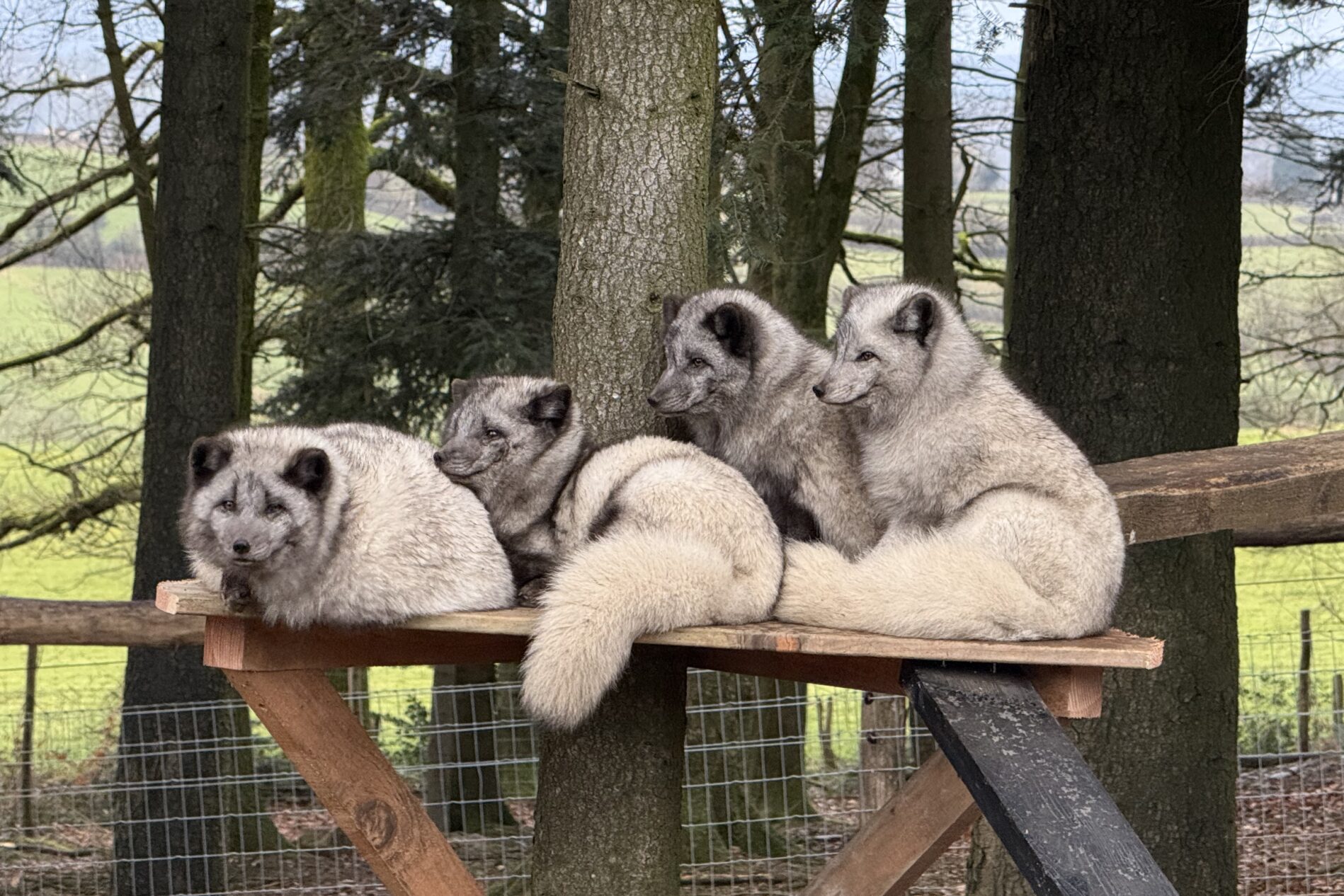
Gunter, Hyearsel, Fritz & Klaus
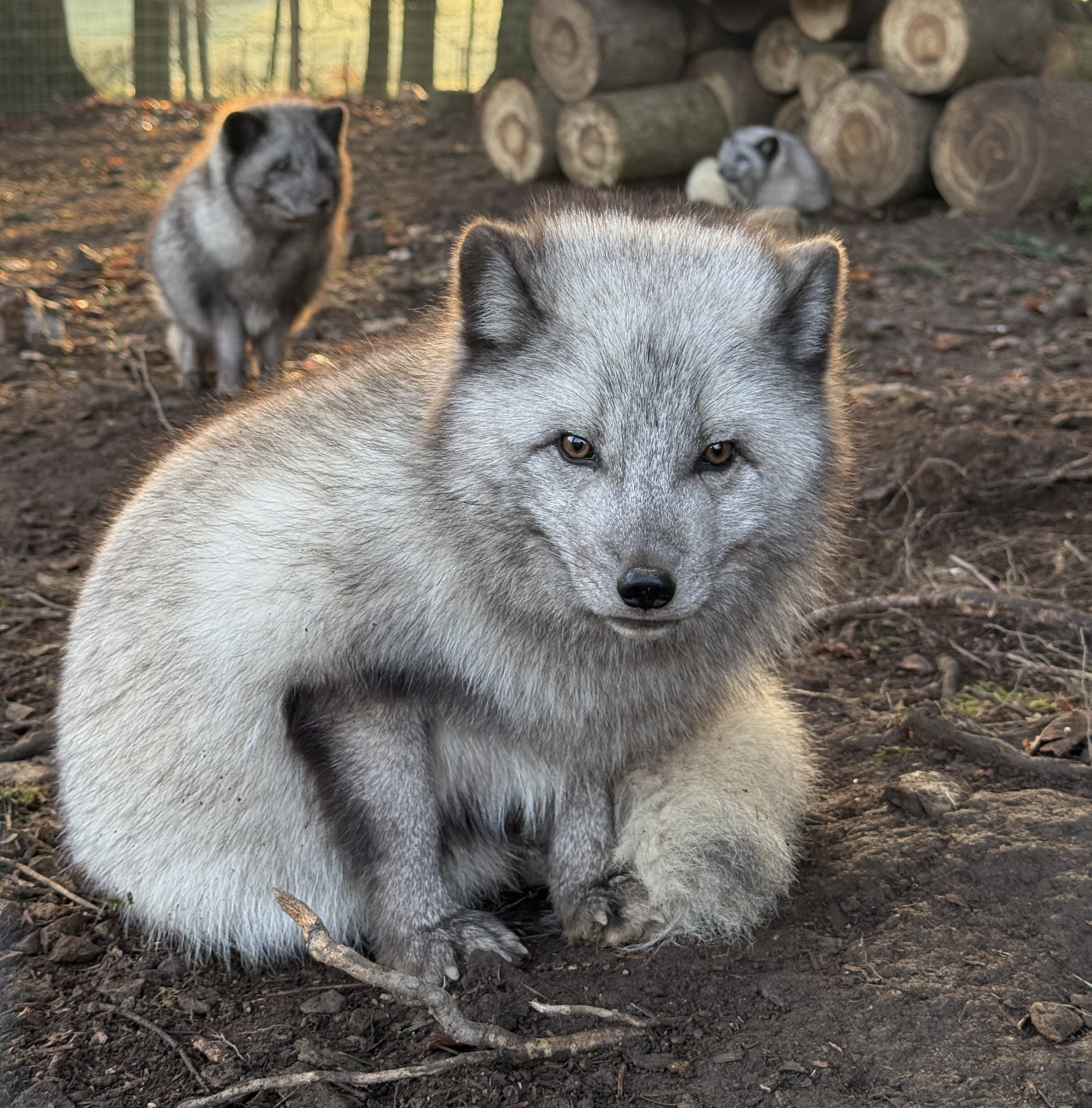
Our arctic foxes
Size: Height: 30 cm Length: 75 cm-1.15 m – Weight: 3-9 kg – Longevity: 10-15 years – Class: Mammalia – Order: Carnivora – Family: Canidae – Genus: Vulpes – Species: vulpes lagopus – Distribution: The entire Arctic region, i.e. Greenland, Russia, Canada, Alaska, Svalbard, Iceland and the Scandinavian Alps- Habitat: Arctic tundra – Social structure: Groups – Gestation: 52 days – Number of offspring: 6-11 – Diet: Carnivore – IUCN conservation status: LC, least concern
ANECDOTE
With its fur-covered paws, short ears and small snout, the arctic fox can survive in temperatures as low as -50°C.
Célestine, Edouard, Ginger, Jules, Roger & Co
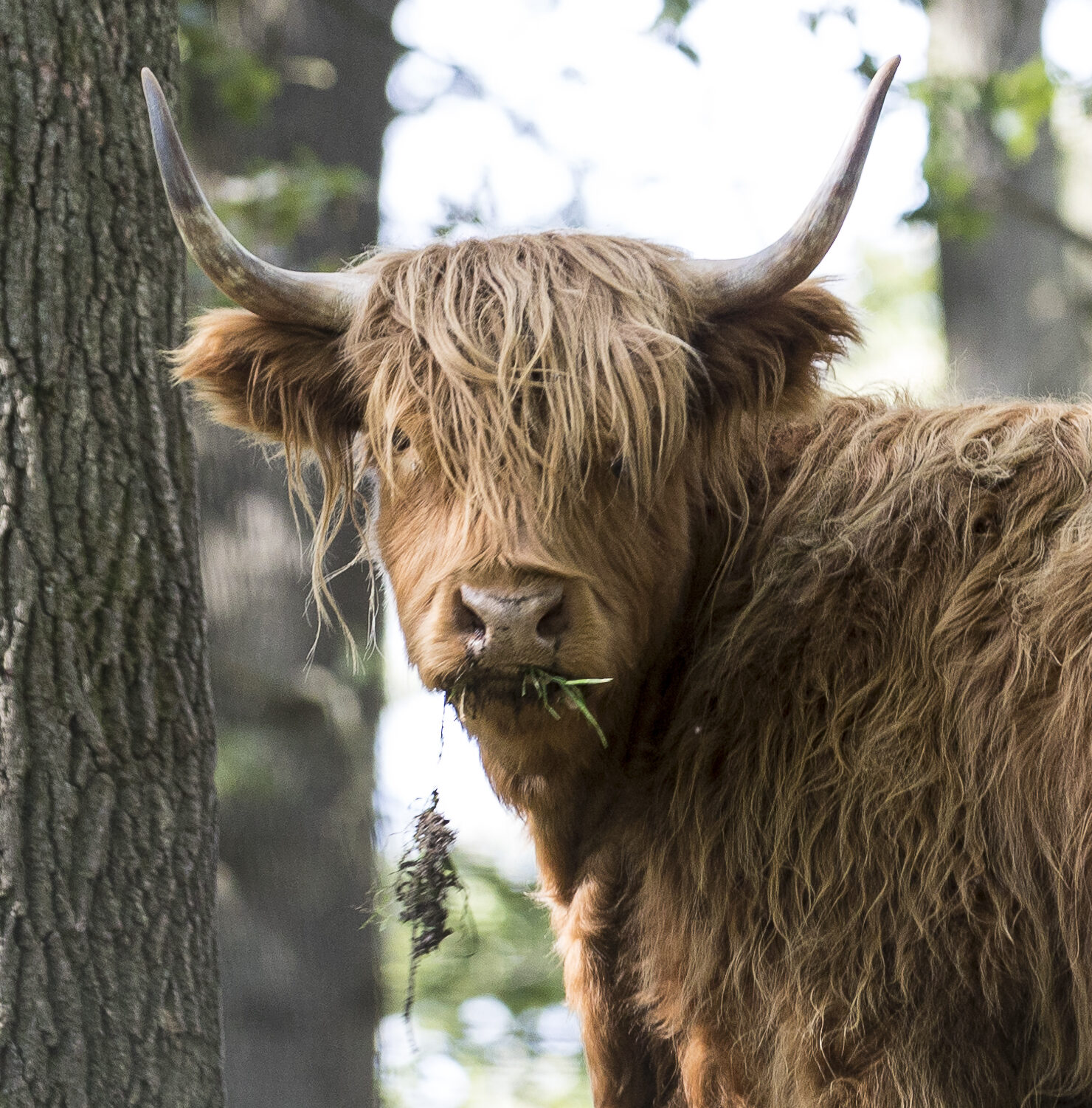
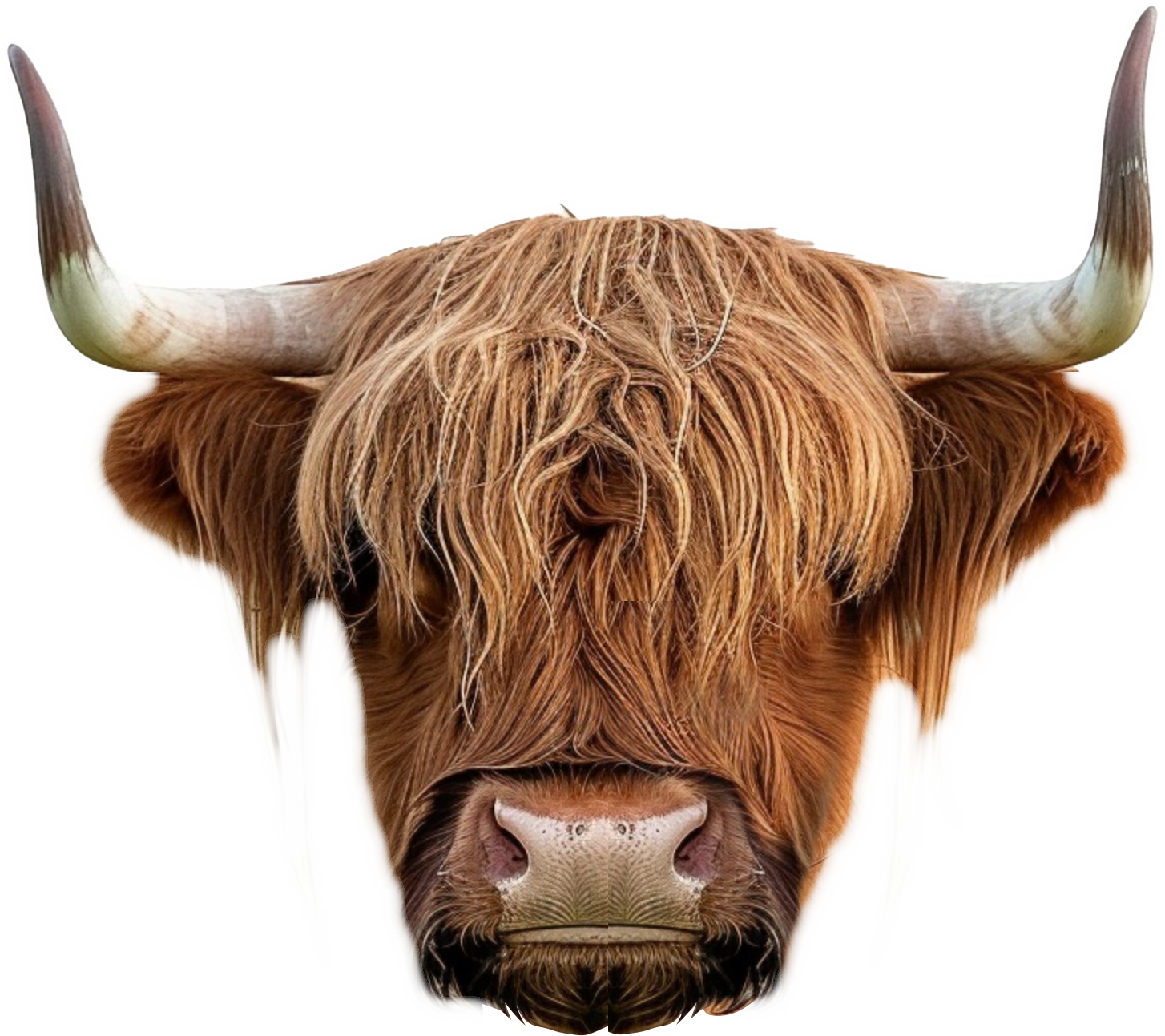
Our highlands
Size: Height: 1.1-1.4 m Length: 1.7-2.5 m – Weight: 300-900 kg – Longevity: 15 years – Class: Mammalia – Order: Artiodactyla – Family: Bovidae – Genus: Bos – Species: Bos Taurus – Distribution: Ecosse – Habitat: Moorland, marshes and grasslands – Social structure: Herd – Gestation: 280-290 days – Number of offspring: 1 – Diet: Herbivore IUCN conservation status: None
ANECDOTE
Highlands come in several colours: red, black, white, grey and brindle. This breed is used for maintaining and clearing marshy areas.
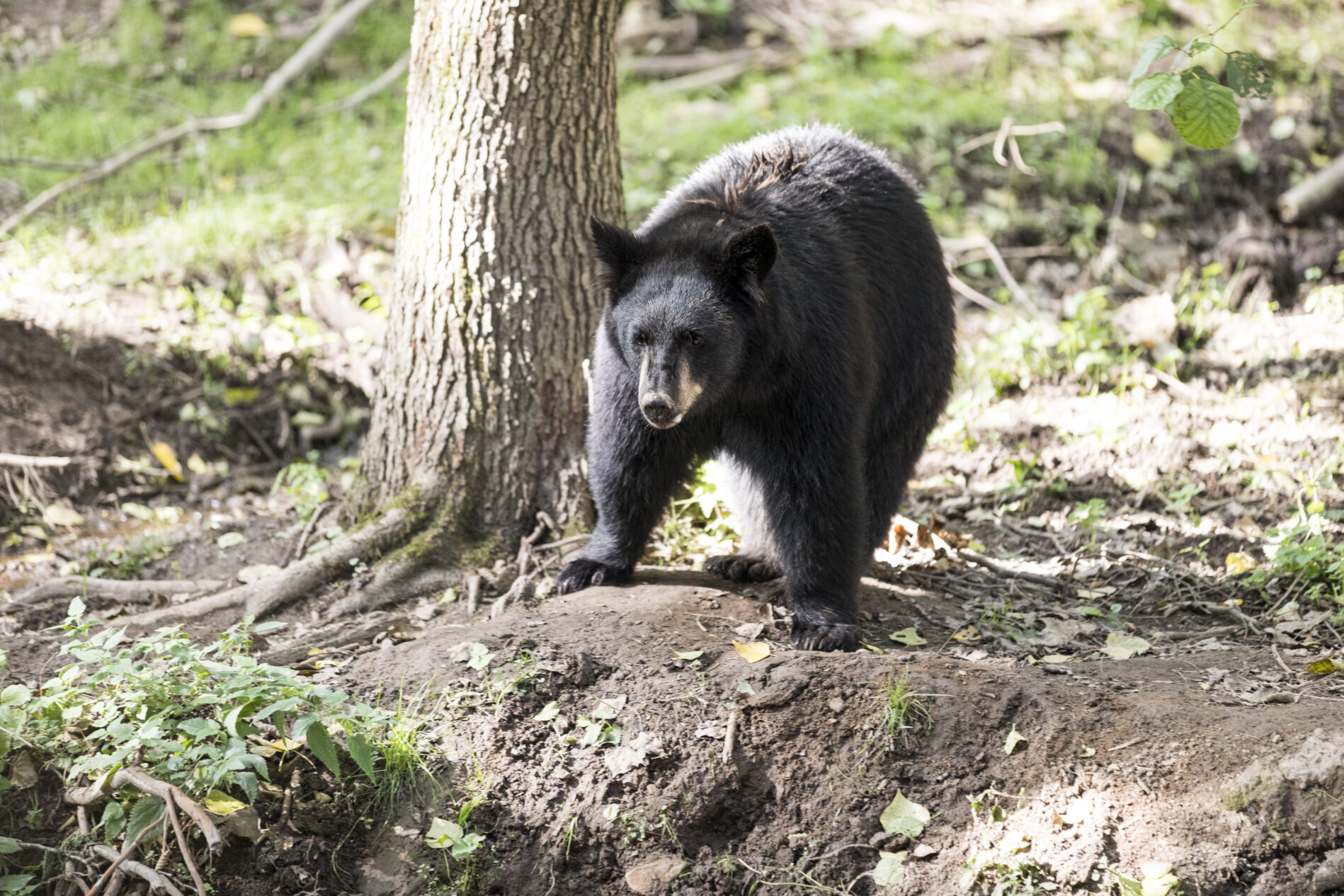
Barry, Nina & Winnie
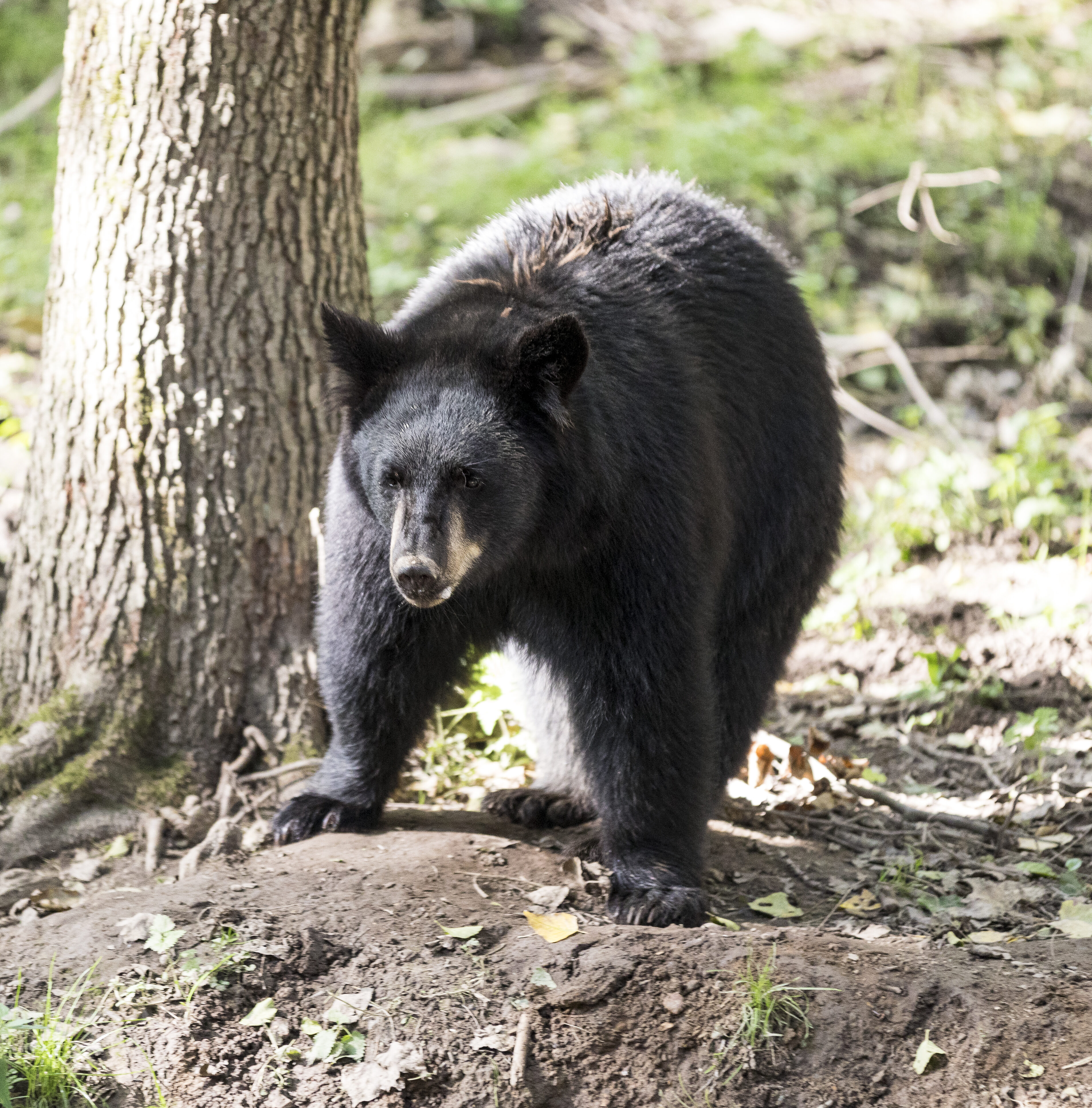
Our black bears
Size: Height: 1-1.2 m at the withers, Length: 1.25-1.7 m (4 legs) – Weight: 70-250 kg – Longevity: 30 years – Classification: – Class: Mammalia – Order: Carnivora – Family: Ursidae – Genus: Ursus – Species: Ursus americanus – Distribution: North America – Habitat: Coniferous forests, deciduous forests and mountains. – Social structure: Solitary – Gestation: 52-56 days – Number of offspring: 1-4 – Diet: Omnivore – IUCN conservation status: LC, least concern, but threatened by: hunting, habitat destruction, global warming.
ANECDOTE
Winnie-the-Pooh, the famous teddy bear, was actually inspired by a black bear born in Canada and imported to London Zoo, where she became its mascot
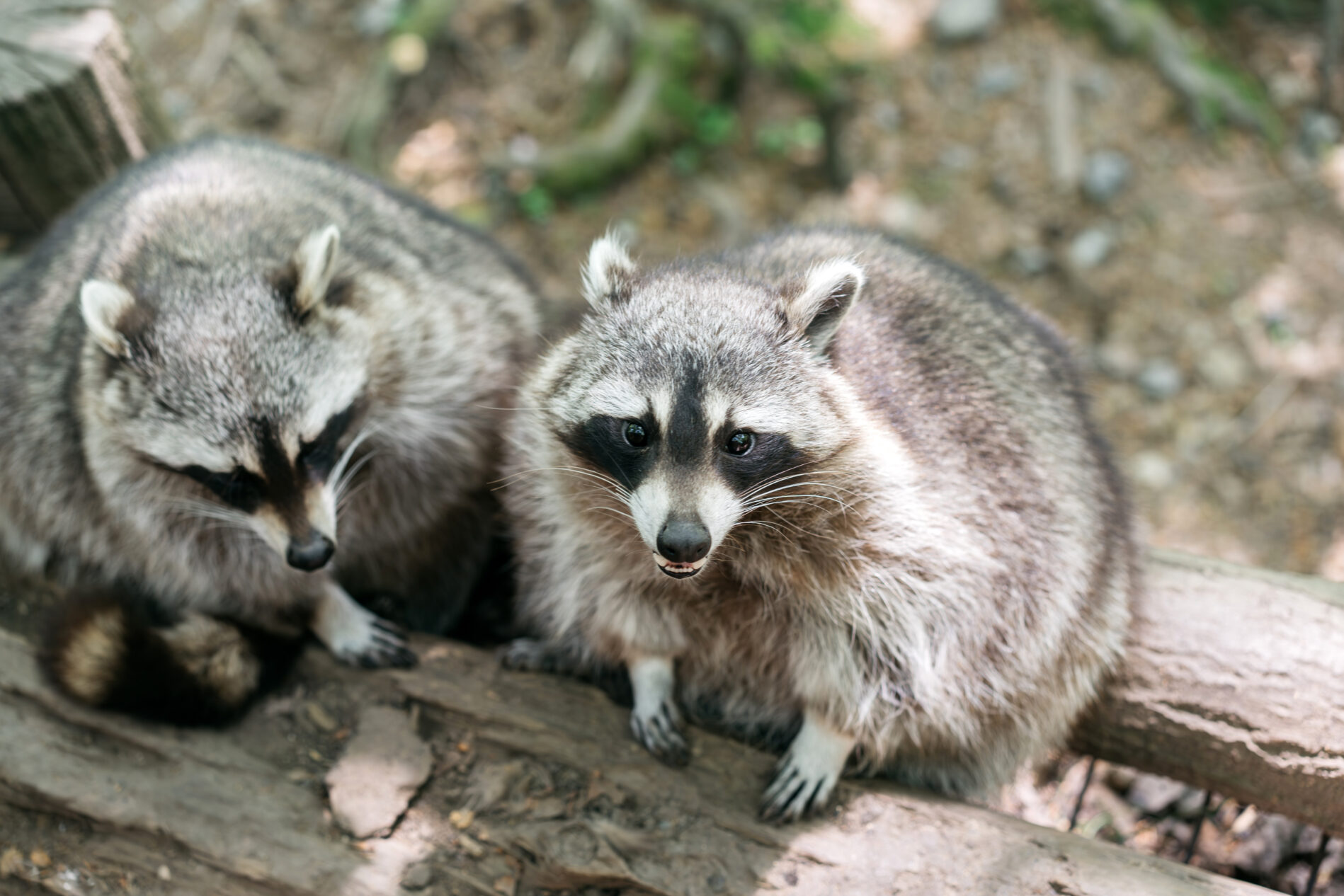
Brittany, Gaston, Ursula & Zoé
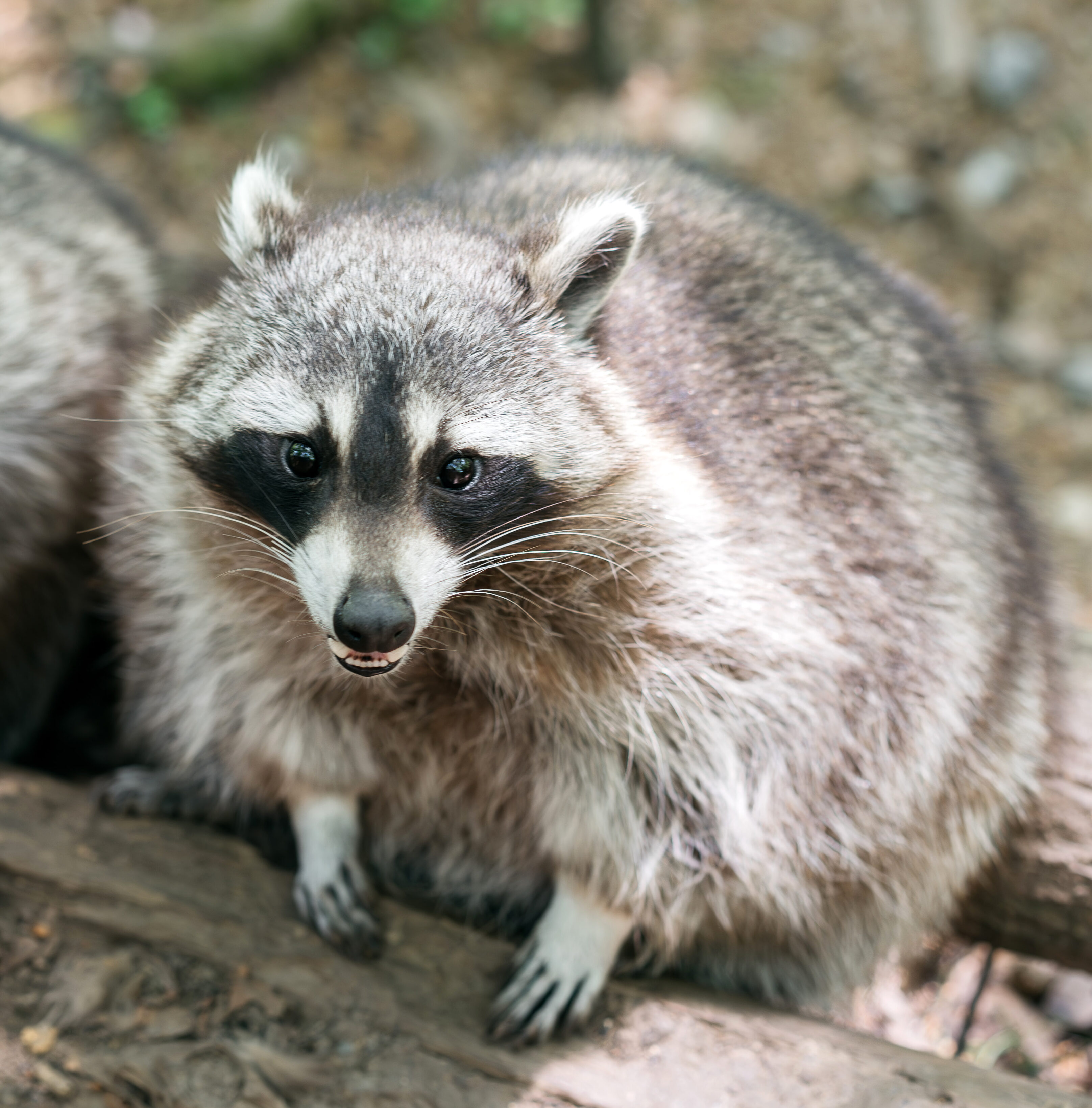
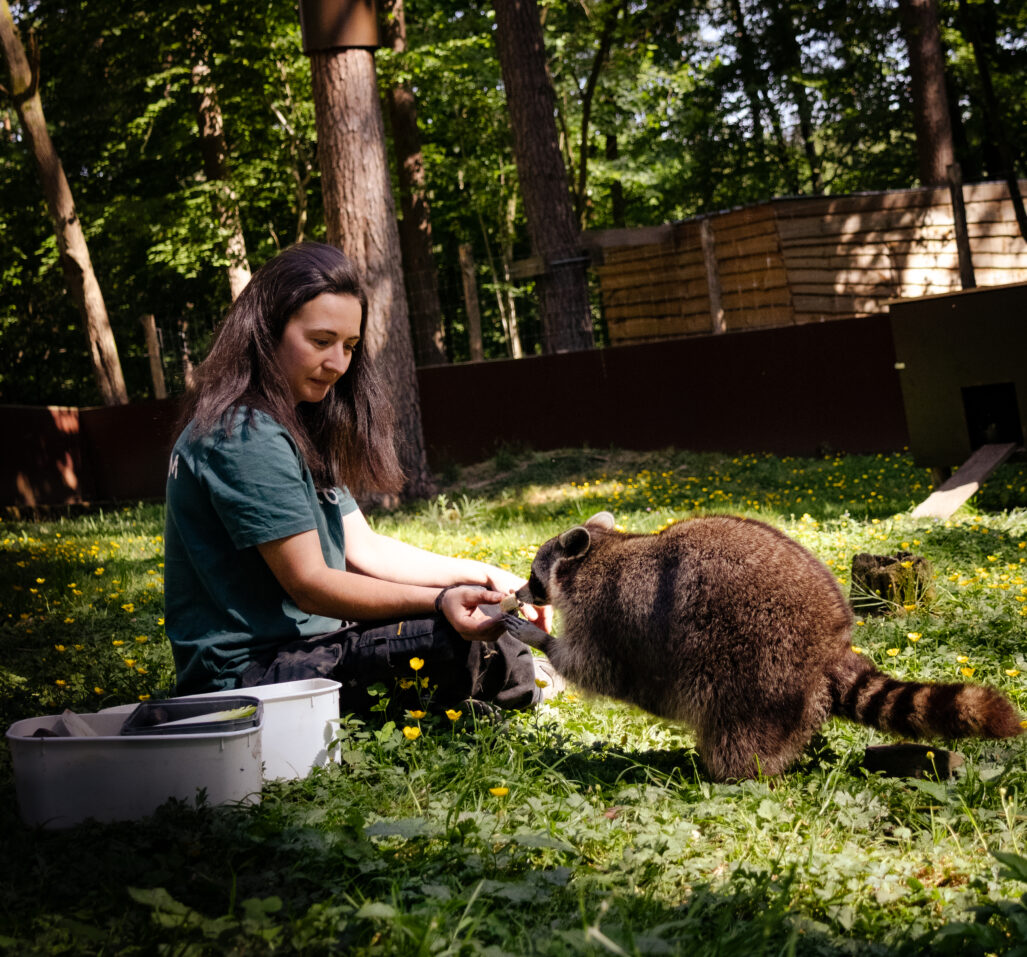
Our raccoons
Size: Length: 40-65 cm – Weight: 3-8 kg – Longevity: 3-10 years – Class: Mammalia – Order: Carnivora – Family: Procyonidae – Genus: Procyon – Species: Procyon Lotor – Distribution: North America, Europe – Habitat: Forests, marshes, urban areas – Social structure: Solitary – Gestation: 60-73 days – Number of offspring: 3-4 – Diet: Omnivore – IUCN conservation status: LC, least concern
ANECDOTE
Raccoons are native to America and were introduced to Europe for their fur. They are now considered pests.
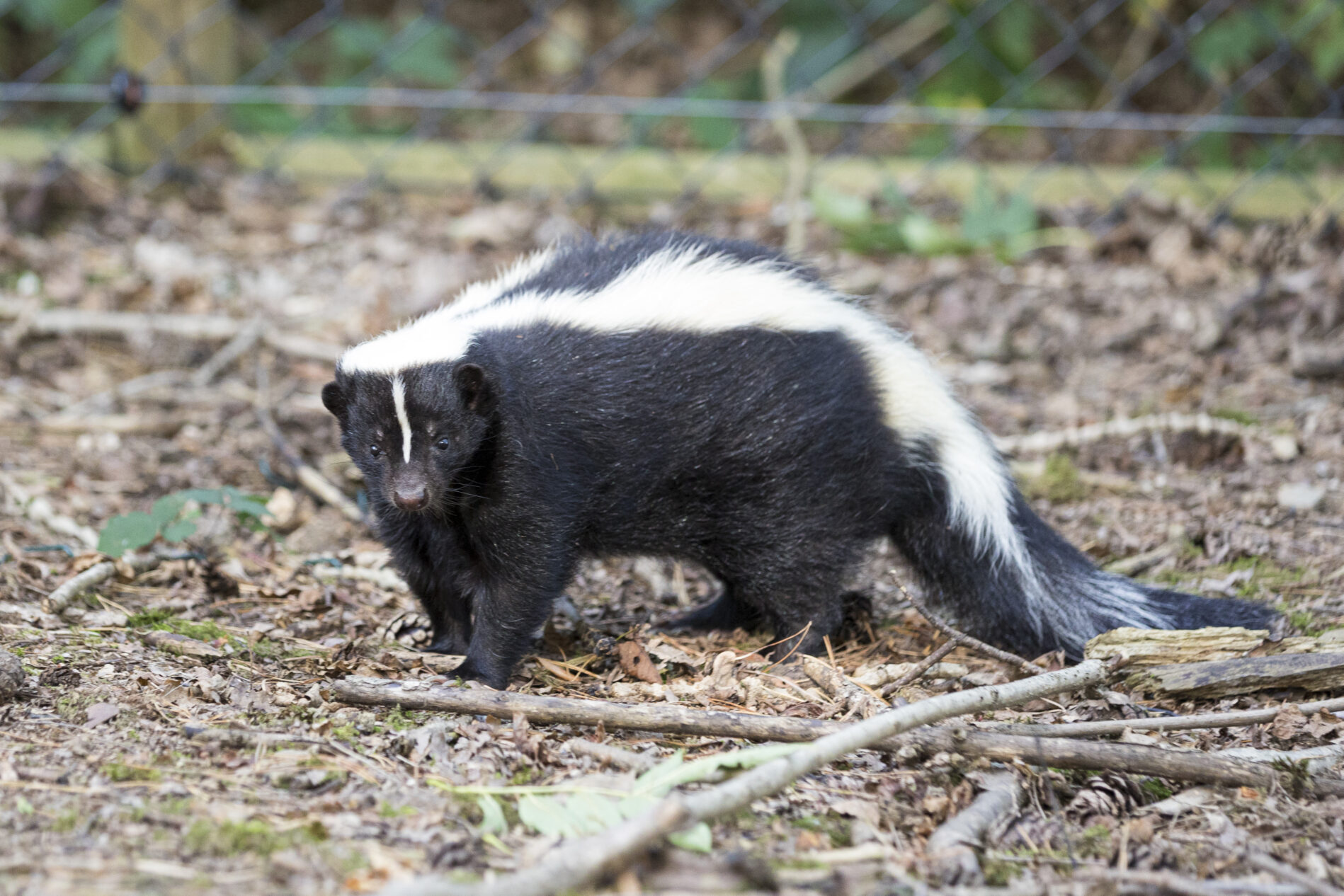
Dash, Rata & Touille
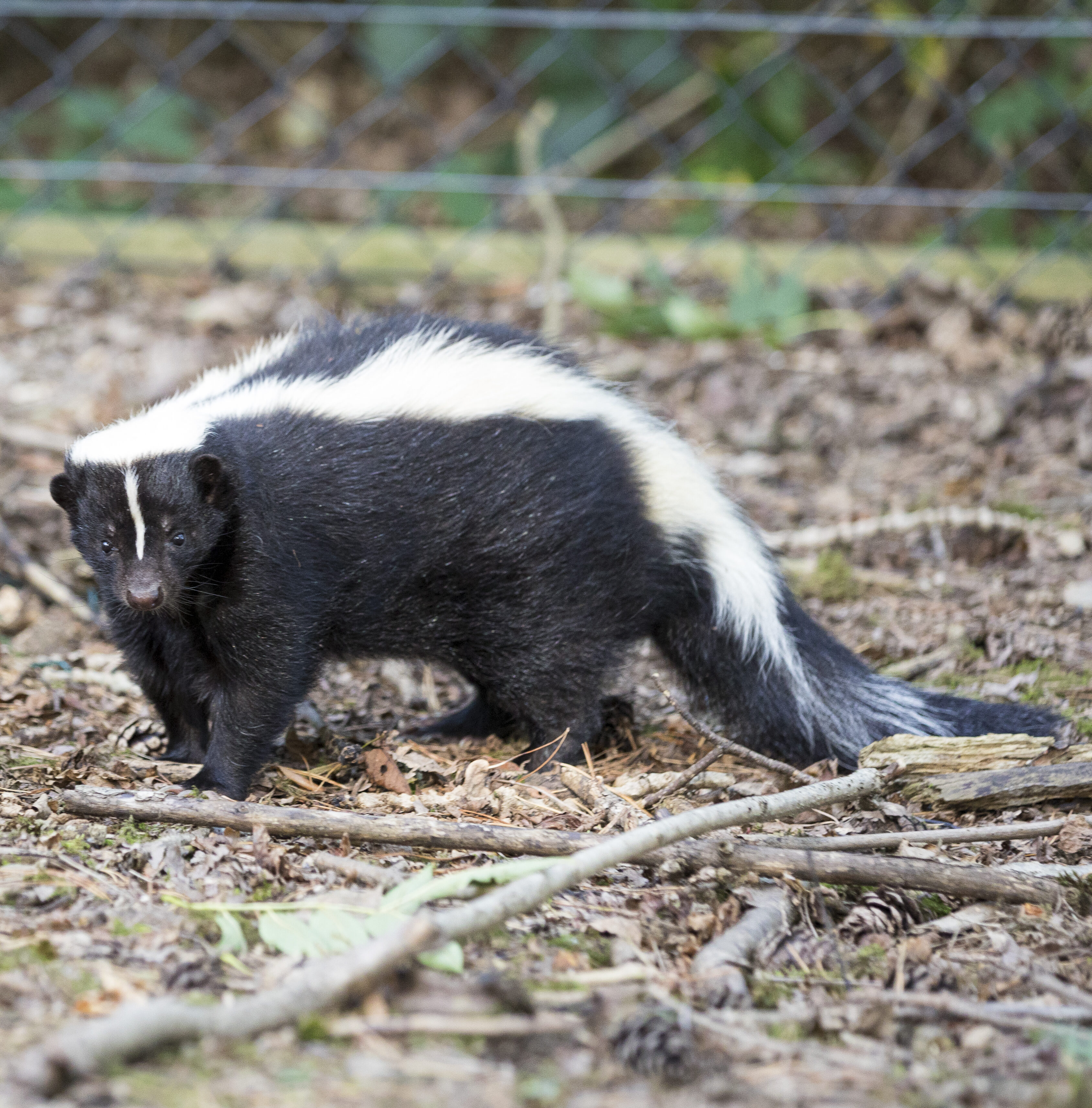
Our skunks
Size: 25-50 cm – Weight: 500 gr-1 kg – Longevity: 5-14 years – Class: Mammalia – Order: Carnivora – Family: Mustelidae – Genus: Mustela – Species: Mustela putorius – Distribution: Global (domestic) – Habitat: Urban areas – Social structure: Solitary or group – Gestation: 45 days – Number of offspring: 2 to 8 – Diet: Carnivore – IUCN conservation status: None
ANECDOTE
Skunks have glands under their tails that produce a foul-smelling liquid, which they spray on their enemies to defend themselves in case of attack. Skunks are very useful as they feed on many pests, such as certain insects.
Henri & Co
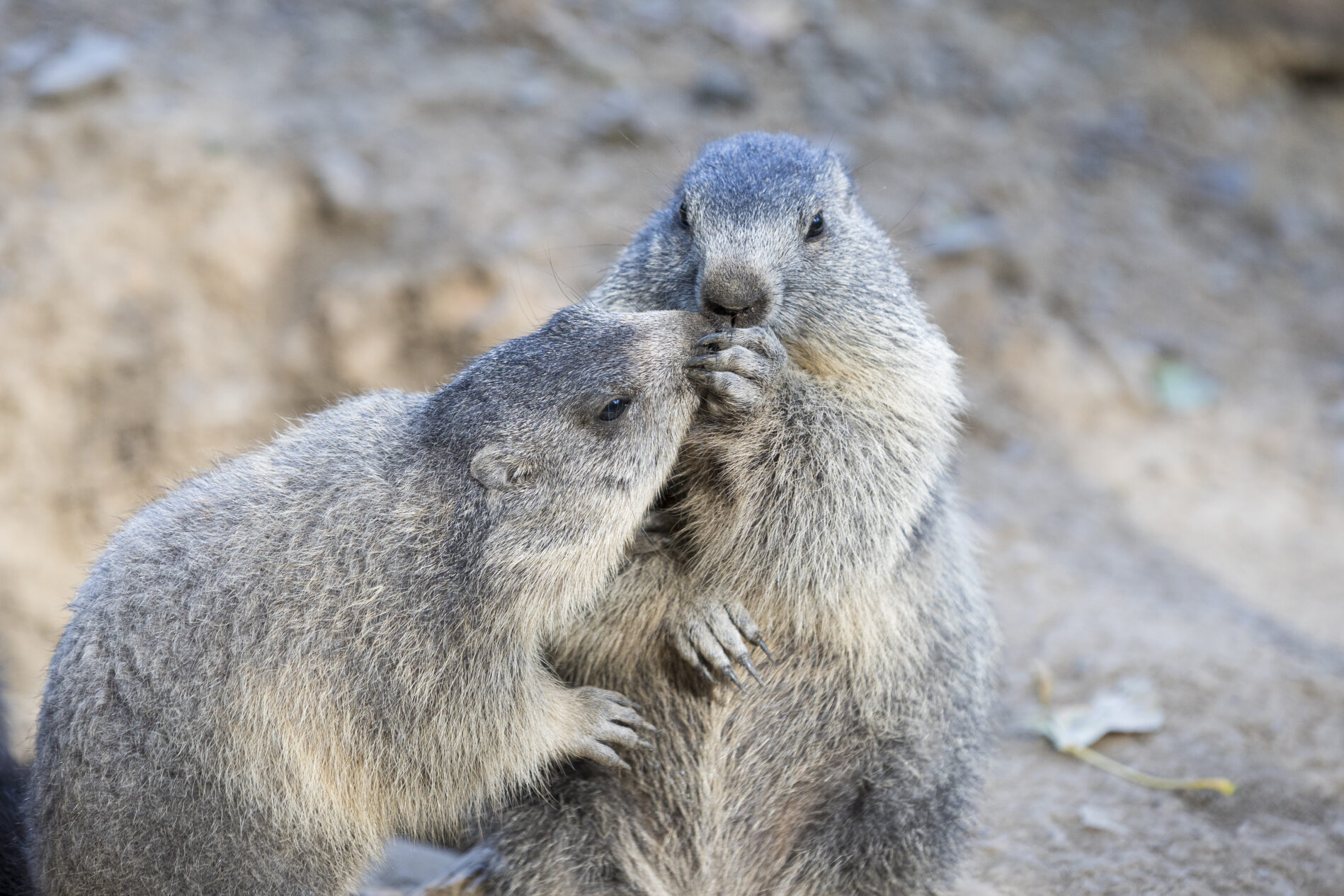
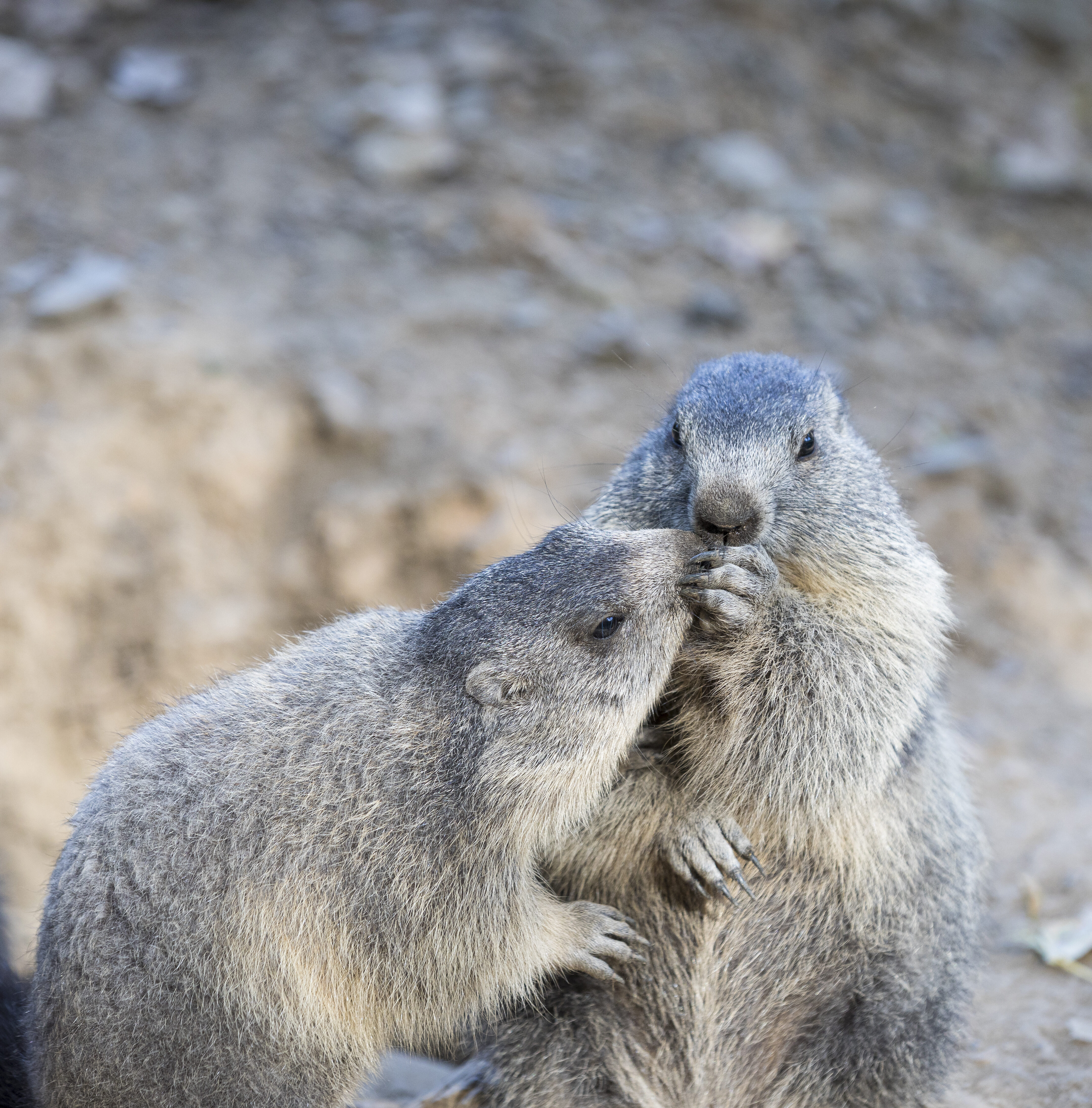
Our marmots
Size: Height: 32-52 cm – Weight: 1.5-5 kg – Longevity: 5-10 years – Class: Mammalia – Order: Rodentia – Family: Sciuridae – Genus: Marmota – Species: Marmota marmota – Distribution: Central Europe – Habitat: Mountains – Social structure: Family – Gestation: 5 weeks – Number of offspring: 2 to 7- Diet: Herbivore – IUCN conservation status: LC, least concern
ANECDOTE
Marmots hibernate for up to six months. During this period, their heart rate can slow down by a factor of eight, and when they wake, they can have lost up to half their body weight.
Jambon, Lardon & Peggy
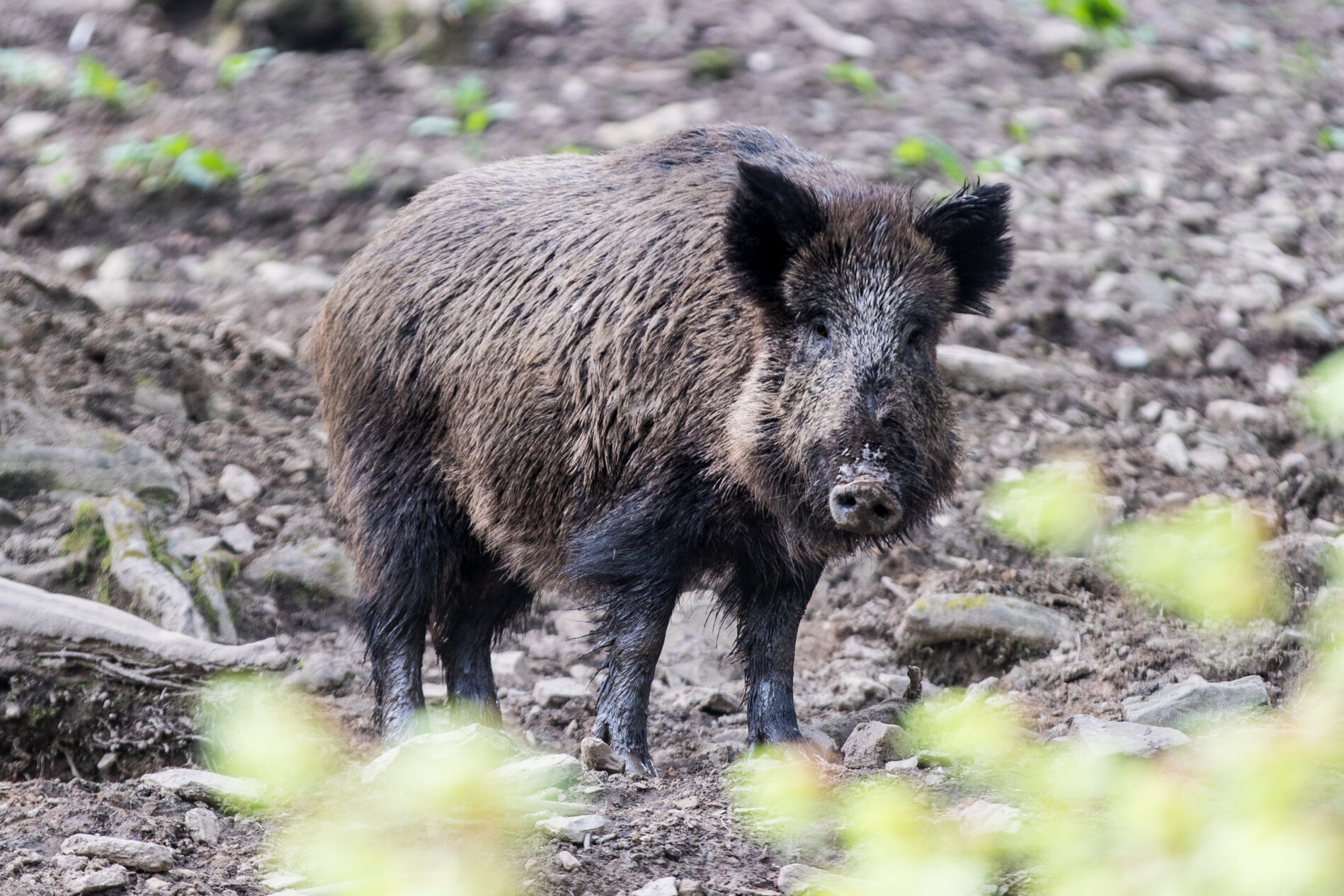
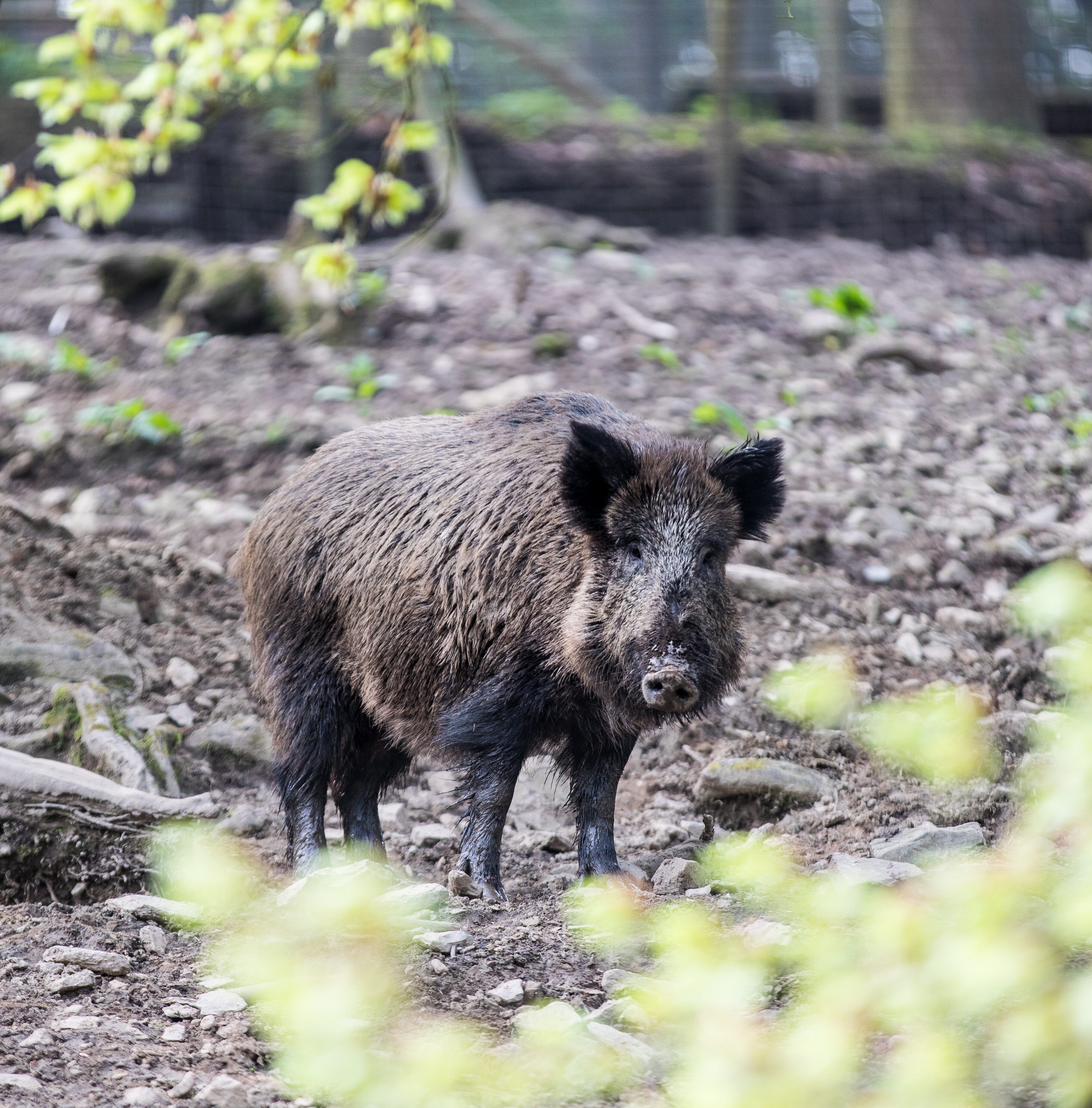
Our wild boars
Size: Height: 70-90 cm Length: 1.2-1.8 m – Weight: 80-180 kg – Longevity: 8-18 years – Class: Mammalia – Order: Artiodactyla – Family: Suidae – Genus: Sus – Species: Sus scrofa – Distribution: Europe, Asia – Habitat: Forests – Social structure: Solitary or group – Gestation: 3 months, 3 weeks, 3 days – Number of offspring: 2-12 – Diet: Omnivore – IUCN conservation status: LC, least concern
ANECDOTE
Celts consider the wild boar to be a sacred animal. A female is called a sow, the young are piglets and an adolescent a “red beast”.
Maine, Michighan & Texas
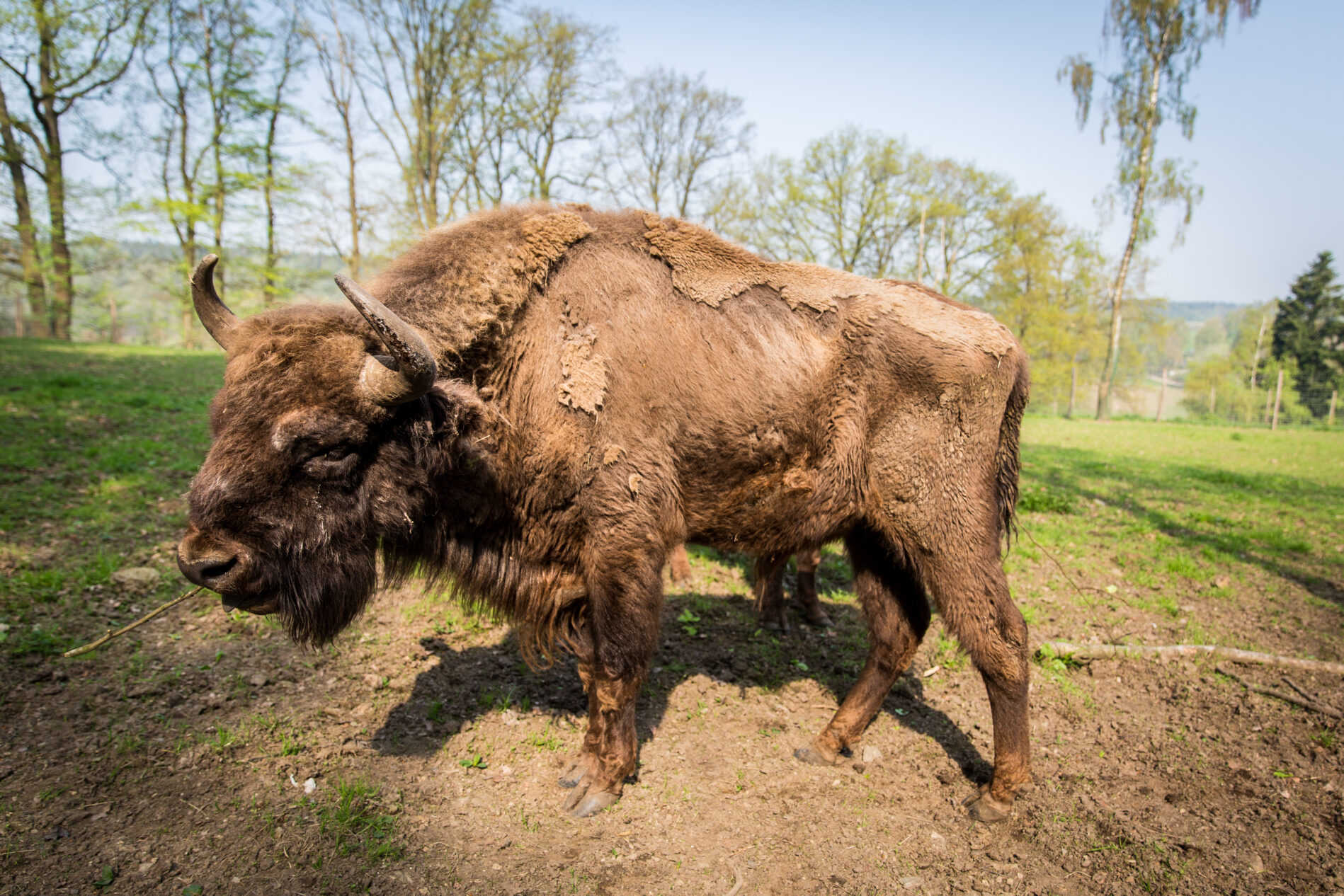
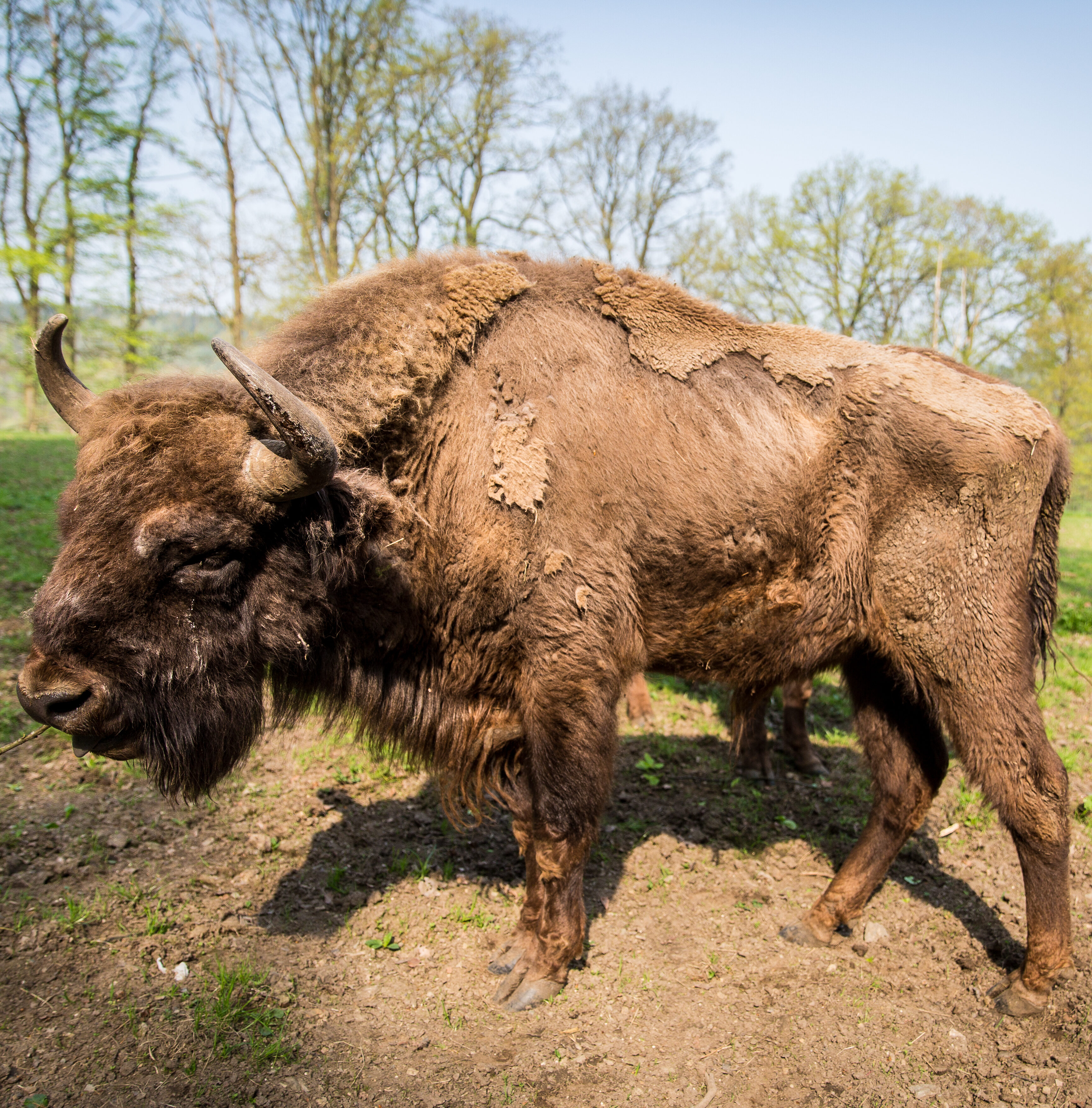
Our bison
Size: Length: 2.1-3.5 m Height at the withers: 1.3-2 m – Weight: 350-1000 kg – Longevity: 25-30 years – Class: Mammalia – Order: Artiodactyla – Family: Bovidae – Genus: Bison – Species: Bison bison – Distribution: North America – Habitat: Plains and mountains – Social structure: Group – Gestation: 9 months – Number of offspring: 1 – Diet: Herbivore – IUCN conservation status: NT, near threatened
ANECDOTE
In the grasslands, Bison graze and ruminate peacefully, but during rutting season, the large males fight violently. Bulls weighing a tonne are not uncommon. Adults are black and calves born after a 9-month gestation period are brown/red.
Heila, Lili & Sylvia
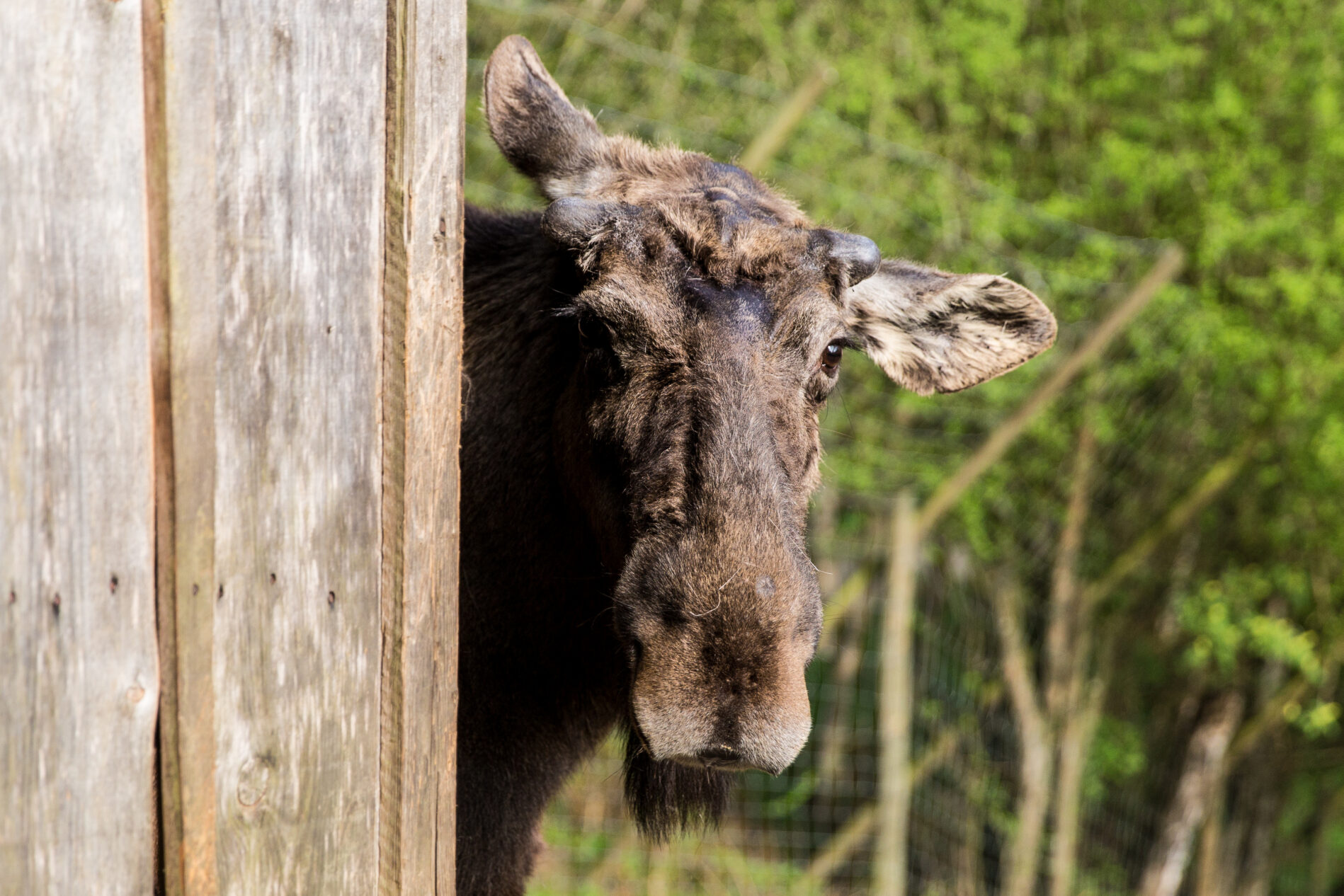
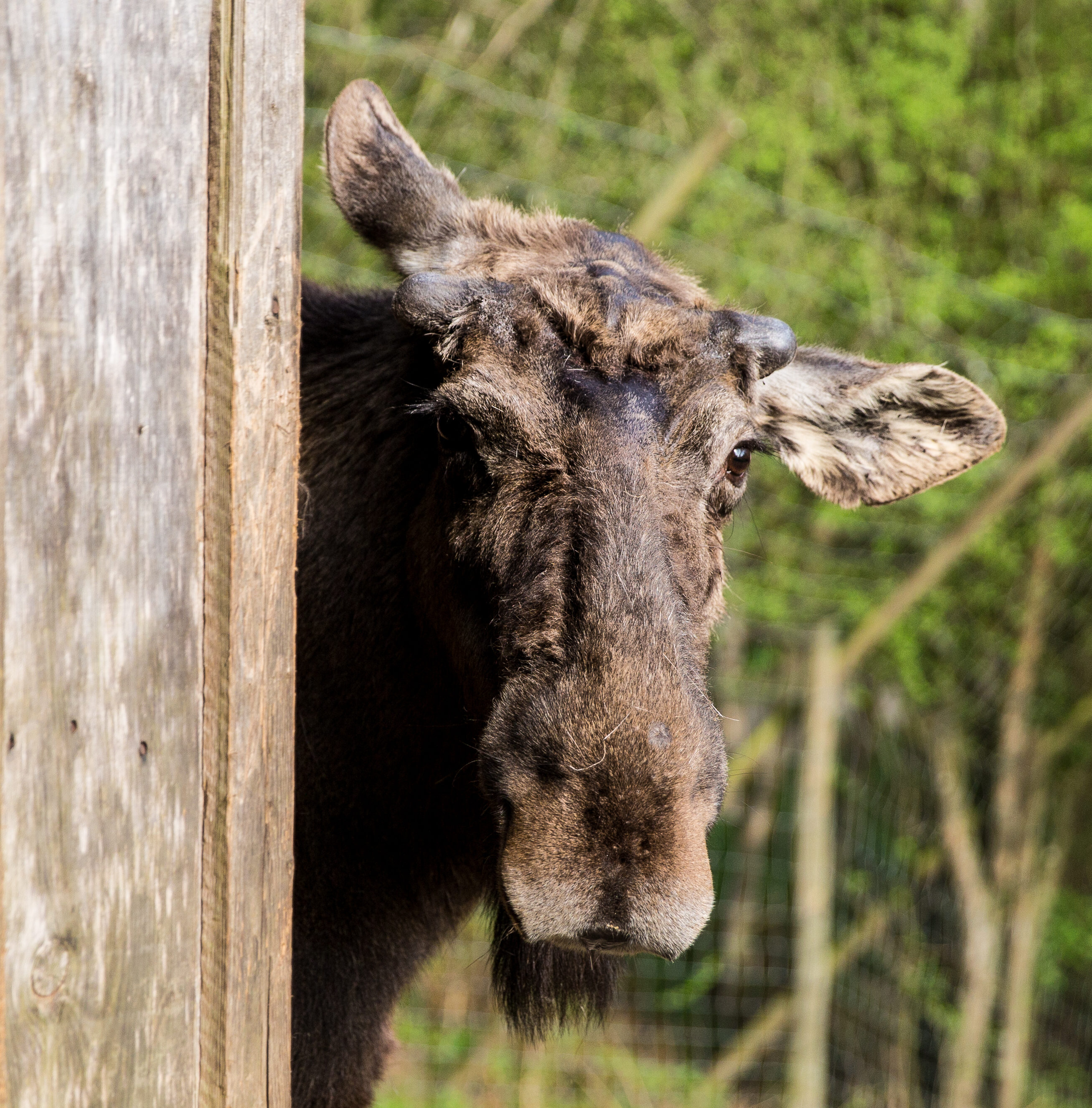
Our elks
Size: Height: 1.6-2.2 m Length: 2.5-3.5 m – Weight: 350-700 kg – Longevity: 15-20 years – Class: Mammalia – Order: Artiodactyla – Family: Cervidae – Genus: Alces – Species: Alces alces – Distribution: Alaska, Canada, Northern Europe – Habitat: Forests, plains, waterways – Social structure: Solitary – Gestation: 242 – 250 days – Number of offspring: 1 – 2 – Diet: Herbivore – IUCN conservation status: LC, least concern
ANECDOTE
Elks are known as moose in Canada and are the largest of all the deer species. Our pair of elks, Nils and Sylvia, were bottle-fed on a farm in Germany, so they are domesticated.
Carena, Madeleine, Scott & Retto
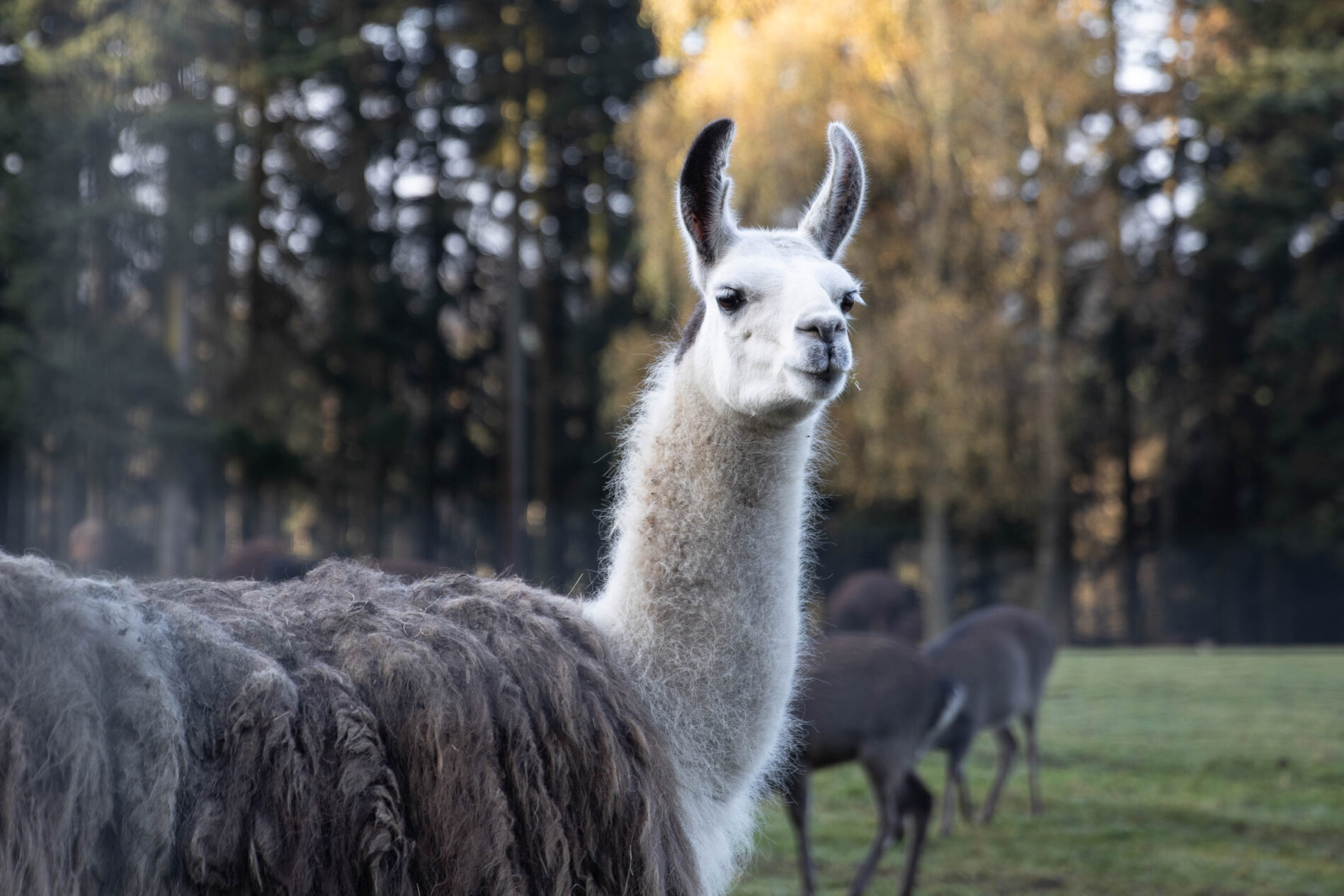
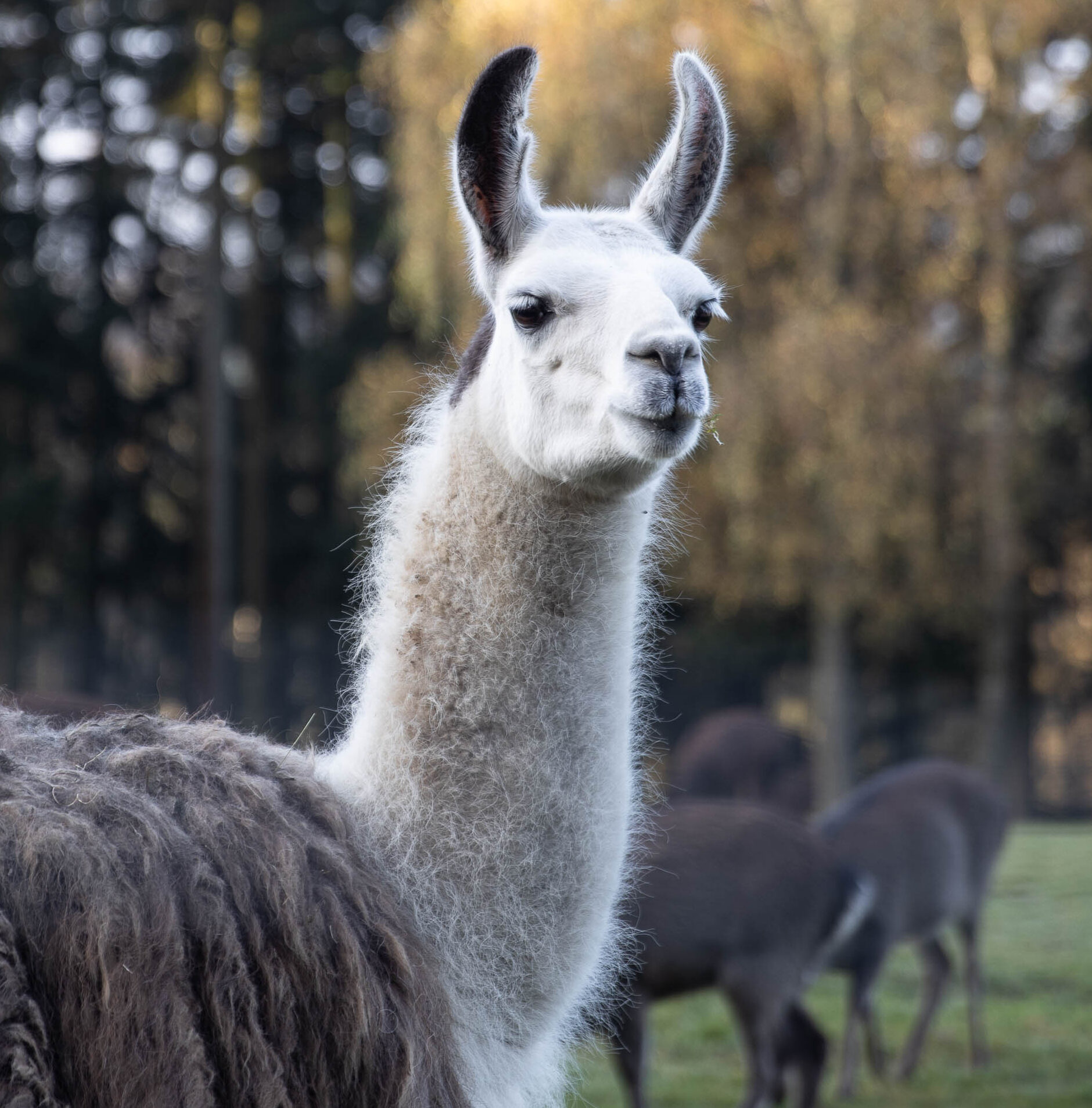
Our llamas
Size: Height: 1-1.4 m Length: 90 cm-2.1 m – Weight: 80-140 kg – Longevity: Up to 20 years – Class: Mammalia – Order: Artiodactyla – Family: Camelidae – Genus: Lama – Species: Lama glama – Distribution: Western South America – Habitat: Mountainous plains and deserts – Social structure: Group – Gestation: 11 months – Number of offspring: 1 – Diet: Herbivore – IUCN conservation status: None
ANECDOTE
Llamas are descendants of guanacos that were domesticated several thousand years ago. Contrary to popular belief, llamas only spit very rarely in order to protect their fellow creatures.
Bob, Ferdinand & Madeleine
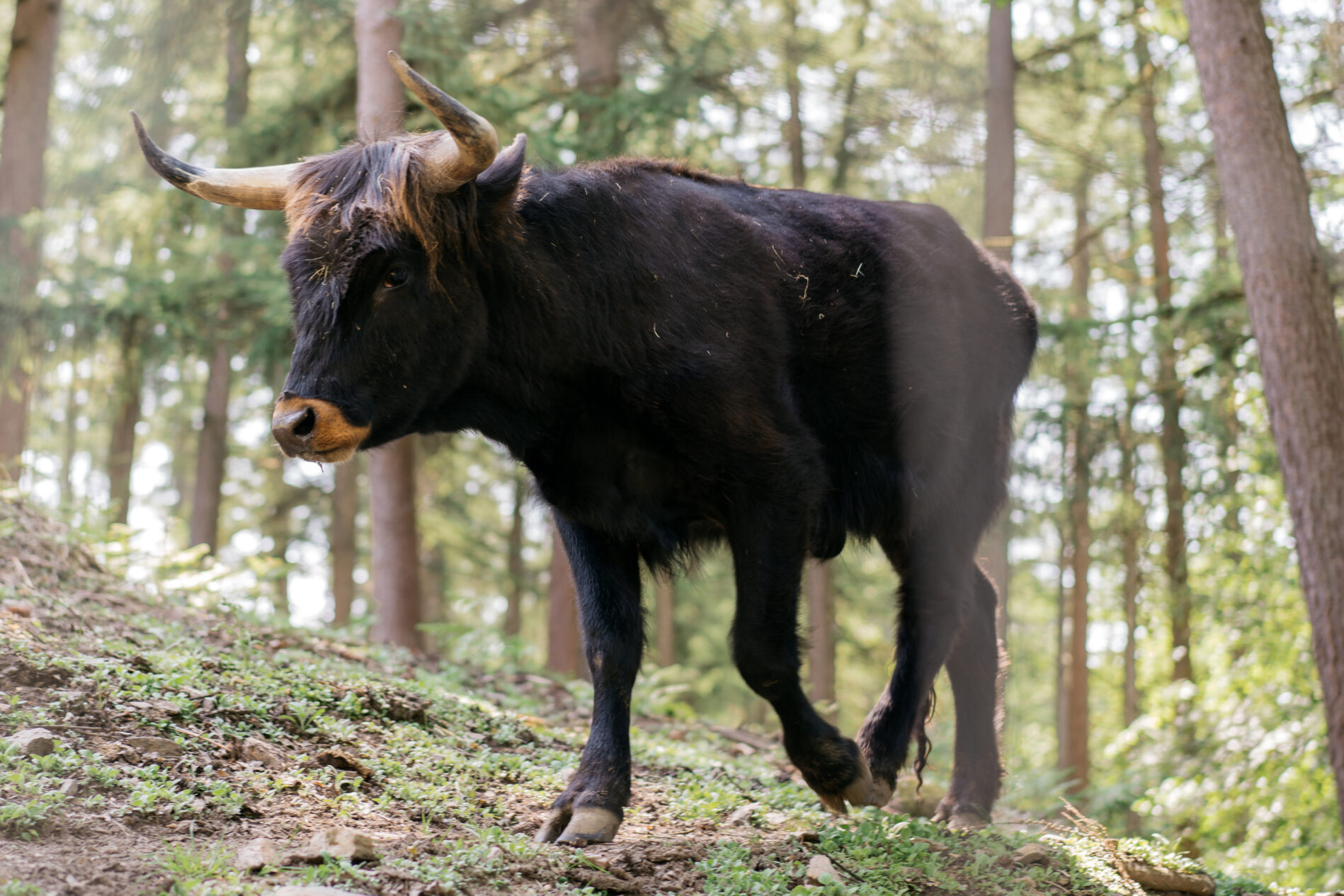
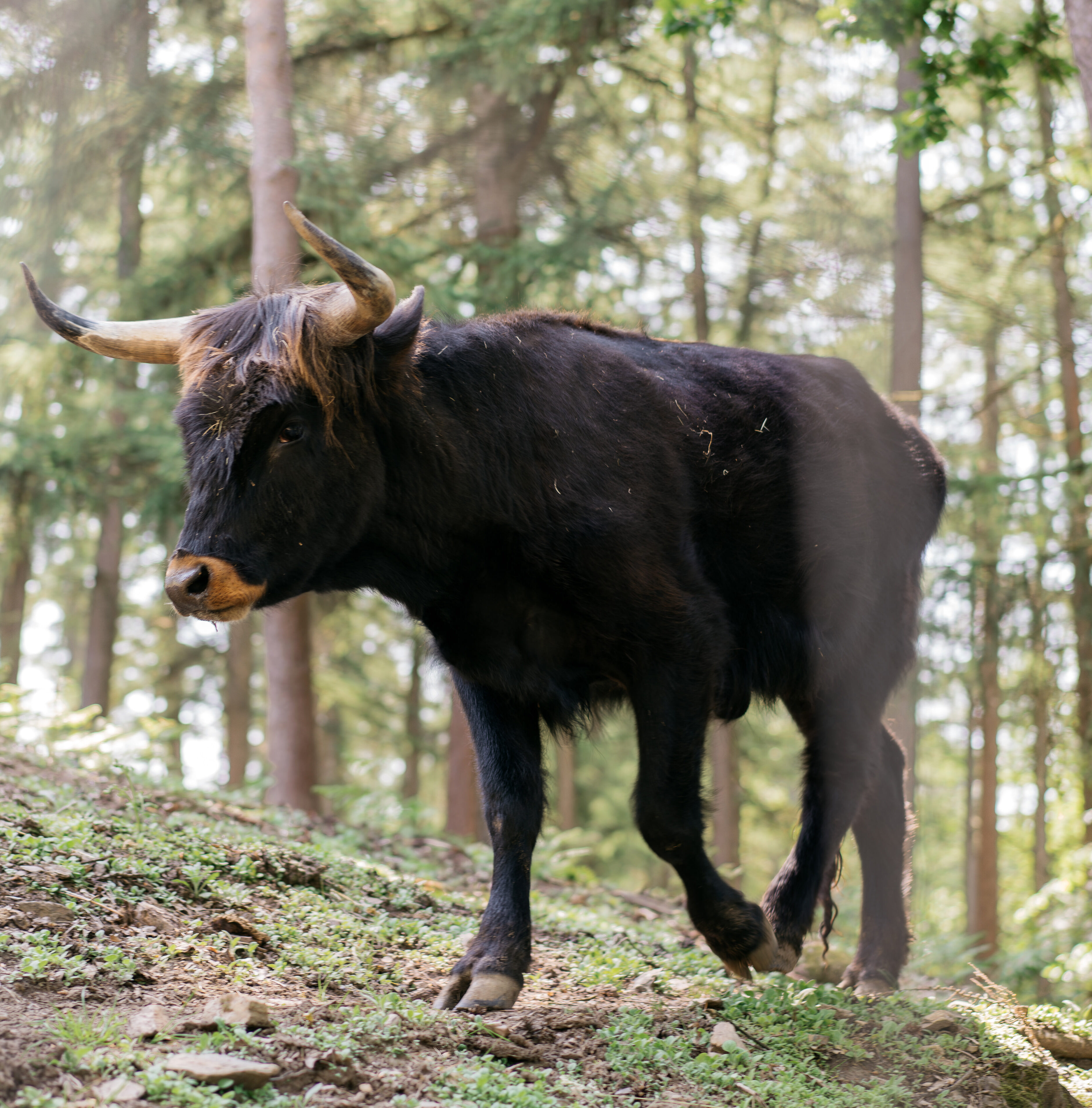
Our aurochs
Size: Height: 1.3-1.6 m Length: 2-2.5 m – Weight: 500-650 kg – Longevity: Up to 20 years – Class: Mammalia – Order: Artiodactyla – Family: Bovidae – Genus: Bos – Species: Bos taurus – Distribution: They used to live in Europe, Asia and North Africa – Habitat: Plains and forests – Social structure: Group – Gestation: 284 days – Number of offspring: 1 – Diet: Herbivore – IUCN conservation status: None
ANECDOTE
The Heck auroch is a bovine breed that has been brought back. It’s the closest relative of its ancestor, the auroch, a breed that became extinct following the death of the last female in 1627.
Floki & Teddy
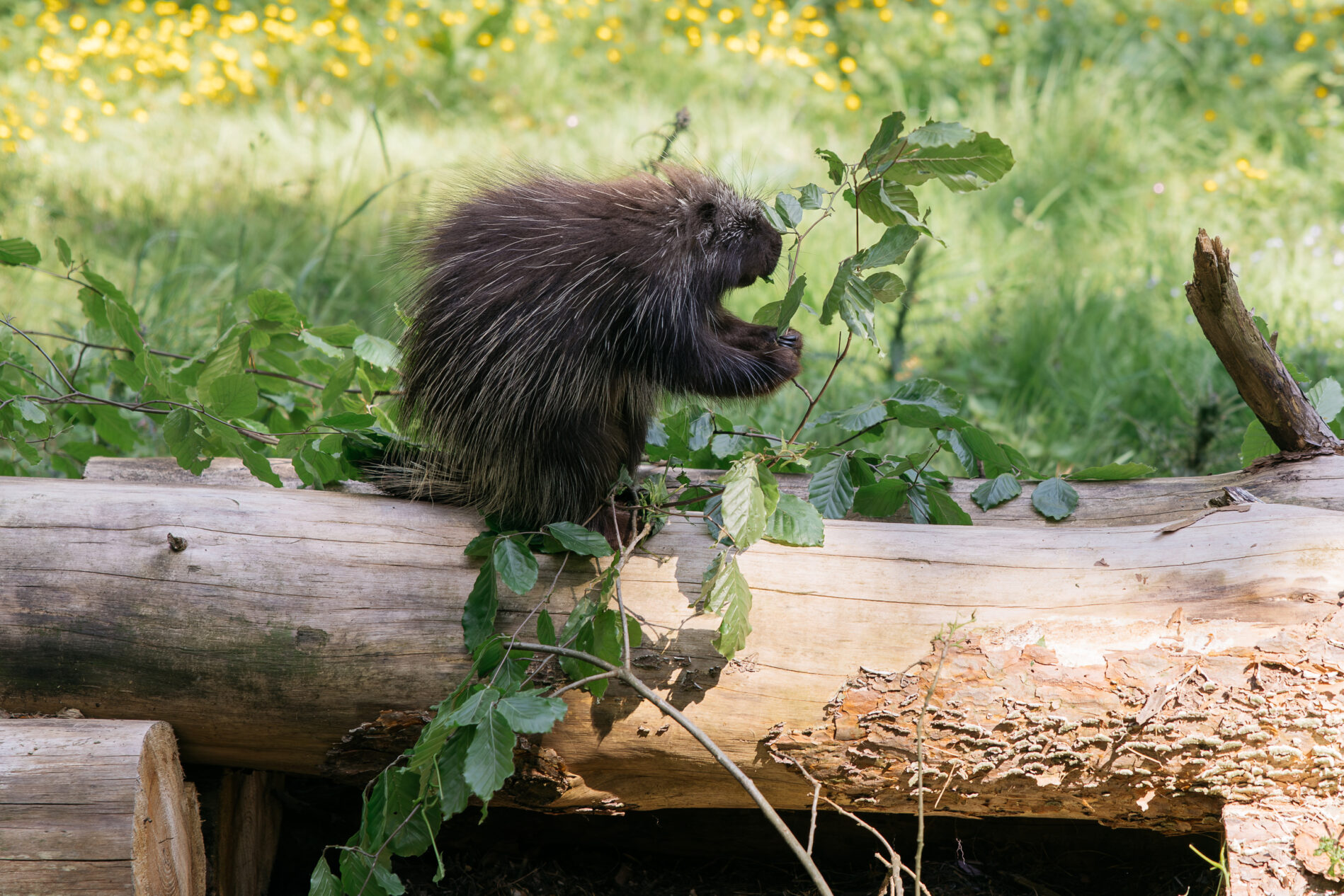
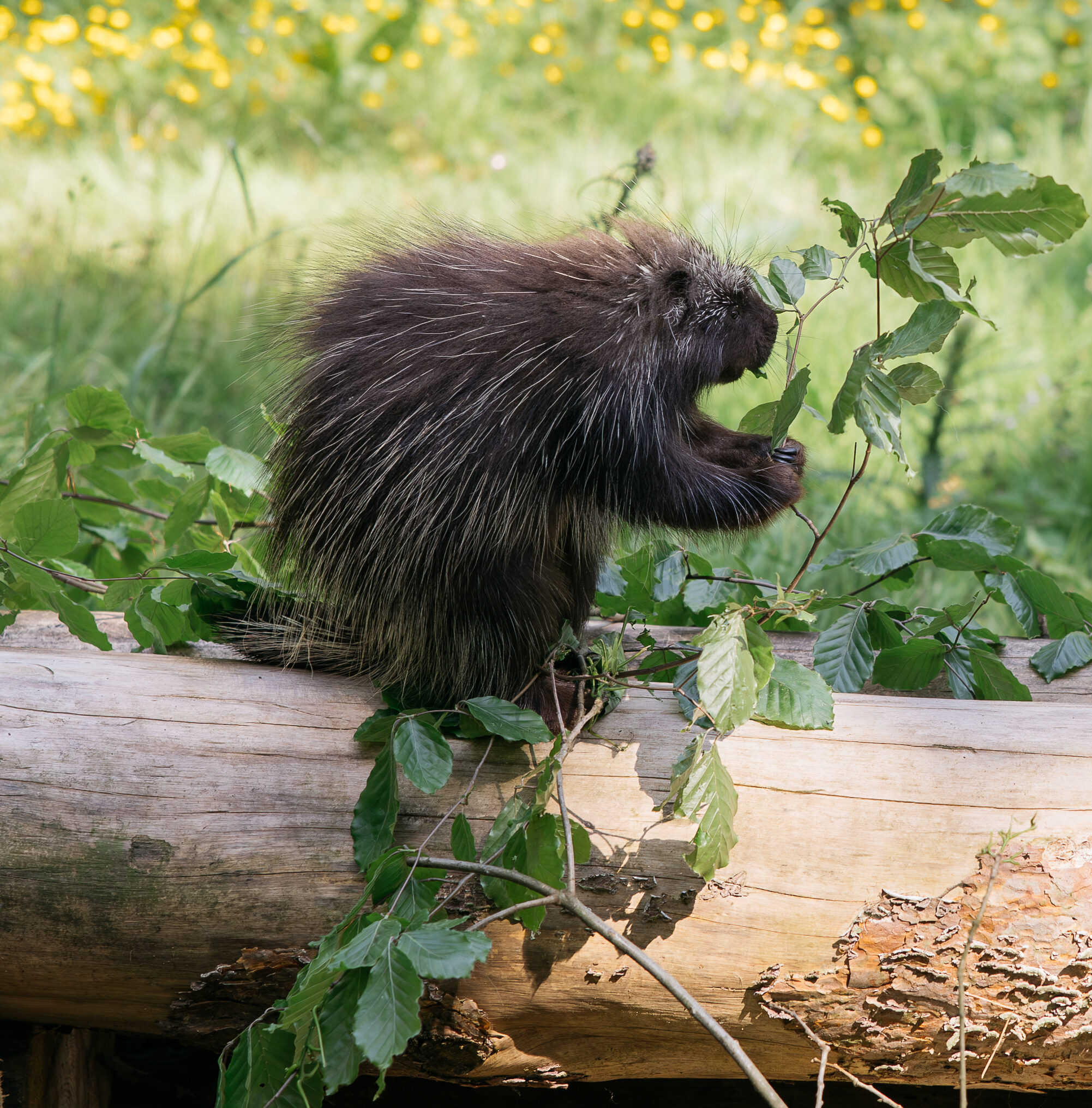
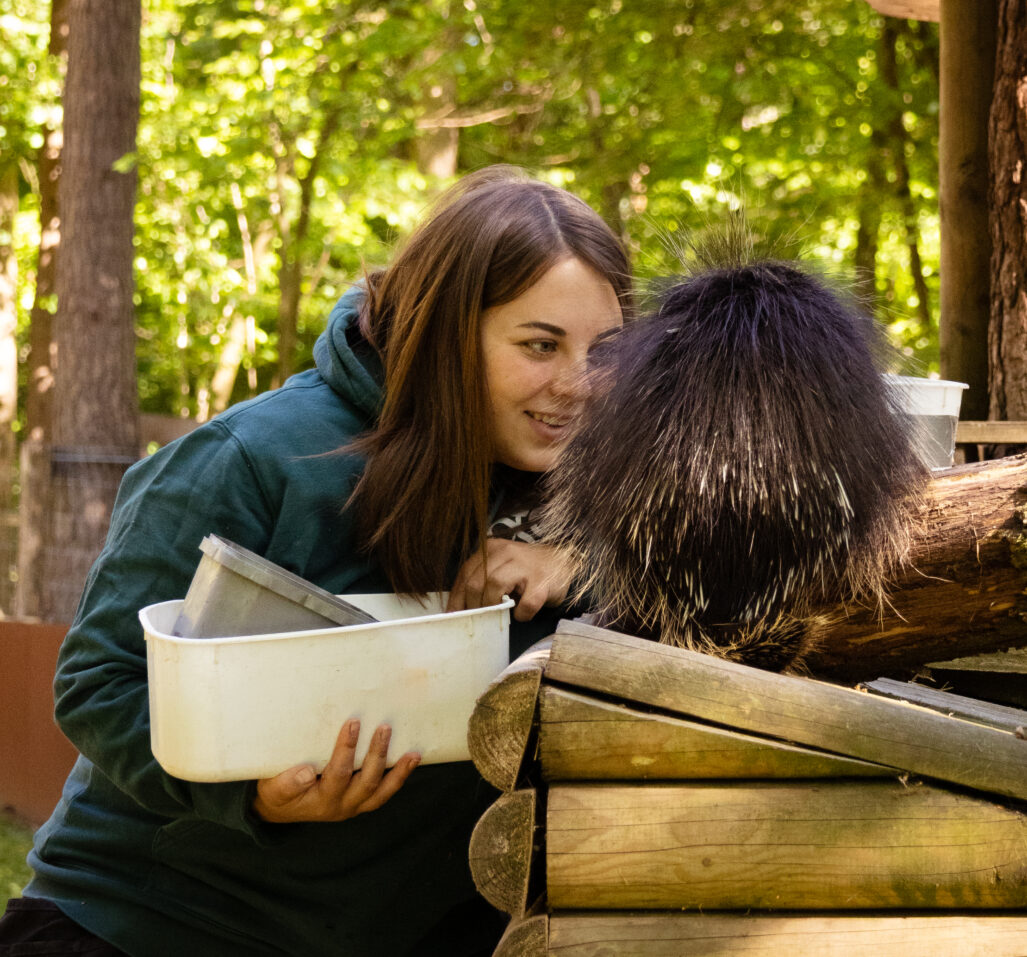
Our porcupines
Size: Height: 30 cm Length: 68 cm-1 m – Weight: 5-18 kg – Longevity: Up to 18 years – Class: Mammalia – Order: Rodentia – Family: Erethizontidae – Genus: Erethizon – Species: Erethizon dorsatum – Distribution: North America, in particular Canada, the United Stated and northern Mexico – Habitat: Forests, tundra – Social structure: Solitary – Gestation: 7 months – Number of offspring: 1 – Diet: Herbivore – IUCN conservation status: LC, least concern
ANECDOTE
Porcupines have around 30,000 quills that regrow. Teddy’s name was inspired by the French “ourson coquau” (ourson meaning teddy bear), another name for the tree porcupine
Barack & Benny
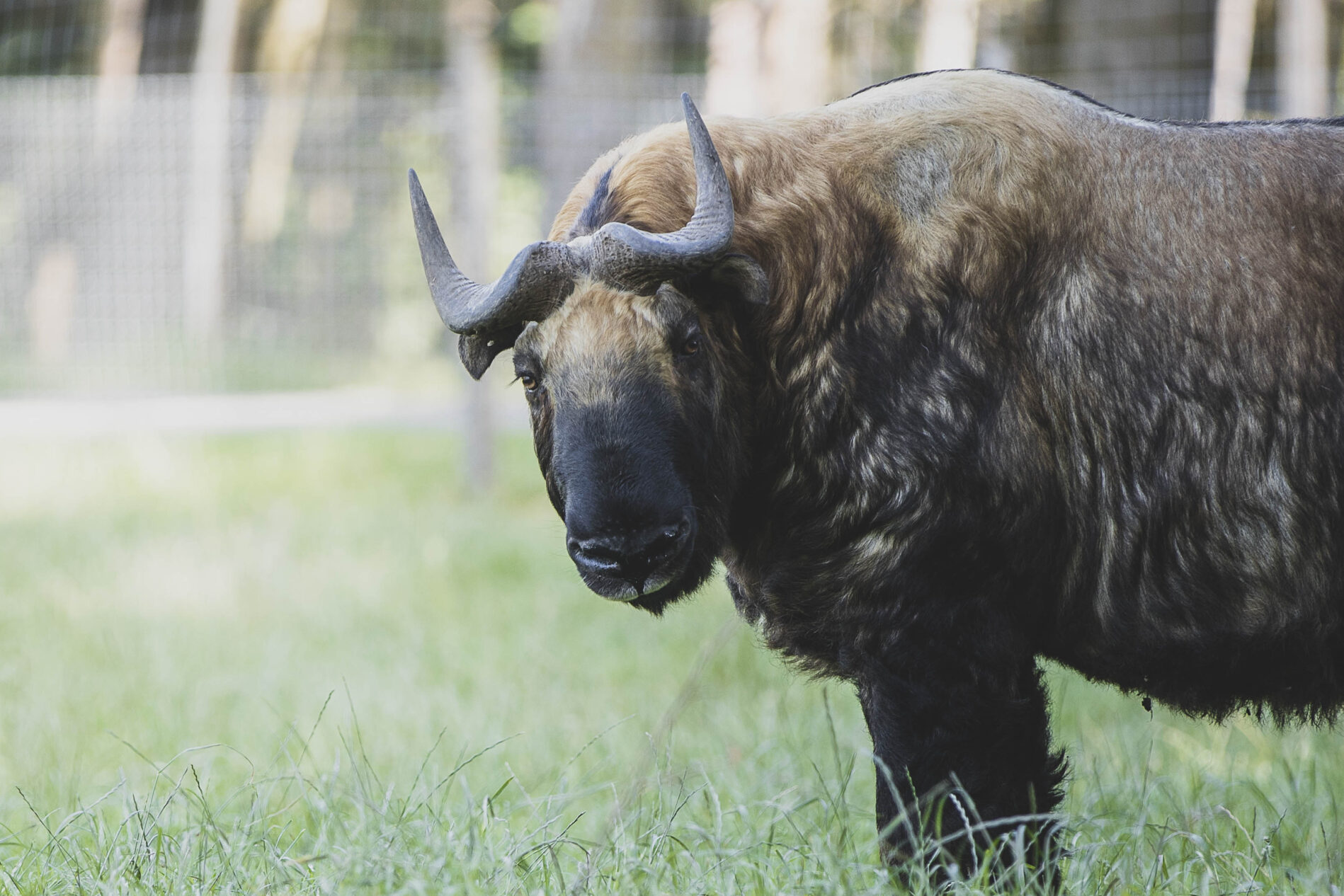
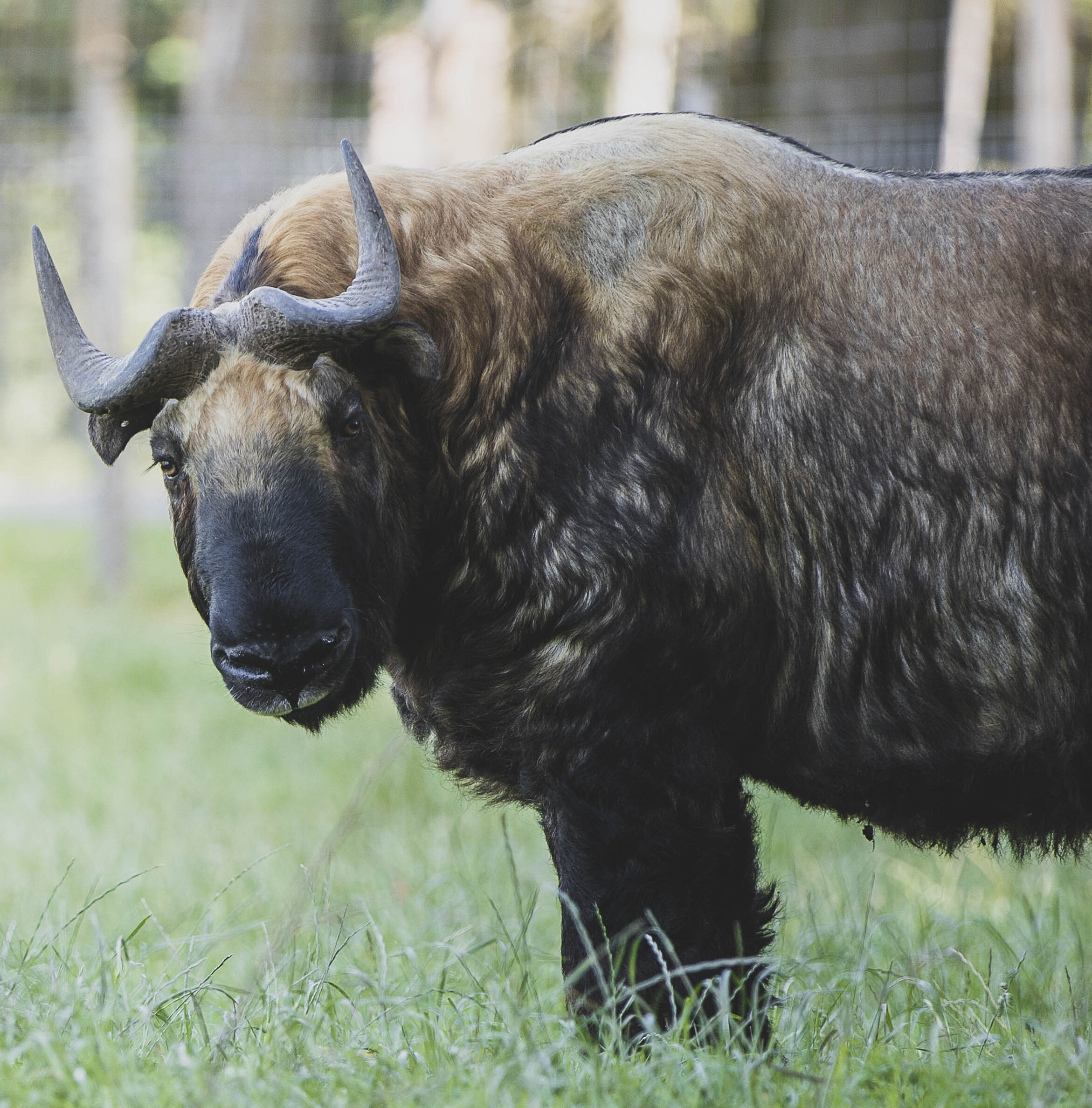
Our Michmi takins
Size: Height: 1-1.3 m Length: 1.5- 2.2 m – Weight: 150-250 kg – Longevity: 12-15 years – Class: Mammalia – Order: Artiodactyla – Family: Bovidae – Genus: Budorcas – Species: Budorcas taxicolor taxicolor – Distribution: China and India – Habitat: High mountain plateaus – Social structure: Group – Gestation: 210-240 days – Number of offspring: 1 – Diet: Herbivore – IUCN conservation status: VU, Vulnerable
ANECDOTE
Takins live in groups of up to a hundred. They secrete an oily substance to protect themselves from moisture. They’re considered to be closer to sheep and goats than to bovines (cows).
Sophie, Justine, Lorin, Thierry & Co
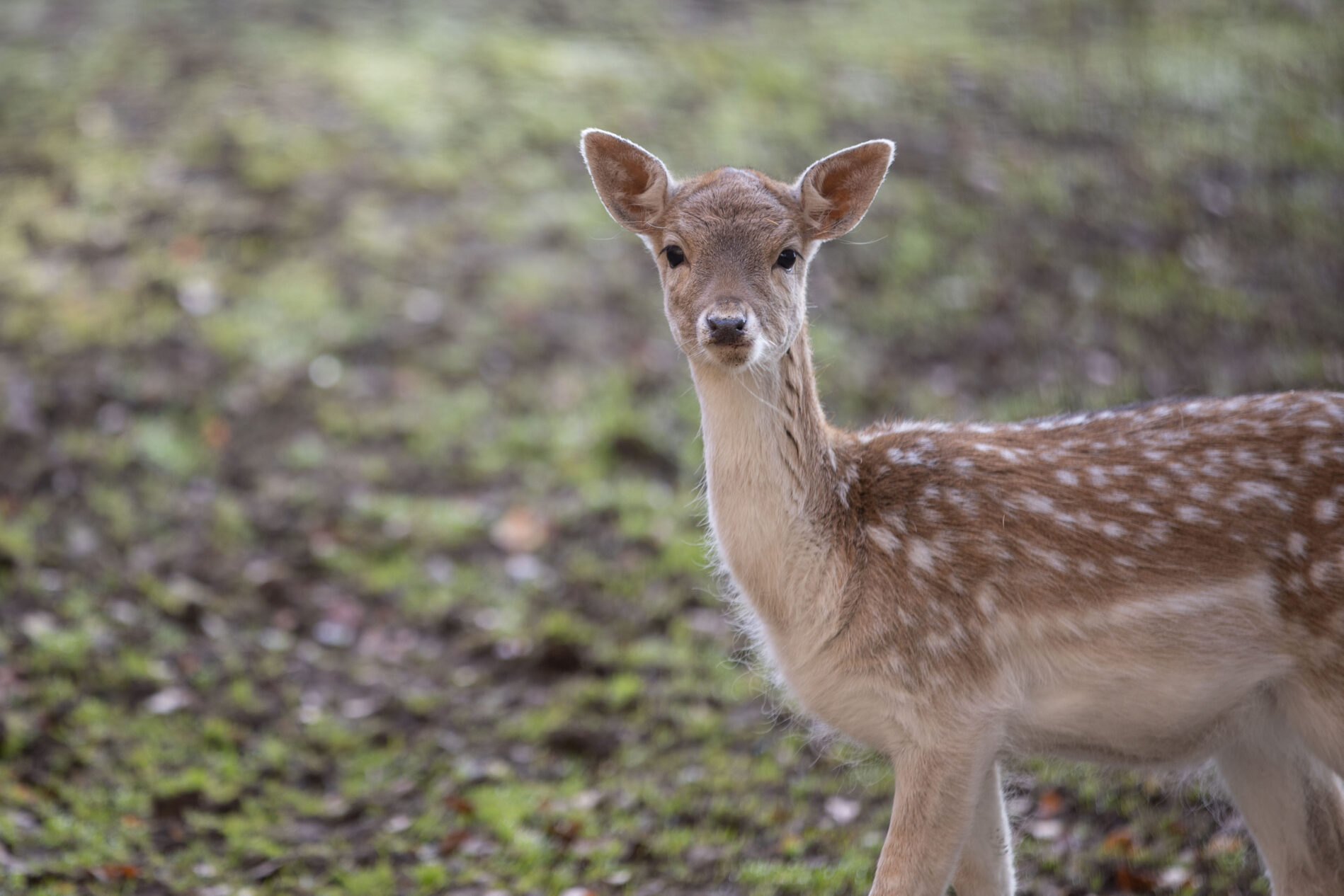
Our fallow deer
Size: Height: 80 cm-1.1 m Length: 1.4-1.9 m – Weight: 35-100 kg – Longevity: 15-20 years – Class: Mammalia – Order: Artiodactyla – Family: Cervidae – Genus: Dama – Species: Dama dama – Distribution: Europe and East Asia – Habitat: Forests and plains – Social structure: Group – Gestation: 230-250 days – Number of offspring: 1 – Diet: Herbivore – IUCN conservation status: LC, least concern.
ANECDOTE
The fallow deer is native to the Mediterranean region and has been reintroduced to America, Africa, Asia and Australia. Fallow deer antlers are flat and are referred to as palms.
Anna, Elsa, Harry & Co
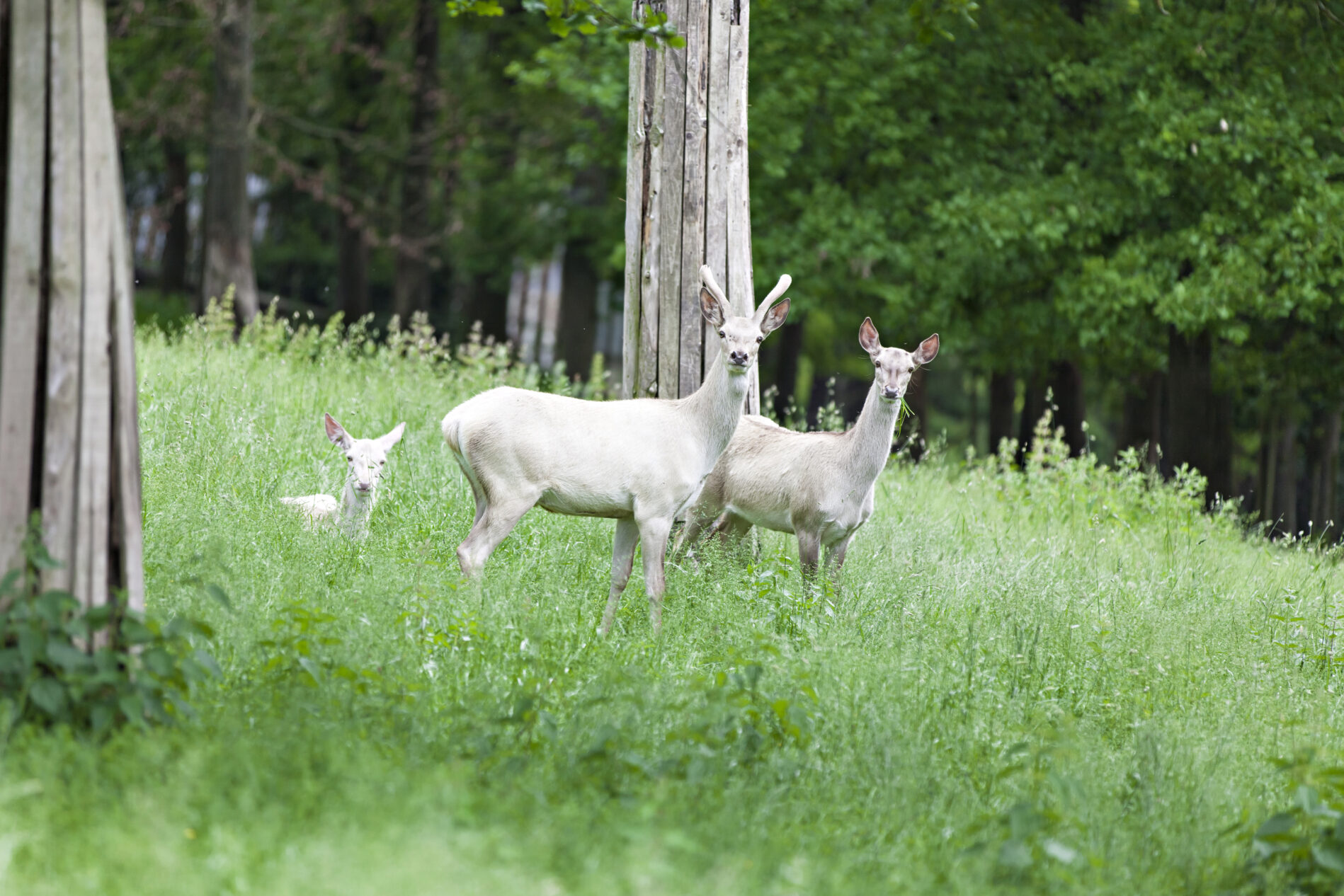
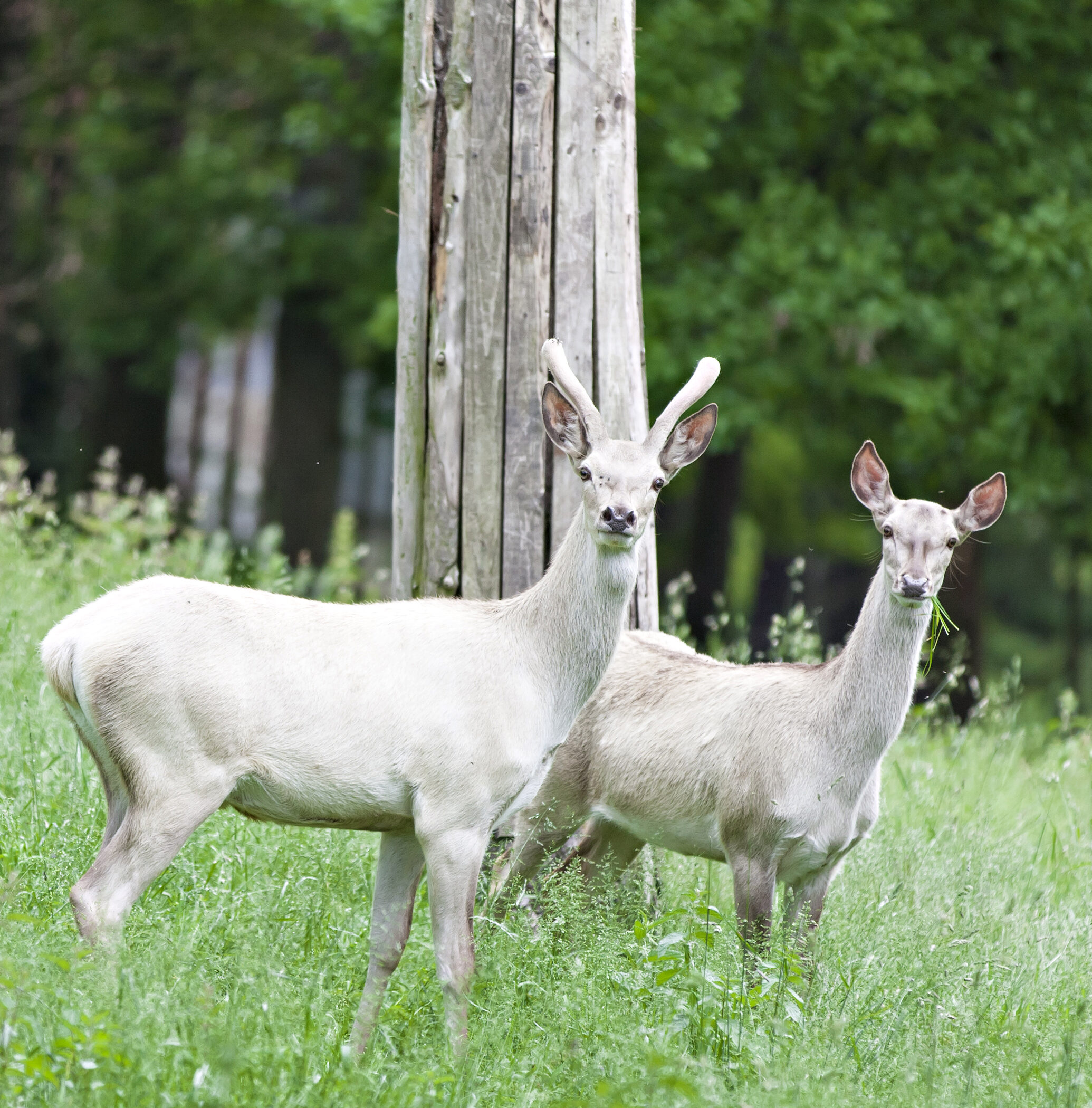
Our white red deer
Size: Height at the withers: 1.1-1.6 m Length: 1.3-2.1 m – Weight: 80-300 kg – Longevity: 20 years – Class: Mammalia – Order: Artiodactyla – Family: Cervidae – Genus: Cervus – Species: Cervus elaphus – Distribution: Denmark – Habitat: Deciduous forests, coniferous forests, plains – Social structure: Herd – Gestation: 8 months – Number of offspring: 1 – Diet: Herbivore – IUCN conservation status: LC, least concern.
ANECDOTE
The white deer is a mutation of the well-known red deer. There are very few in the wild. The vast majority of them live in Denmark and are owned by the Royal Family.
Alelo, Flocon, Gewa, Itori, Kha & Kodie
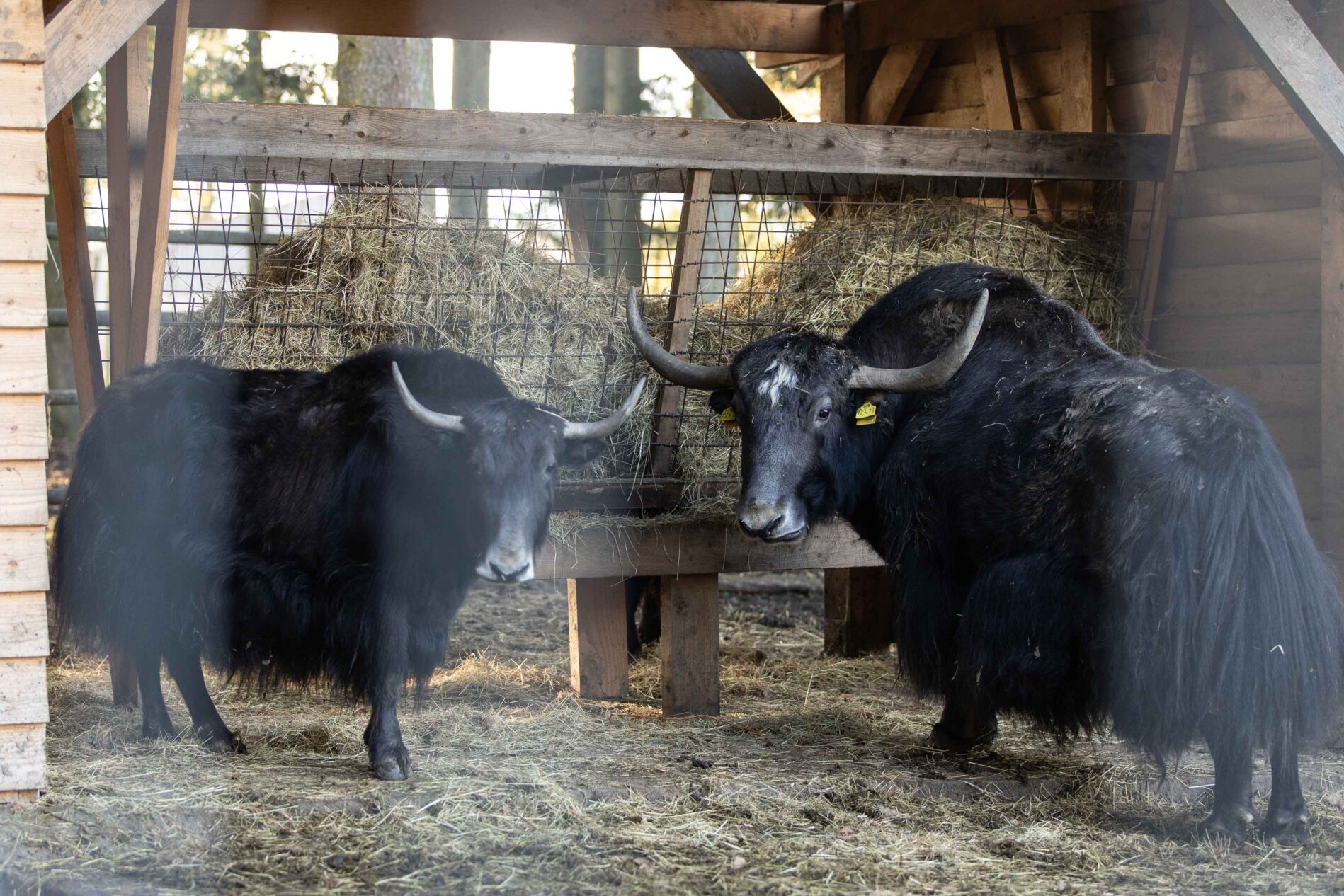
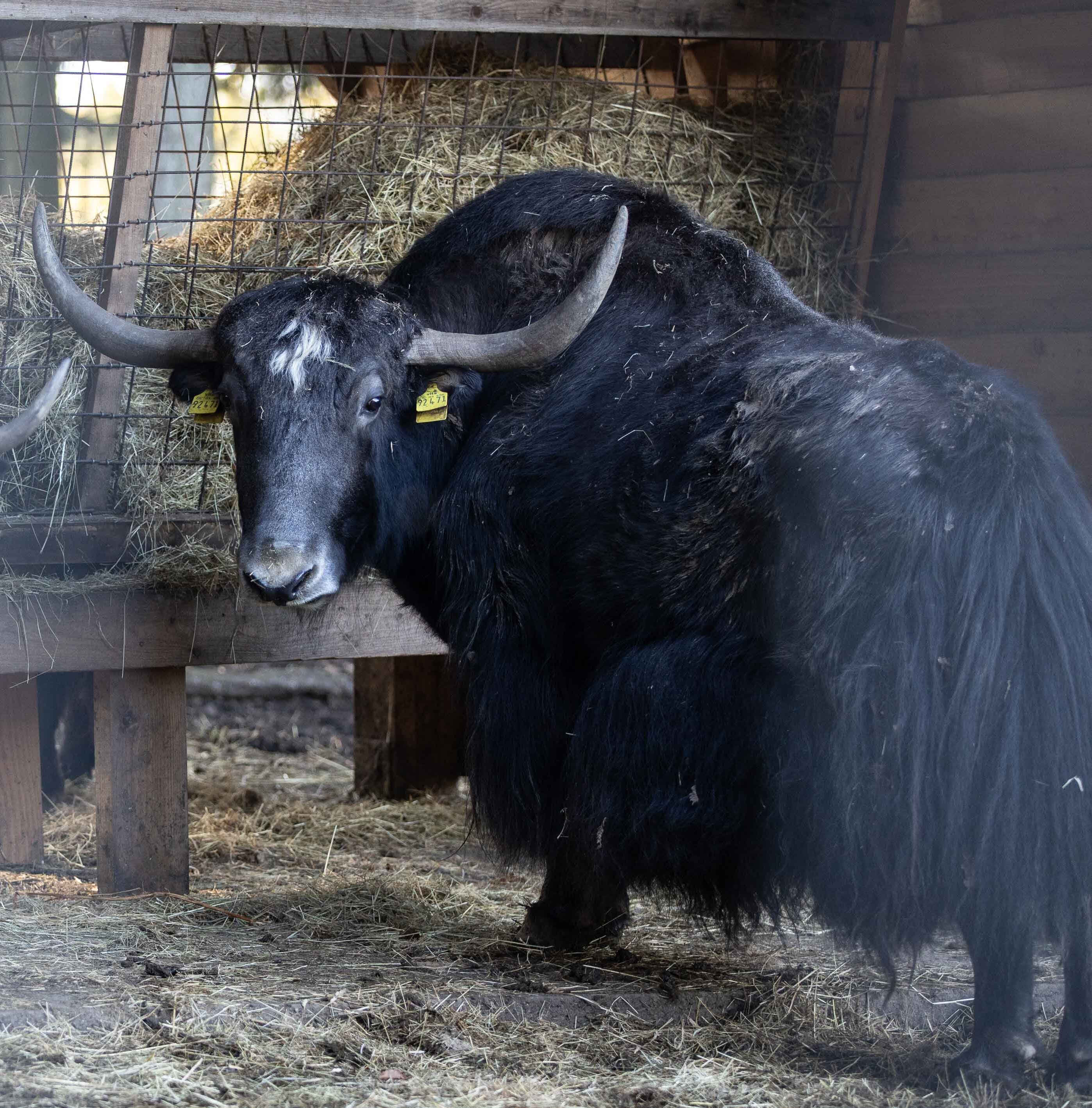
Our yaks
Size: Height: 1.2-1.7 m Length: up to 3 m – Weight: 250-800 kg – Longevity: 12-15 years – Class: Mammalia – Order: Artiodactyla – Family: Bovidae – Genus: Bos – Species: Bos grunniens – Distribution: China and India – Habitat: High mountain plateaus – Social structure: Group – Gestation: 258 days – Number of offspring: 1 every two years – Diet: Herbivore – IUCN conservation status: VU, Vulnerable.
ANECDOTE
The yaks we know are domestic yaks. These are significantly smaller than wild yaks, which can weigh up to 800 kg. Yaks can survive on snow alone for hydration.
Madeline, Nathan, Océane & Co
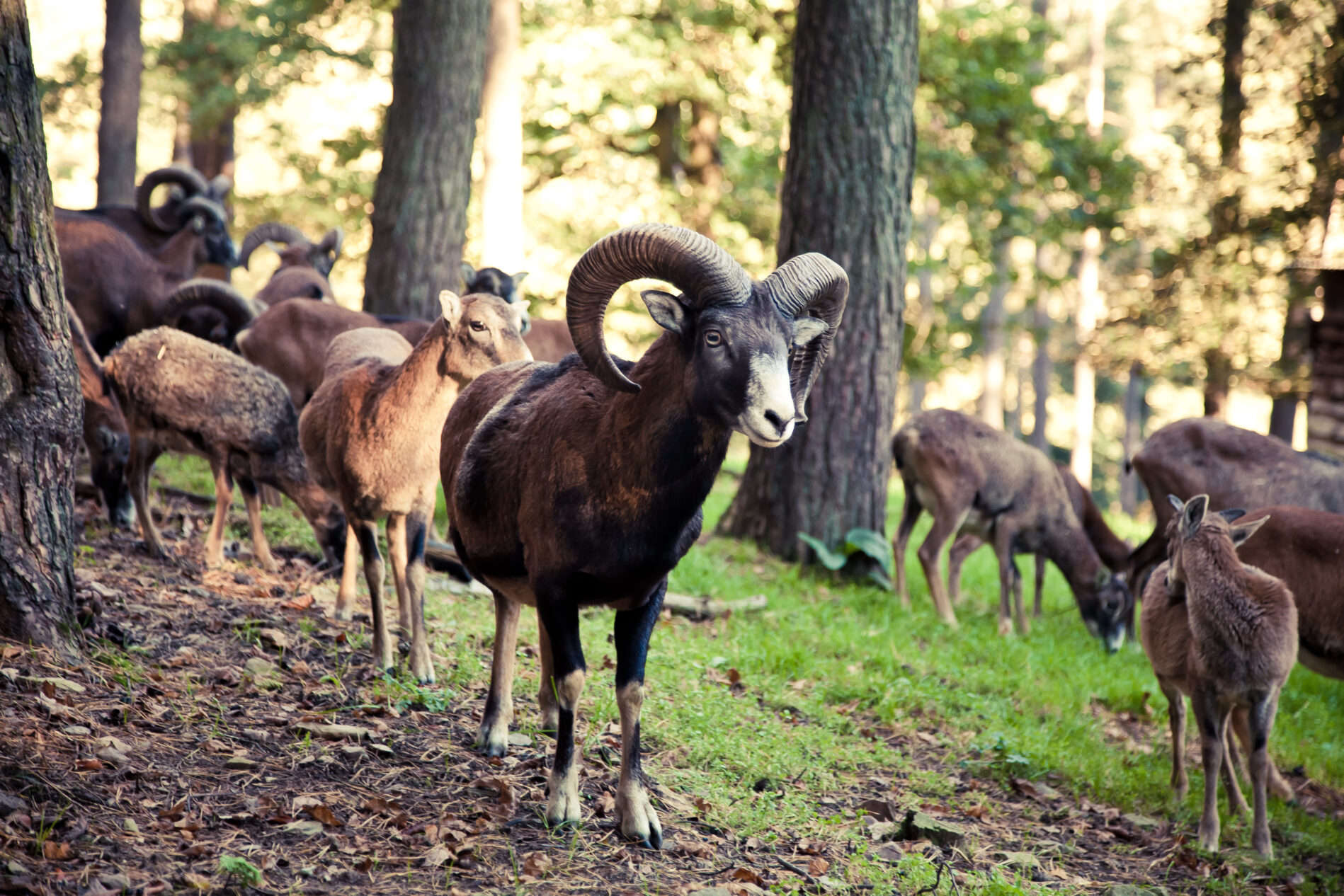
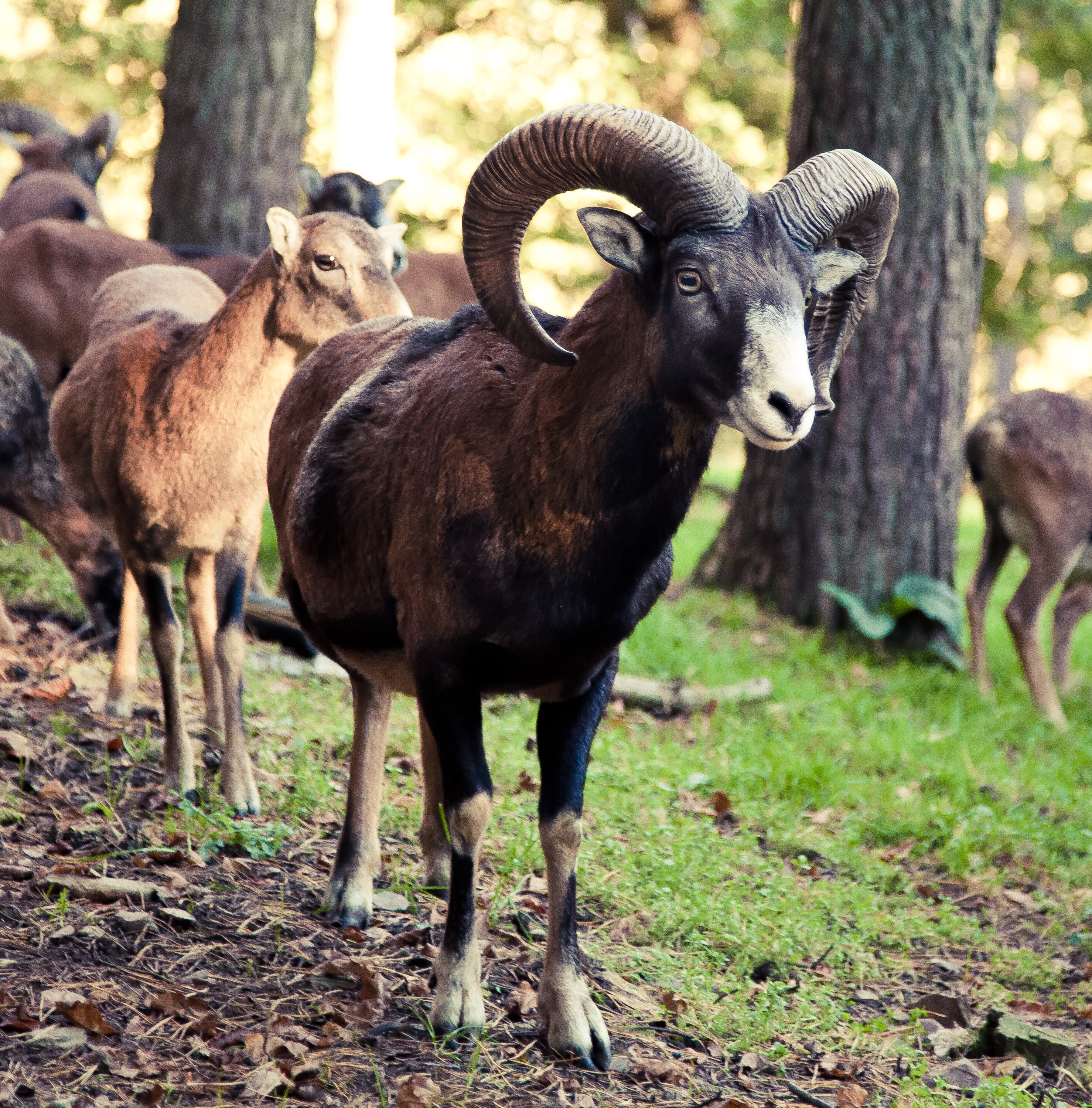
Our mouflons
Size: Height 60-75 cm Length: 1-1.3 m – Weight: 25-55 kg – Longevity: 20 years – Classification: – Class: Mammalia – Order: Artiodactyla – Family: Bovidae – Genus: Ovis – Species: Ovis Orientalis – Distribution: Western Asia and the Mediterranean – Habitat: Mountains – Social structure: Solitary or group – Gestation: 4 months – Number of offspring: 1 – Diet: Herbivore – IUCN conservation status: VU, Vulnerable.
ANECDOTE
The mouflon has horns weighing up to 13 kg and can run at speeds of up to 60 km/hour.
Chloé, Jojo, Lulu & Co
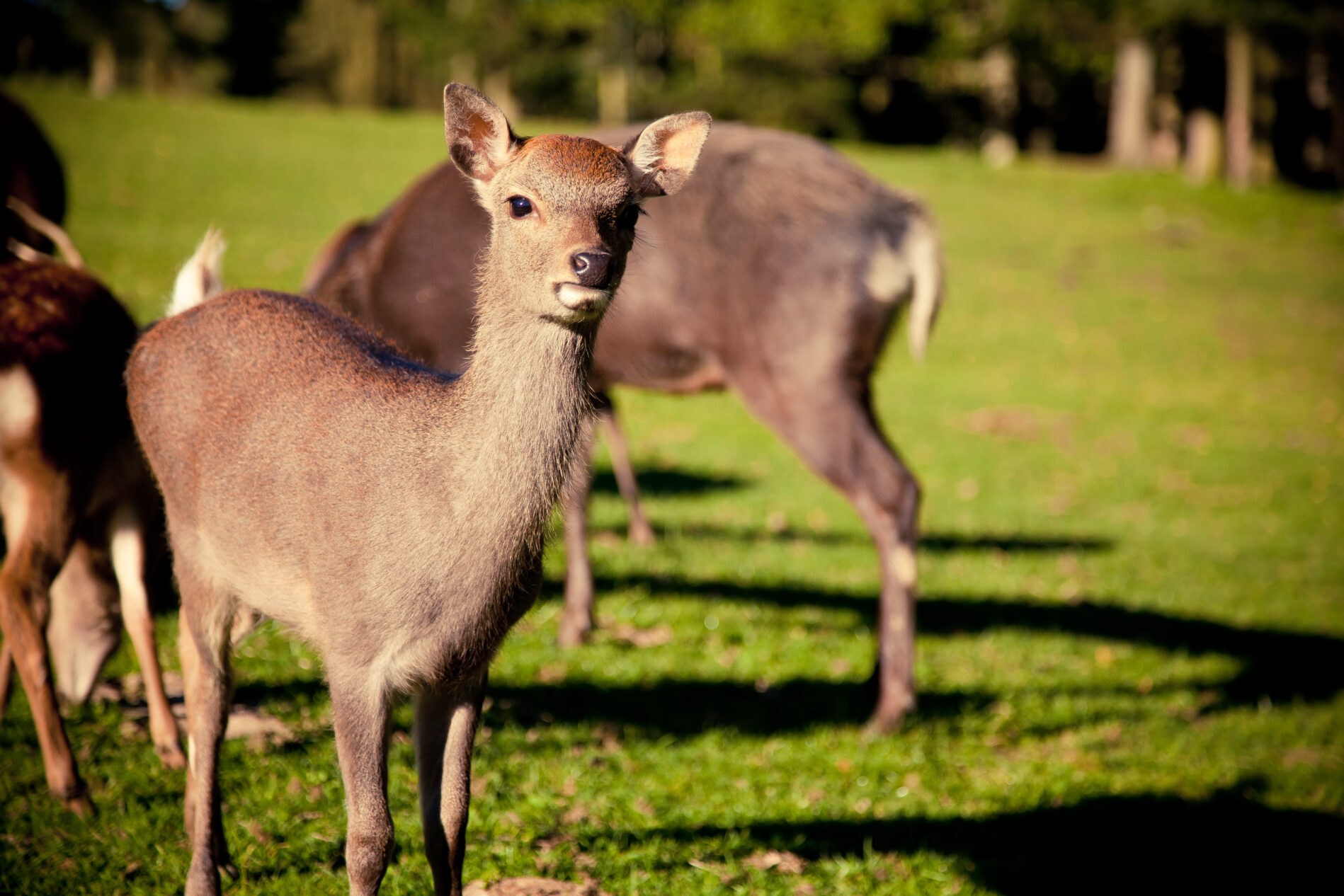
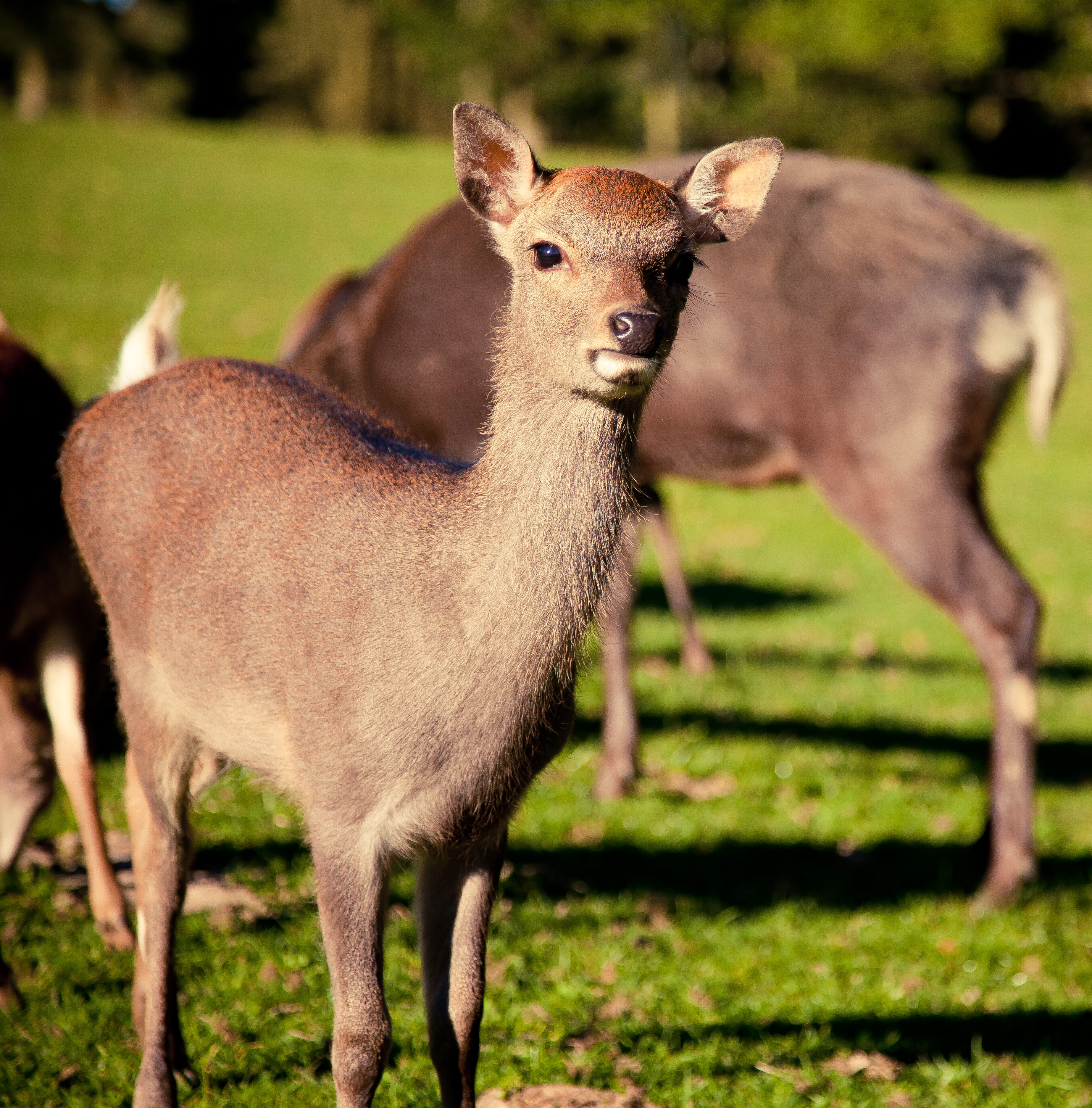
Our sika deer
Size: Height: 60 cm–1 m Length: 90 cm-1.2 m – Weight: 15-40 kg – Longevity: 15 years – Class: Mammalia – Order: Artiodactyla – Family: Cervidae – Genus: Cervus – Species: Cervus nippon nippon – Distribution: Europe, East Asia – Habitat: Deciduous and coniferous forests, plains – Social structure: Group – Gestation: 8 months – Number of offspring: 1 – Diet: Herbivore – IUCN conservation status: LC, least concern.
ANECDOTE
The sika deer is now more common in Europe than in Asia. It was introduced in the Middle Ages. The cry of the sika deer resembles the cry of a newborn baby.
Koopa, Luigi, Peach & Warrio
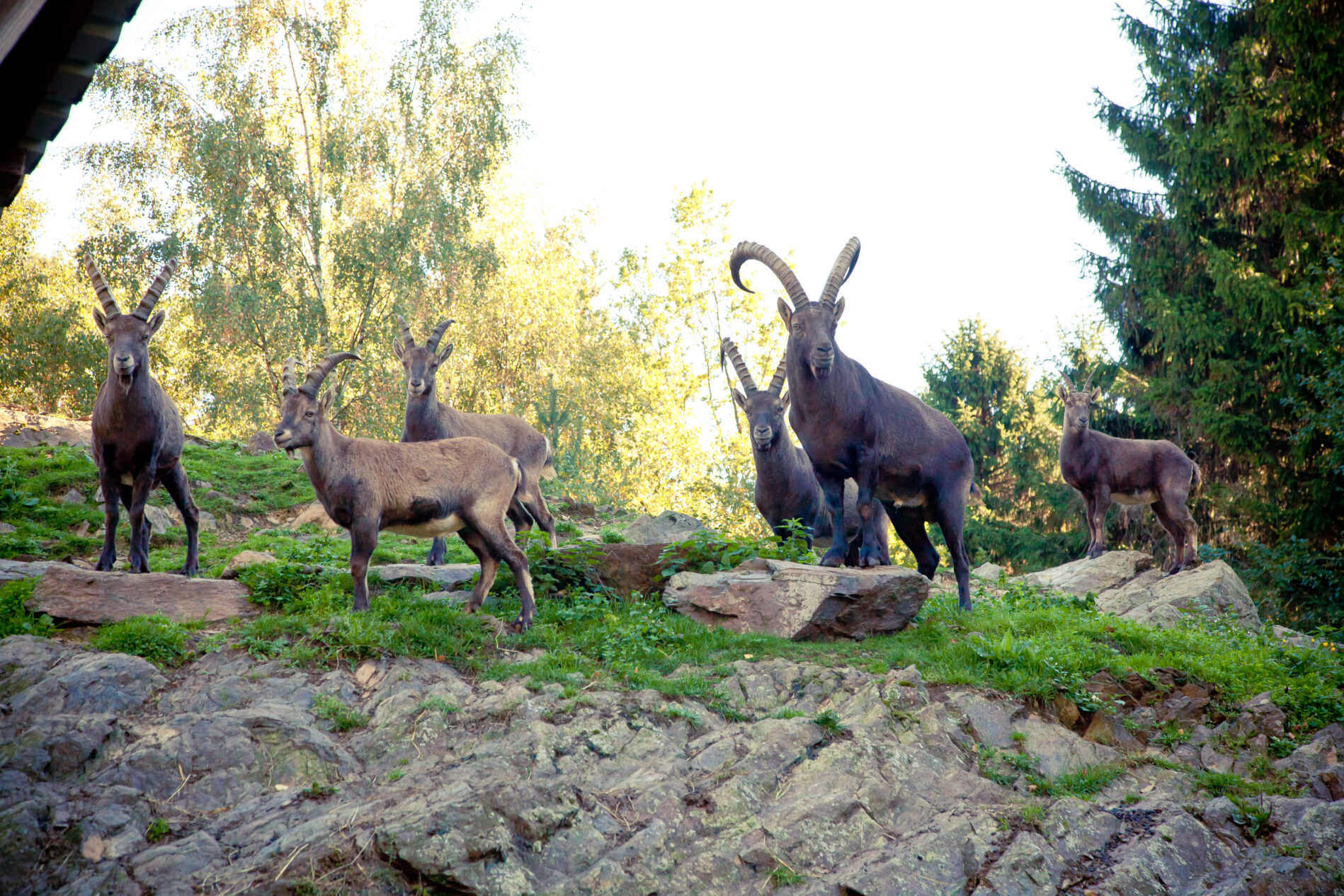
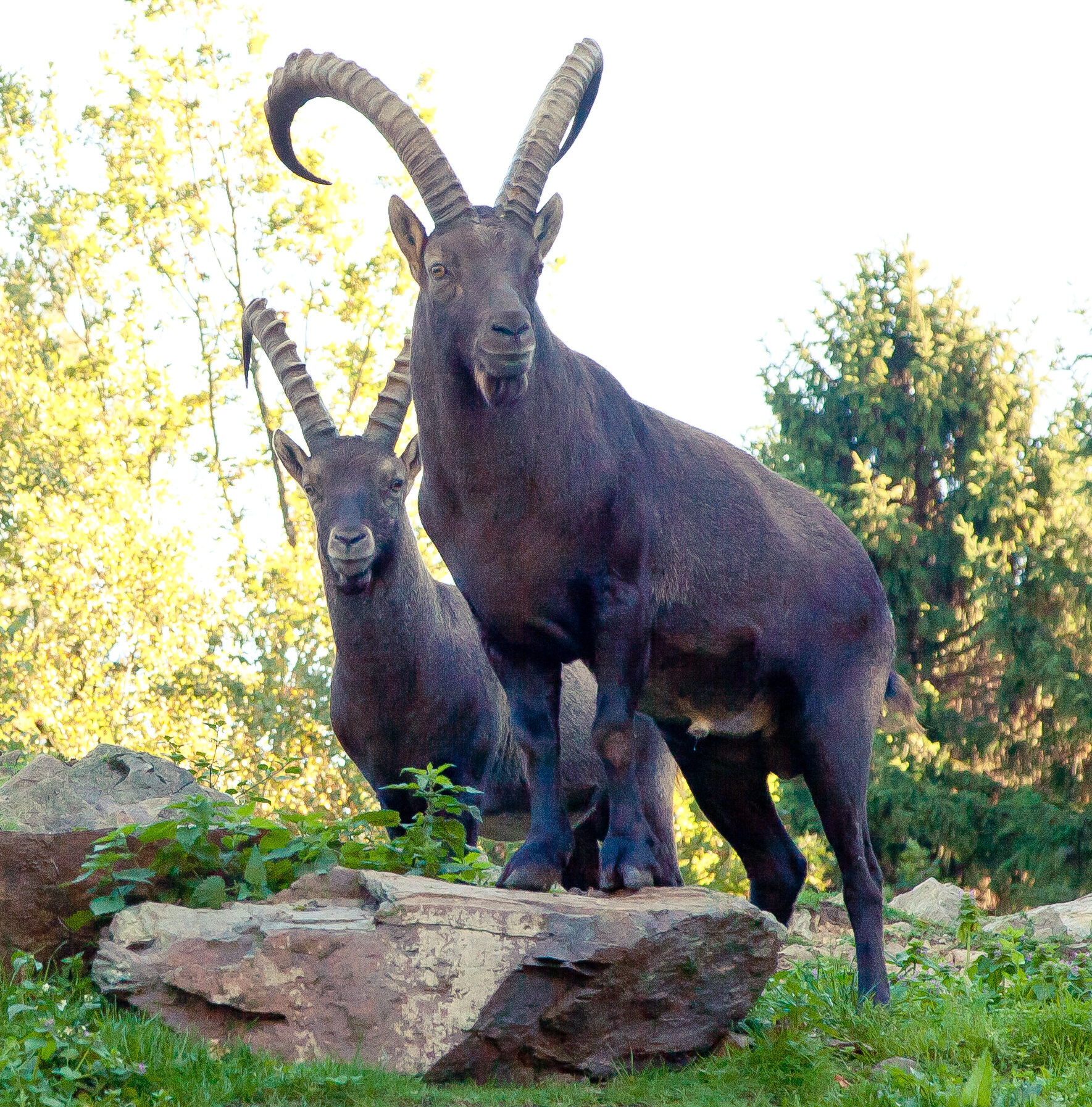
Our ibex
Size: Length: 1.1-1.7 m Height at the withers: 70-90 cm – Weight: 35-110 kg- Longevity: 20 years – Class: Mammalia – Order: Artiodactyla – Family: Bovidae – Genus: Capra – Species: Capra ibex Distribution: Southern Europe, Western and Southern Asia, Northern Africa Habitat: Mountains Social structure: solitary or group Gestation: 168 days Number of offspring: 1, on rare occasions 2 Diet: Herbivore IUCN conservation status: LC, least concern.
ANECDOTE
The male ibex fights to dominate the herd and the females. Rivals stand on their hind legs, then lunge forward and clash horns fiercely. The horns of males can measure up to nearly one metre.
Glu, Finn & Muffy
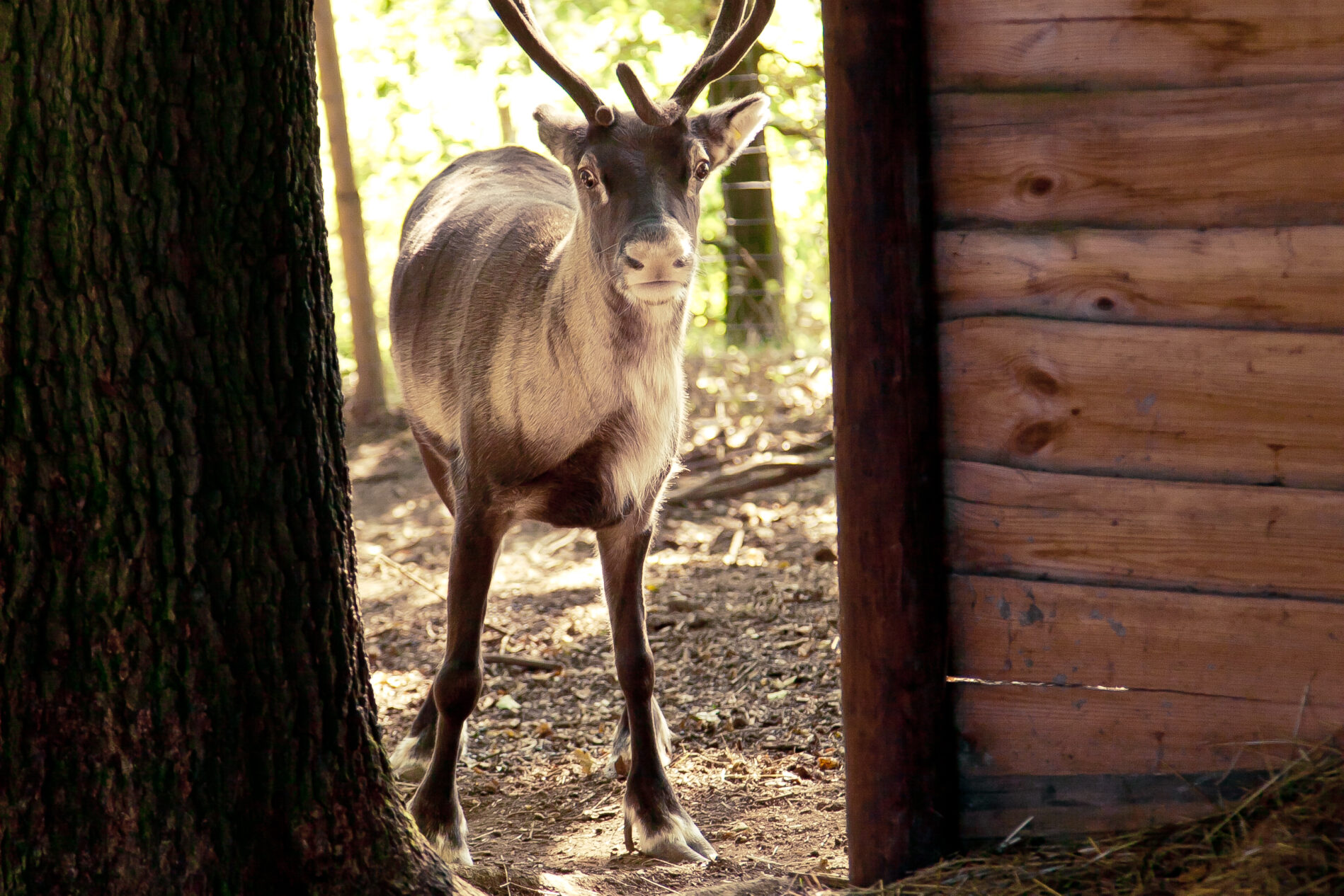
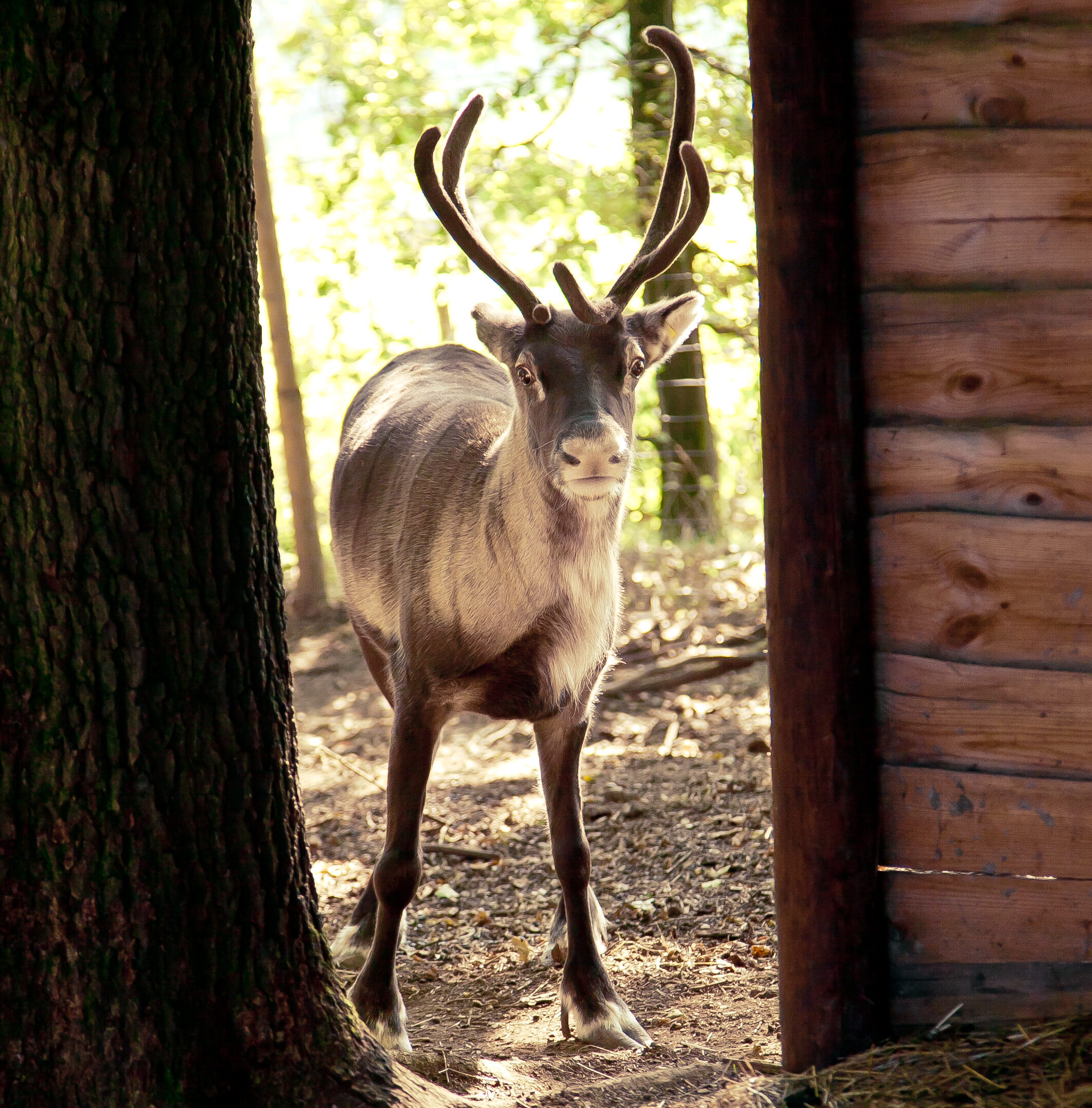
Our reindeer
Size: Length: 1.2-2.2 m Height at the withers: 1-1.3 m – Weight: 60-180 kg – Longevity: 15 years, 20 years in captivity – Class: Mammalia – Order: Artiodactyla – Family: Cervidae – Genus: Rangifer – Species: Rangifer tarandus – Distribution: Northern Europe, North Asia, North America – Habitat: Boreal forests and tundra – Social structure: Group – Gestation: 210-240 days – Number of offspring: 1, on rare occasions 2 – Diet: Herbivore – IUCN conservation status: LC, least concern
ANECDOTE
The reindeer is the only deer species in which the female also has antlers.
Aya, Barbie & Moon
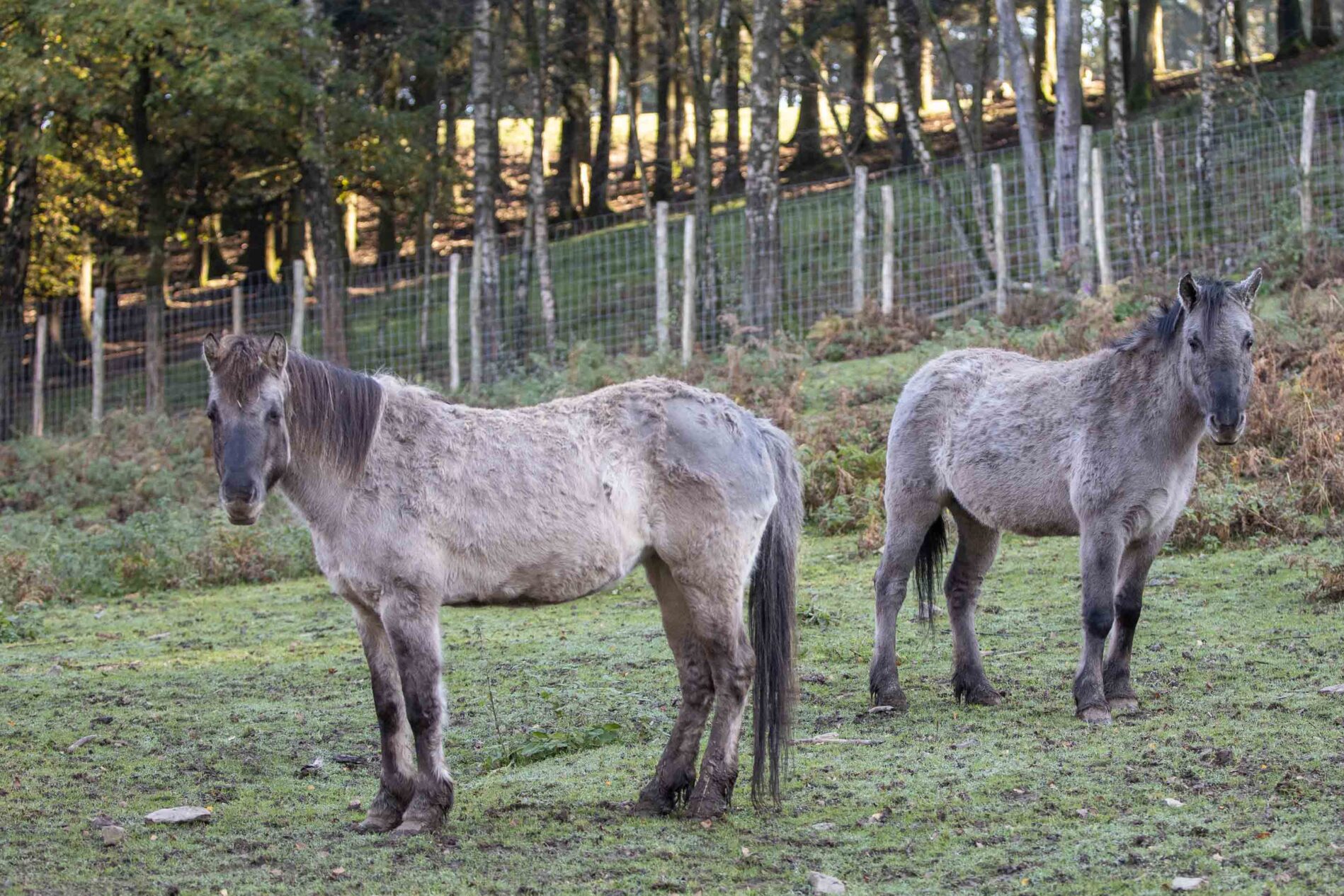
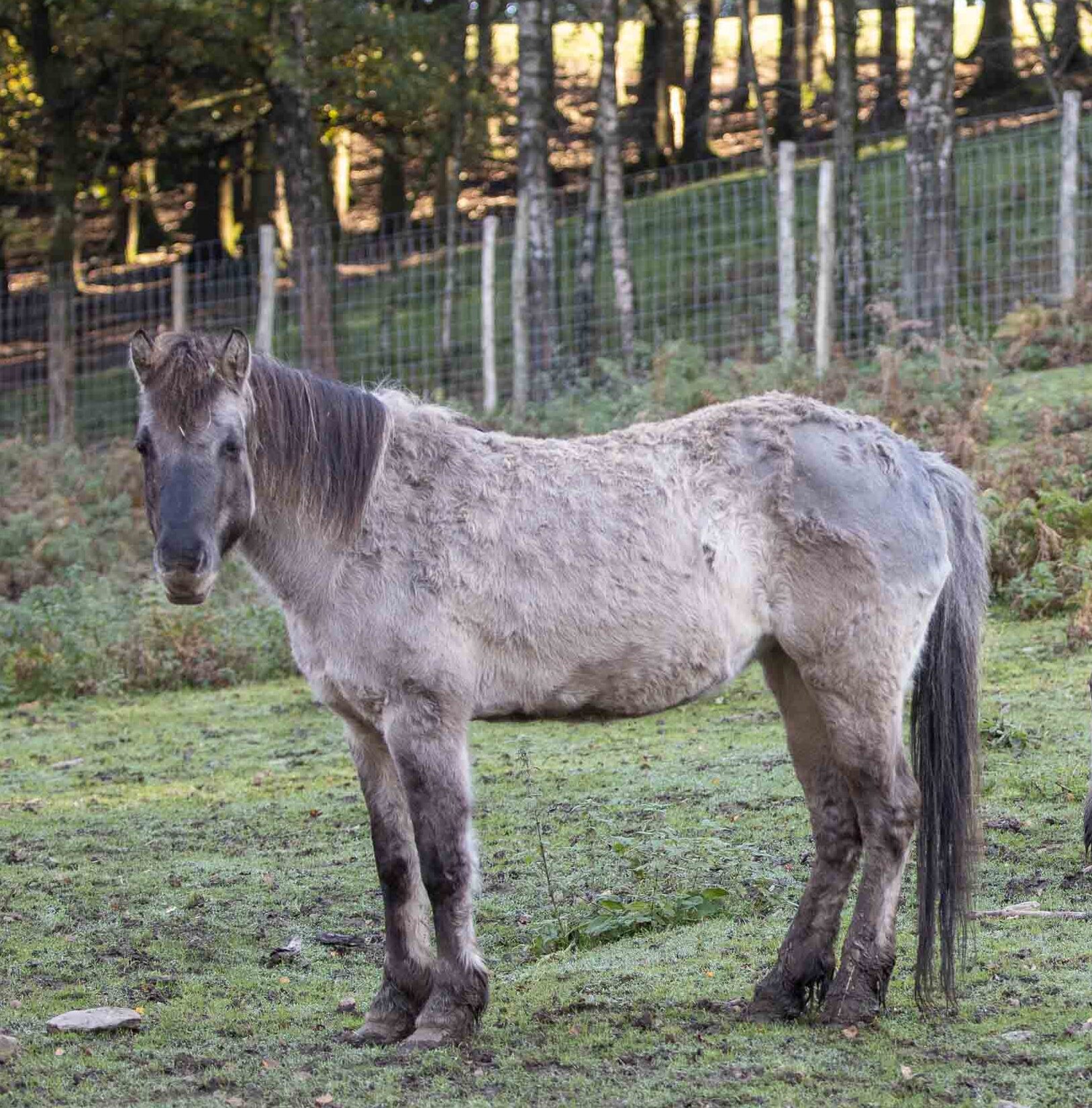
Our tarpan horses
Size: Height: 1.2-1.4 m Length: 2-2.6 m – Weight: 200-350 kg – Longevity: 20 years – Class: Mammalia – Order: Perissodactyles – Family: Equidae – Genus: Equus – Species: Equus ferus – Distribution: Europe – Habitat: Grasslands and livestock farming- Social structure: Herd – Gestation: 11 months – Number of offspring: 1 – Diet: Herbivore – IUCN conservation status: None.
ANECDOTE
The Polish Konik is a horse breed that has been brought back. It’s the closest relative to its ancestor, the Tarpan horse, a breed that has been extinct since 1887.
Fondue & Raclette
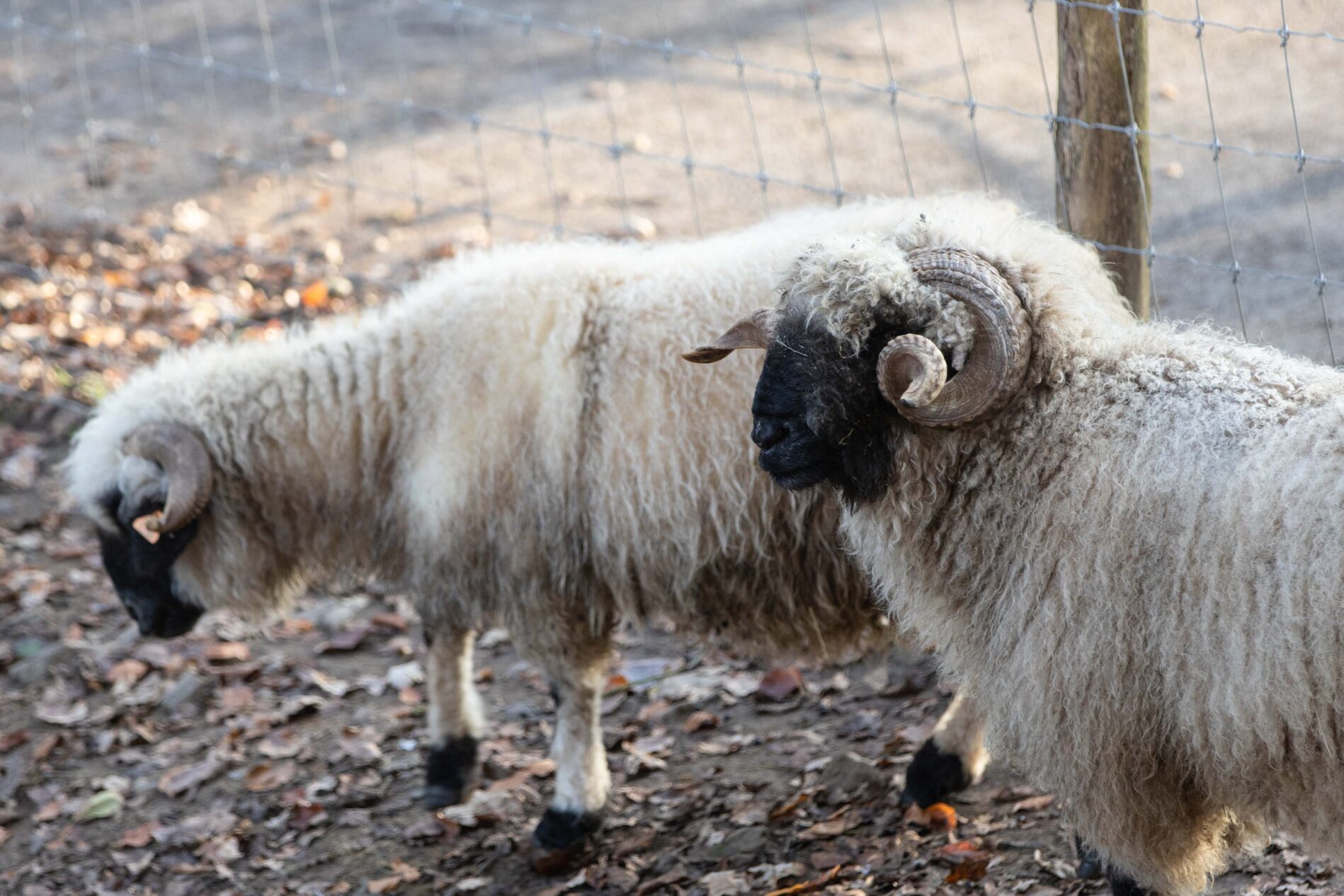
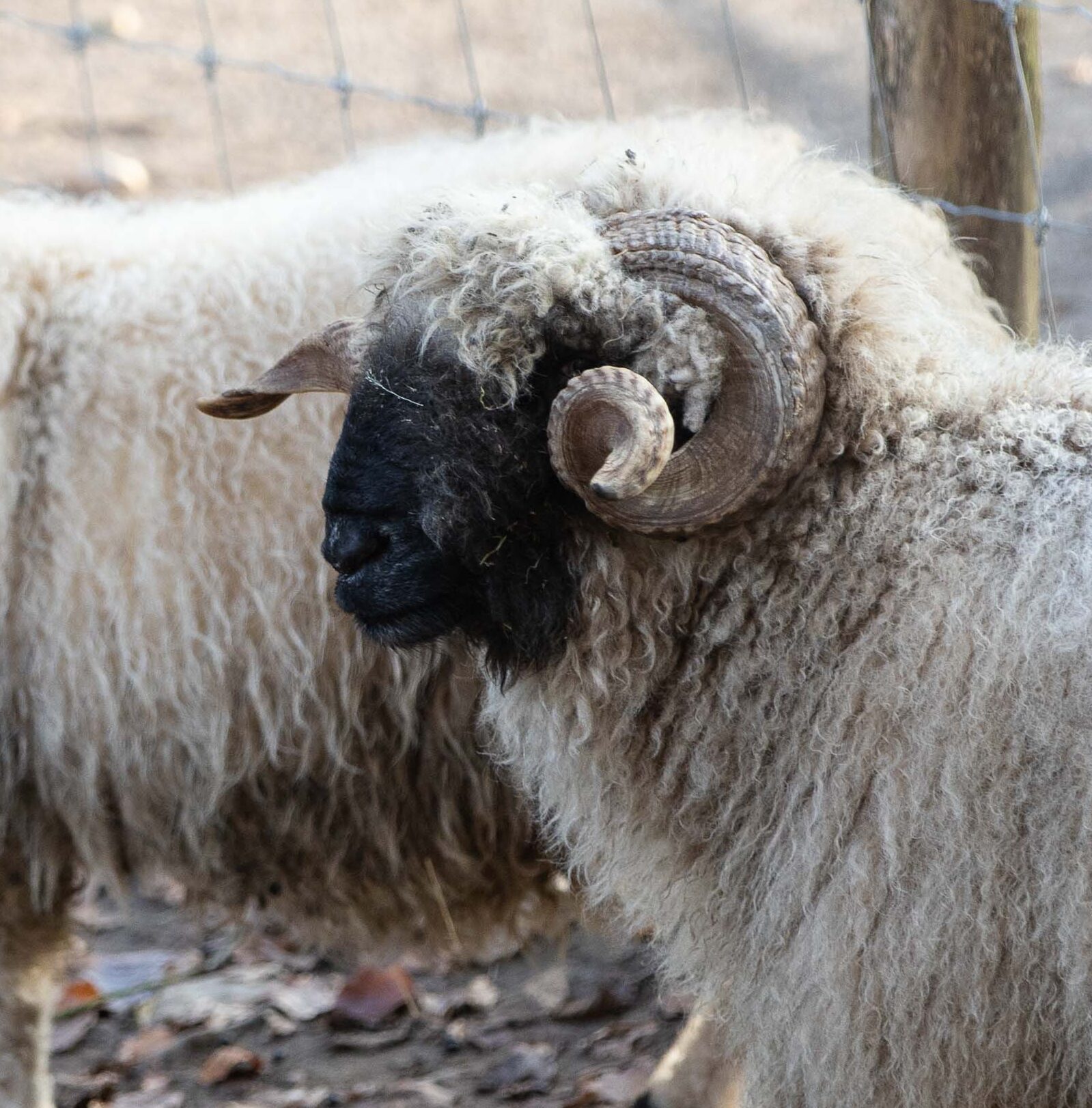
Our Valais blacknose sheep
Size: Height: 72-80 cm Length: 1.2-1.5 m – Weight: 70-120 kg – Longevity: 10-12 years – Class: Mammalia – Order: Articodactyles – Family: Bovidae – Genus: Ovis – Species: Ovis Aries – Distribution: Valais, Switzerland – Habitat: Grasslands and mountains – Social structure: Herd – Gestation: 20 weeks – Number of offspring: 1 to 2 – Diet: Herbivore – IUCN conservation status: Not endangered.
ANECDOTE
The Valais Blacknose sheep produces up to 4 kg of wool per year. The wool grows so quickly that the sheep have to be sheared twice a year. It’s also too thick to be used for clothing and is therefore used for rugs and wall hangings.
Cannelloni, Linguine, Rigatoni & Tortelini
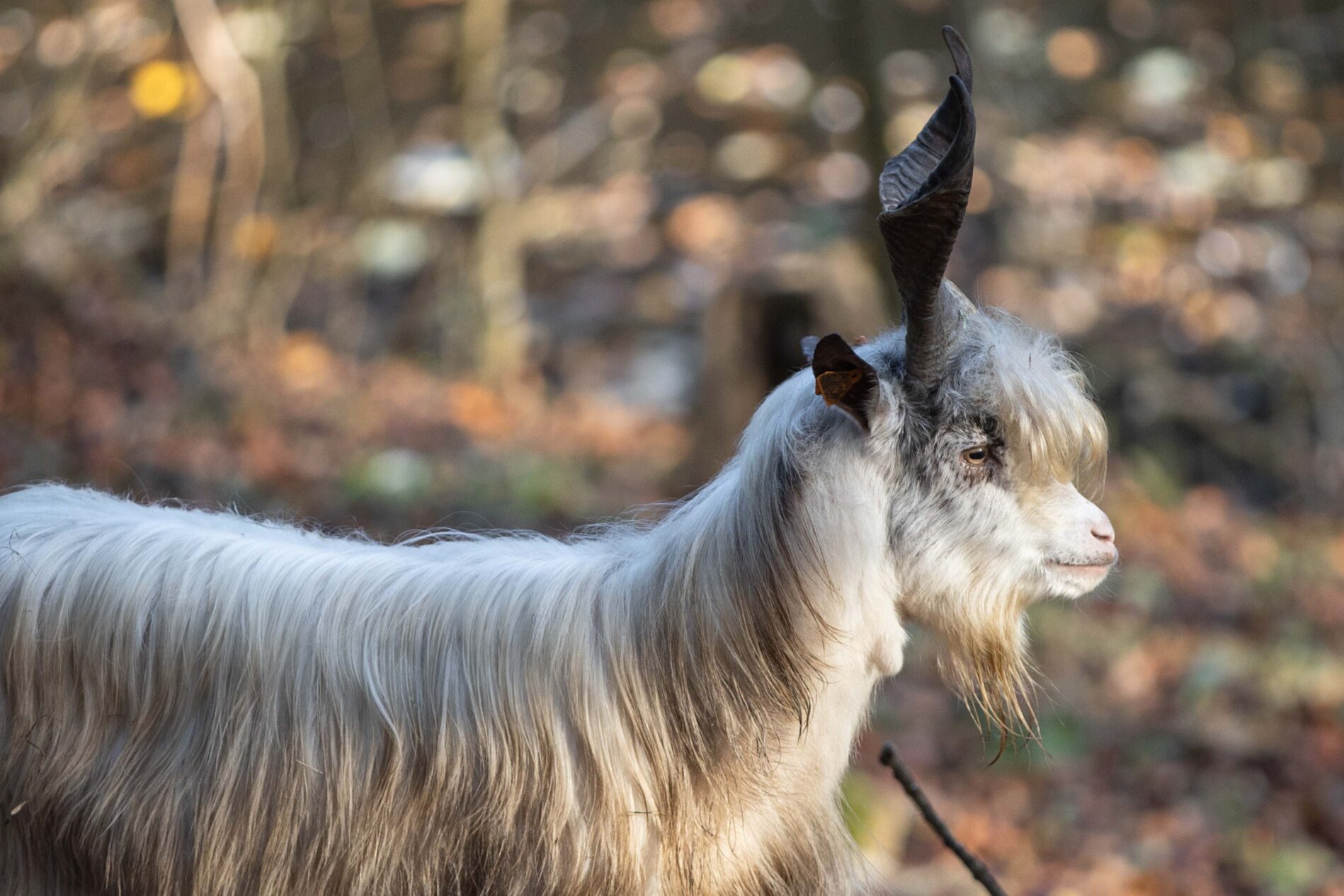
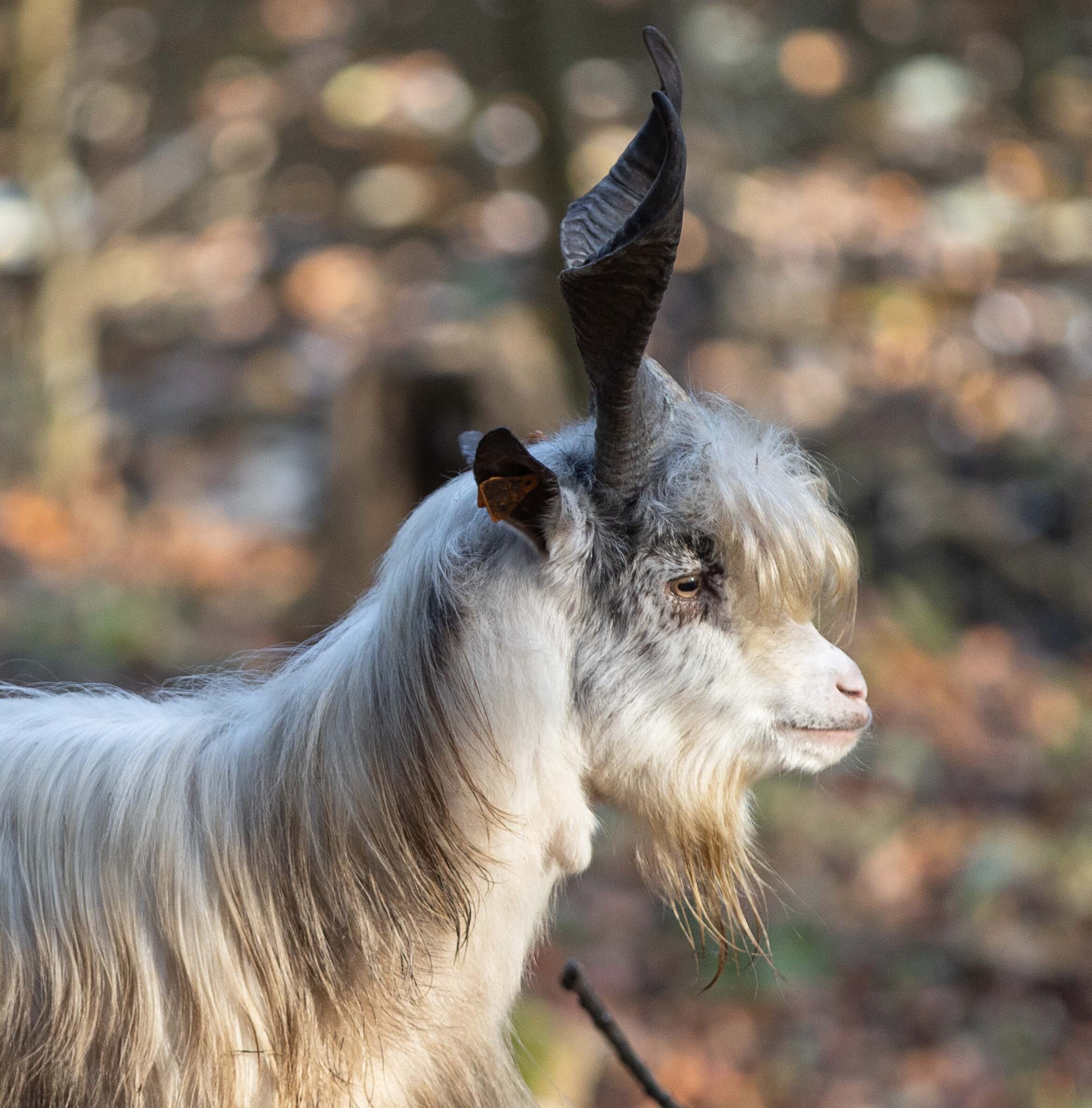
Our Girgentana goats
Size: Height: 80-85 cm Length: 1.2-1.5 m – Weight: 40-60 kg – Longevity: 15 years – Class: Mammalia – Order: Articodactyles – Family: Capra – Genus: Odocoileus – Species: Capra Aegargus Hircus – Distribution: Italy and Sicily – Habitat: Mountains, plateaus and plains – Social structure: Herd – Gestation: 5 months – Number of offspring: 1-2 – Diet: Herbivore – IUCN conservation status: EN, endangered.
ANECDOTE
The Girgentana goat is nicknamed the “unicorn goat” because of its horns. It produces between 400 and 500 litres of milk per year.
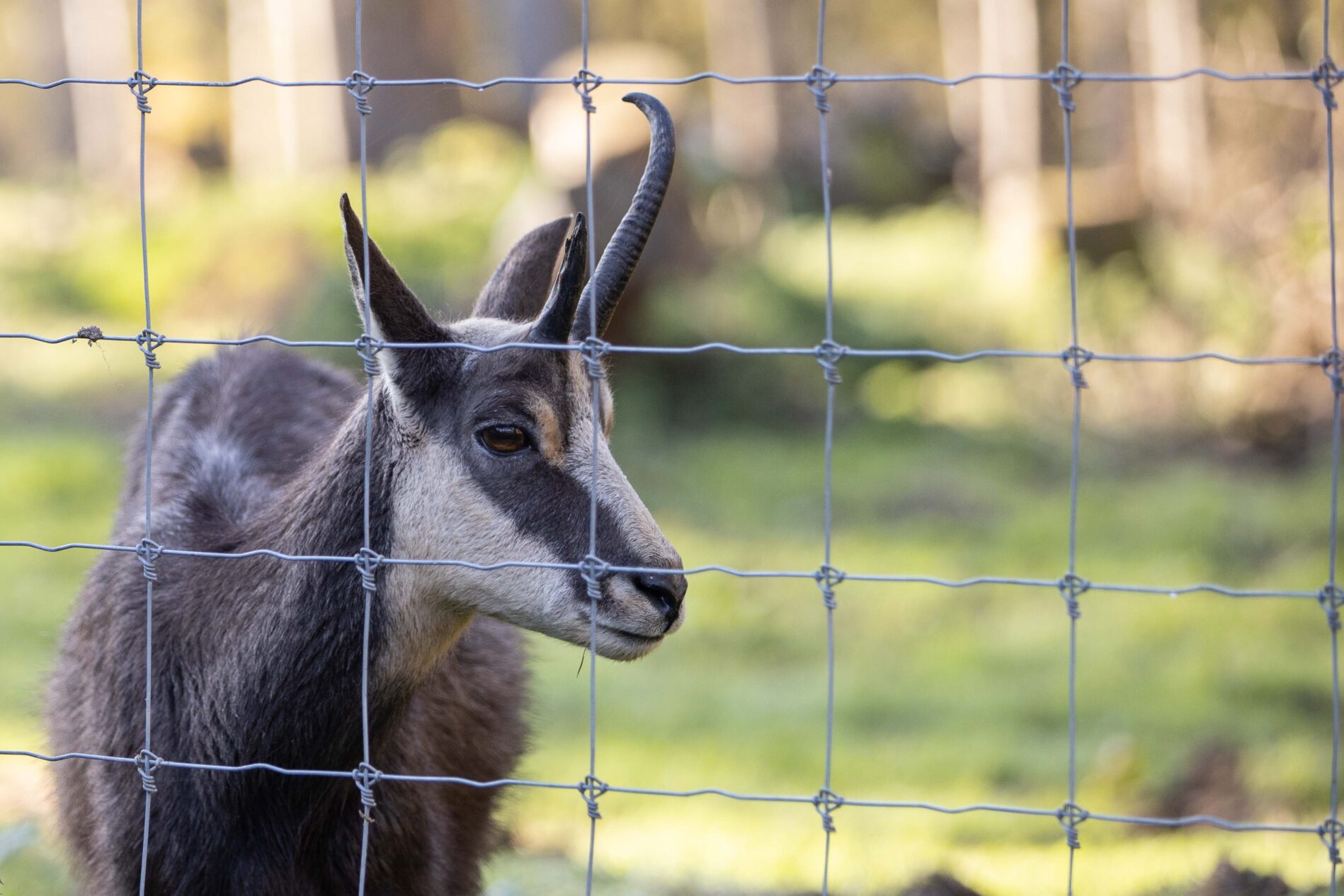
Cosmos, Crocus, Lotus & Mimosa
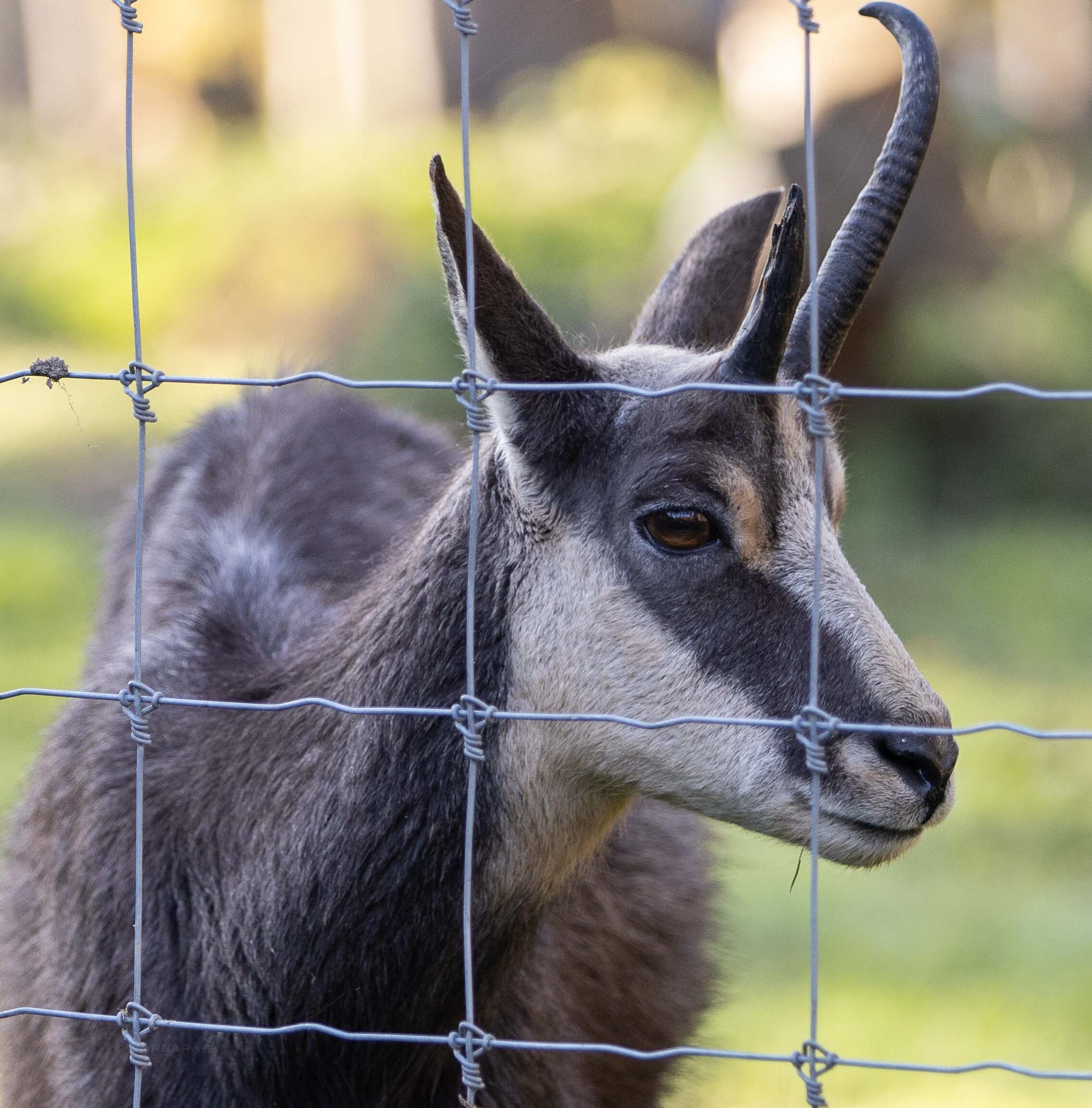
Our chamois
Size: Length: 90 cm-1.4 m Height at the withers: 65-85 cm – Weight: 20-50 kg – Longevity: 15 years – Class: Mammalia – Order: Artiodactyla – Family: Bovidae – Genus: Rupicapra – Species: Rupicapra rupicapra – Distribution: Europe, Western Asia – Habitat: Mountains – Social structure: Solitary or group – Gestation: 23 weeks = 161 days – Number of offspring: 1, on rare occasions 2 (twins) – Diet: Herbivore – IUCN conservation status: LC, least concern
ANECDOTE
The chamois is an agile climber, capable of leaping 2 metres high and 6 metres in distance, and reaching speeds of 50 km/hour.
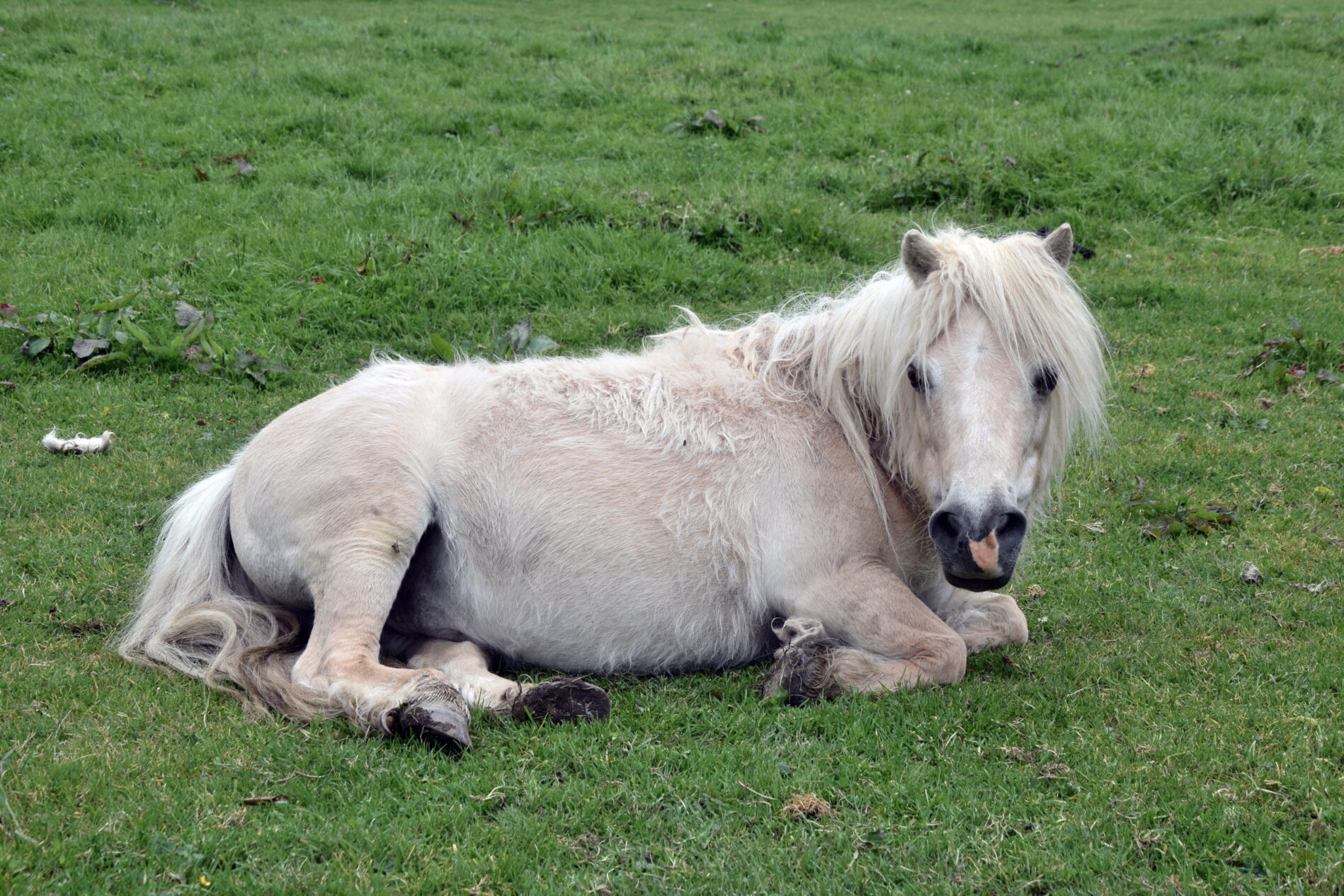
Pancho & Petit Pot
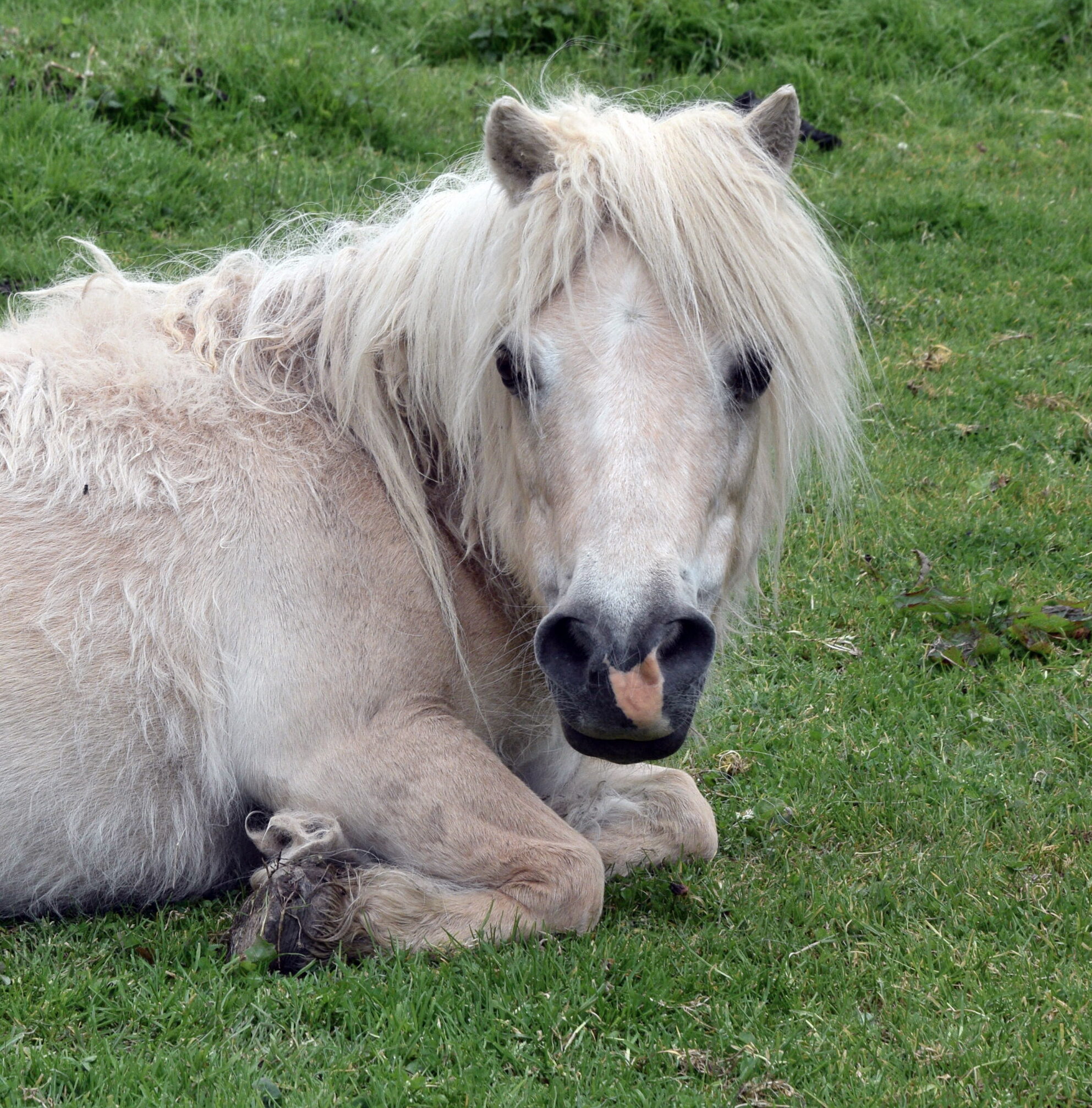
Our ponies
Size: Height: 1.1-1.3 m Length: 80 cm-1.3 m Weight: 100-250 kg – Longevity: Up to 35 years – Class: Mammalia – Order: Perissodactyla – Family: Equidae – Genus: Equus – Species: Equus caballus – Gestation: 11 months – Number of offspring: 1 – Diet: Herbivore.
ANECDOTE
The Shetland pony is the smallest of the equidae. The largest is the Shire. Our ponies are called Prunelle, Pancho and Pat or Petit pot. Like horses, ponies’ teeth grow continuously and wear down as they chew their fodder.
Céline & René
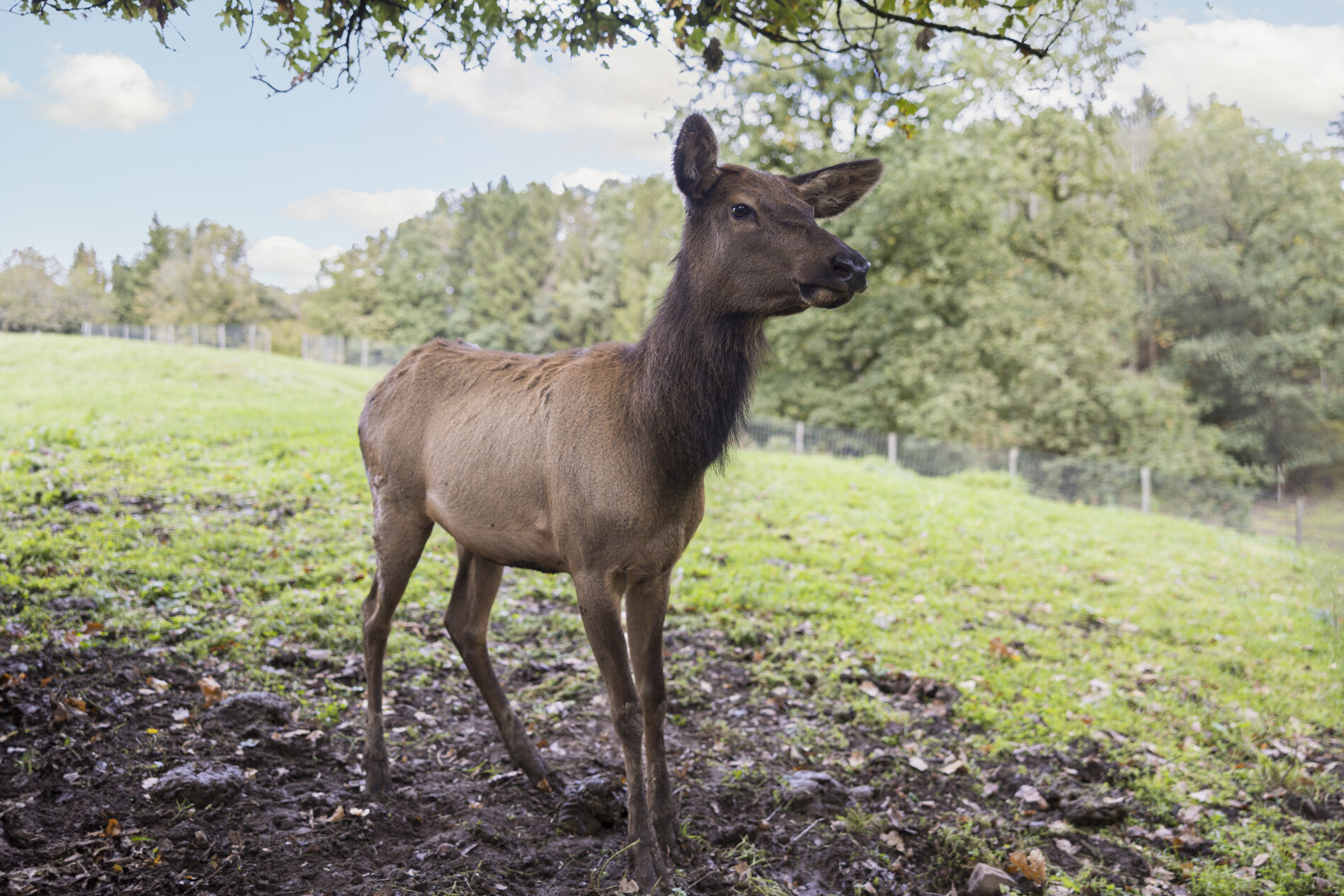
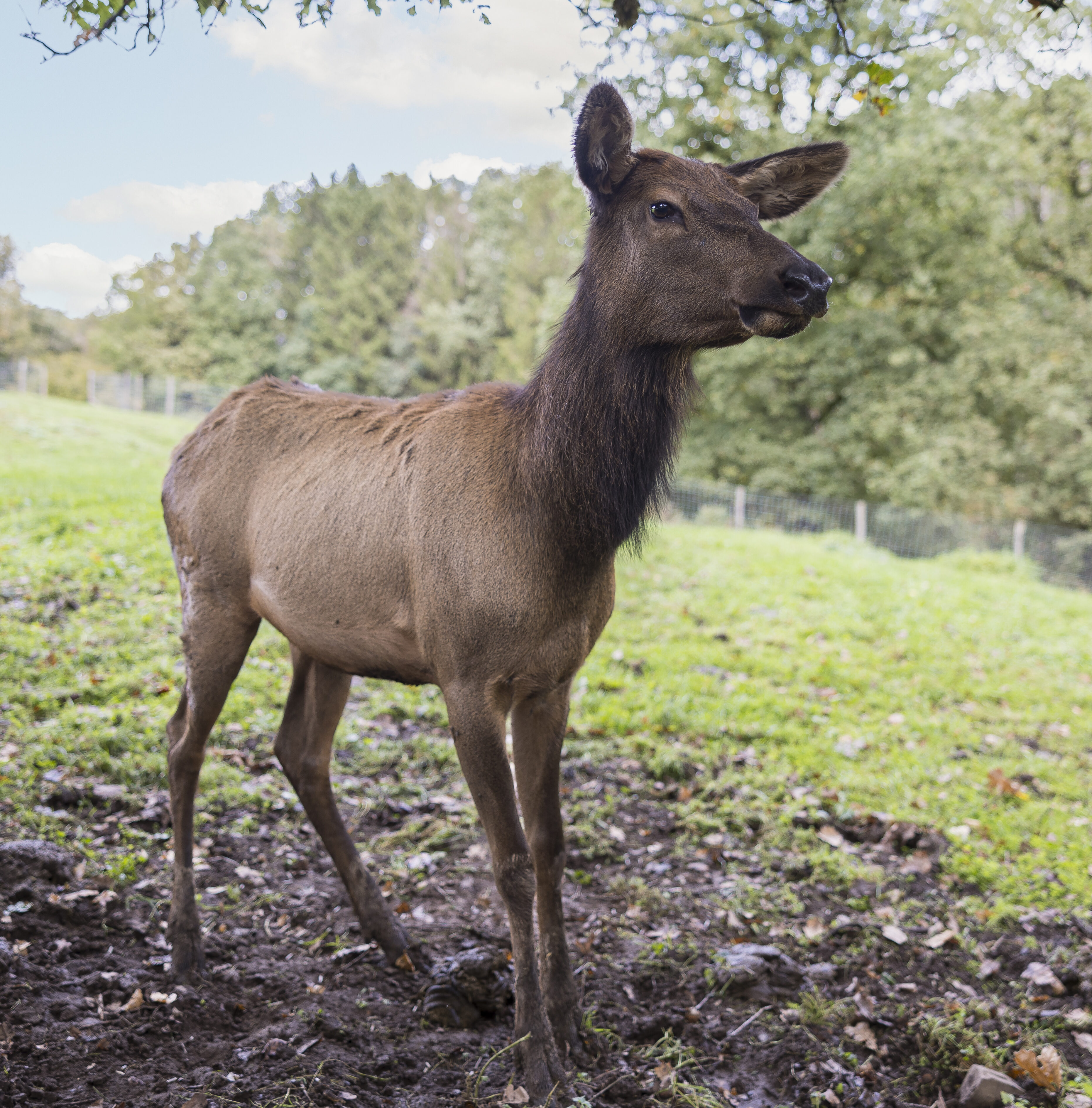
Our wapitis
Length: 2-2.5 m – Height: 1.3-1.5 m – Weight: 200-350 kg – Longevity: 20 years – Class: Mammalia – Order: Cetartiodactyla – Family: Cervidae – Genus: Cervus – Species: Cervus canadensis – Habitat: Forests and mountains – Social structure: Herd – Gestation: 240-260 days – Number of offspring: 1 – Diet: Herbivore IUCN conservation status: LC, least concern
ANECDOTE
Wapiti means “white rump” in the language of the Shawnee, a Native American tribe.
Jackson & Myo
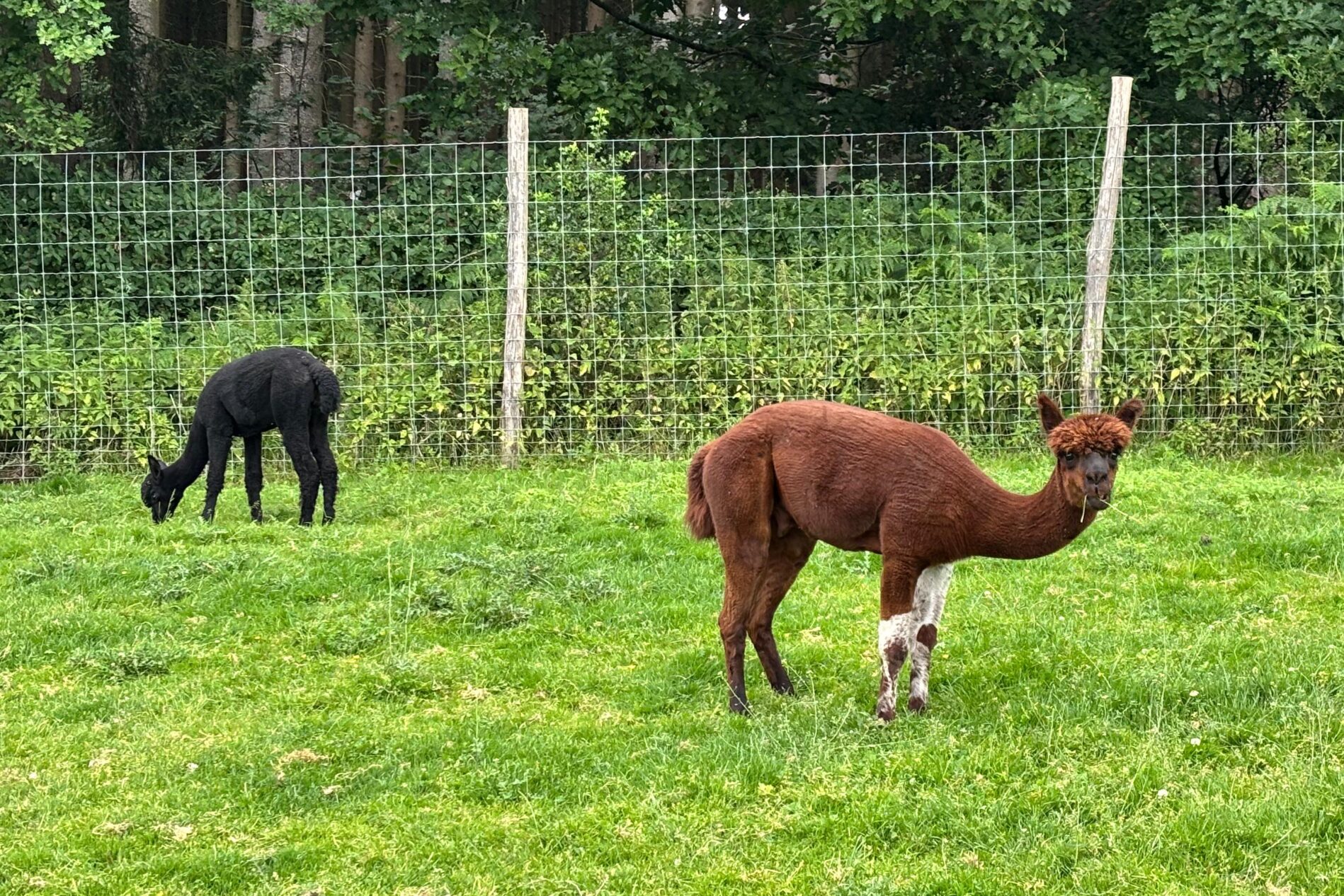
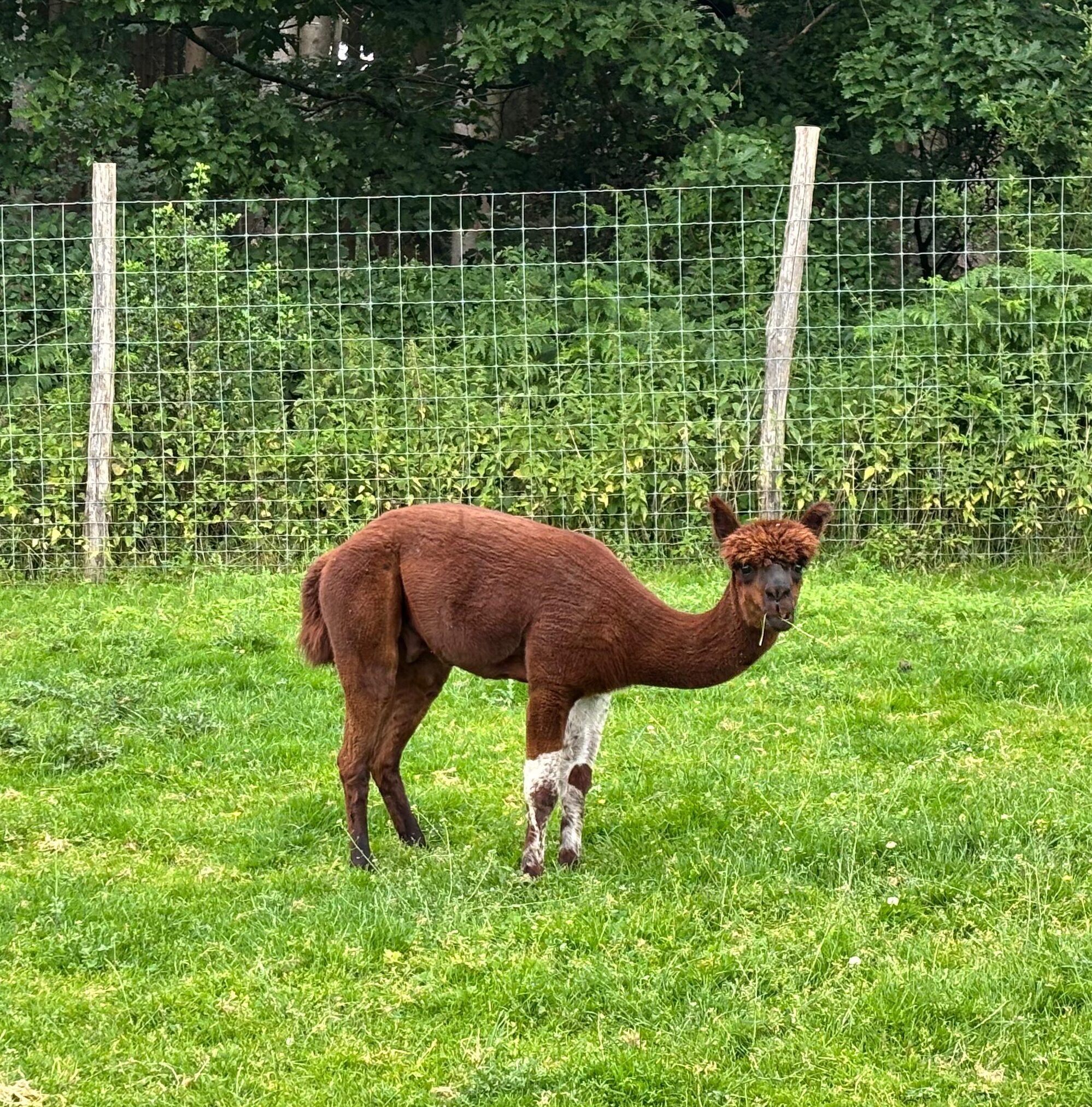
Our alpacas
Length: 75 cm-1.3 m – Height: 90 cm-1 m – Weight: 70-80 kg – Longevity: 20-30 years – Class: Mammalia – Order: Artiodactyla – Family: Camelidae – Genus: Vicugna – Species: Pacos – Habitat: Andes mountains – Social structure: Group – Gestation: 11 months – Number of offspring: 1 – Diet: Herbivore IUCN conservation status: LC, least concern
ANECDOTE
Five times warmer than sheep’s wool, alpaca wool is also hypoallergenic because it doesn’t contain lanolin.
Shaun, Shirley & Timmy
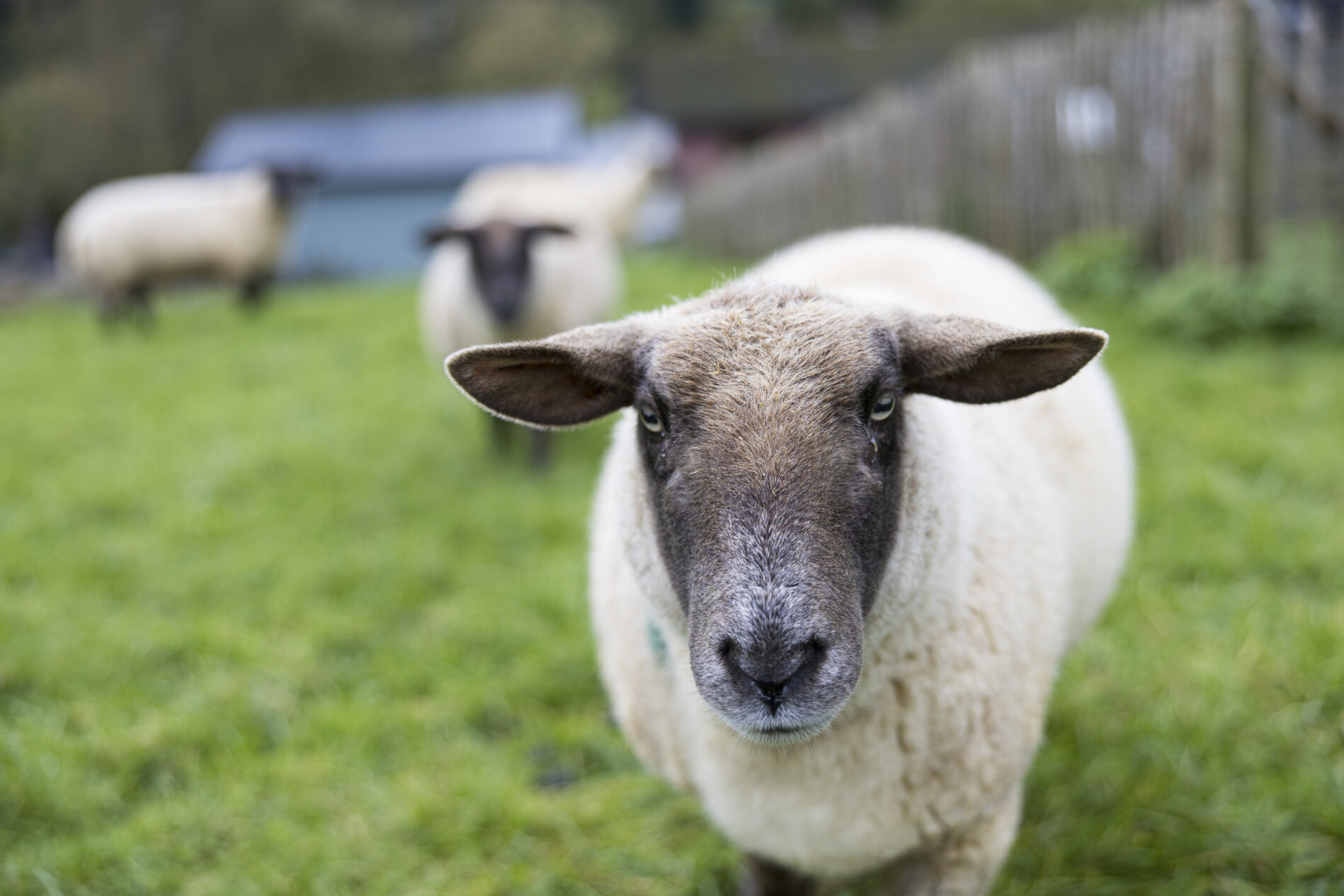
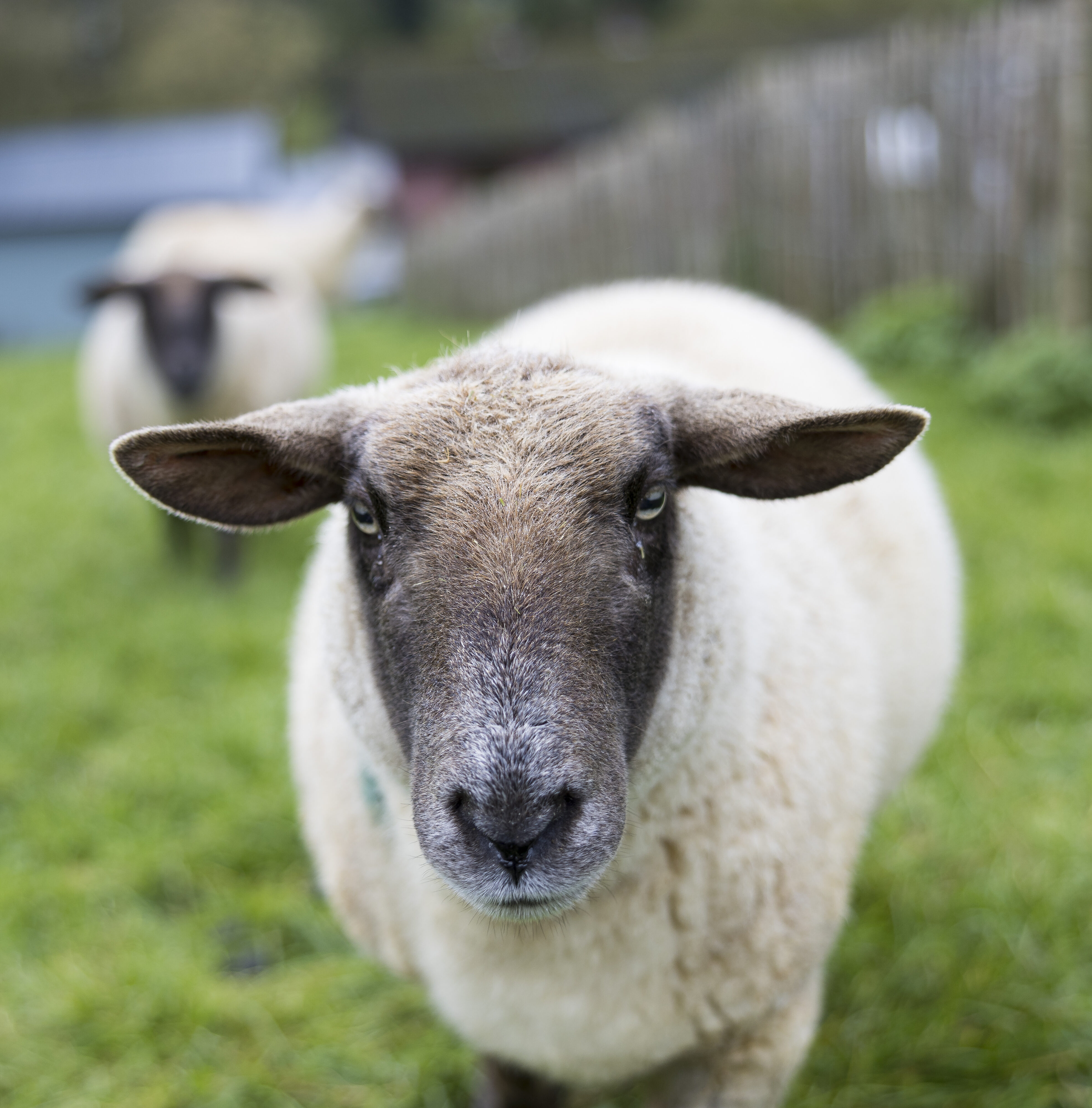
Our black-headed sheep
Size: Height: 60 cm-1 m Length: 1-1.5 m – Weight: 35-150 kg- Longevity: Up to 12 years Class: Mammalia – Order: Artyodactyles – Family: Bovidae – Genus: Ovis – Species: Ovis aries – Gestation: 148 days – Number of offspring: 1-2 – Diet: Herbivore.
ANECDOTE
Most sheep produce wool every year. Here we shear them at the end of spring. In some species, both males and females have horns, while in others it is only the males. Sometimes neither have horns.
Caro, Noé & Co
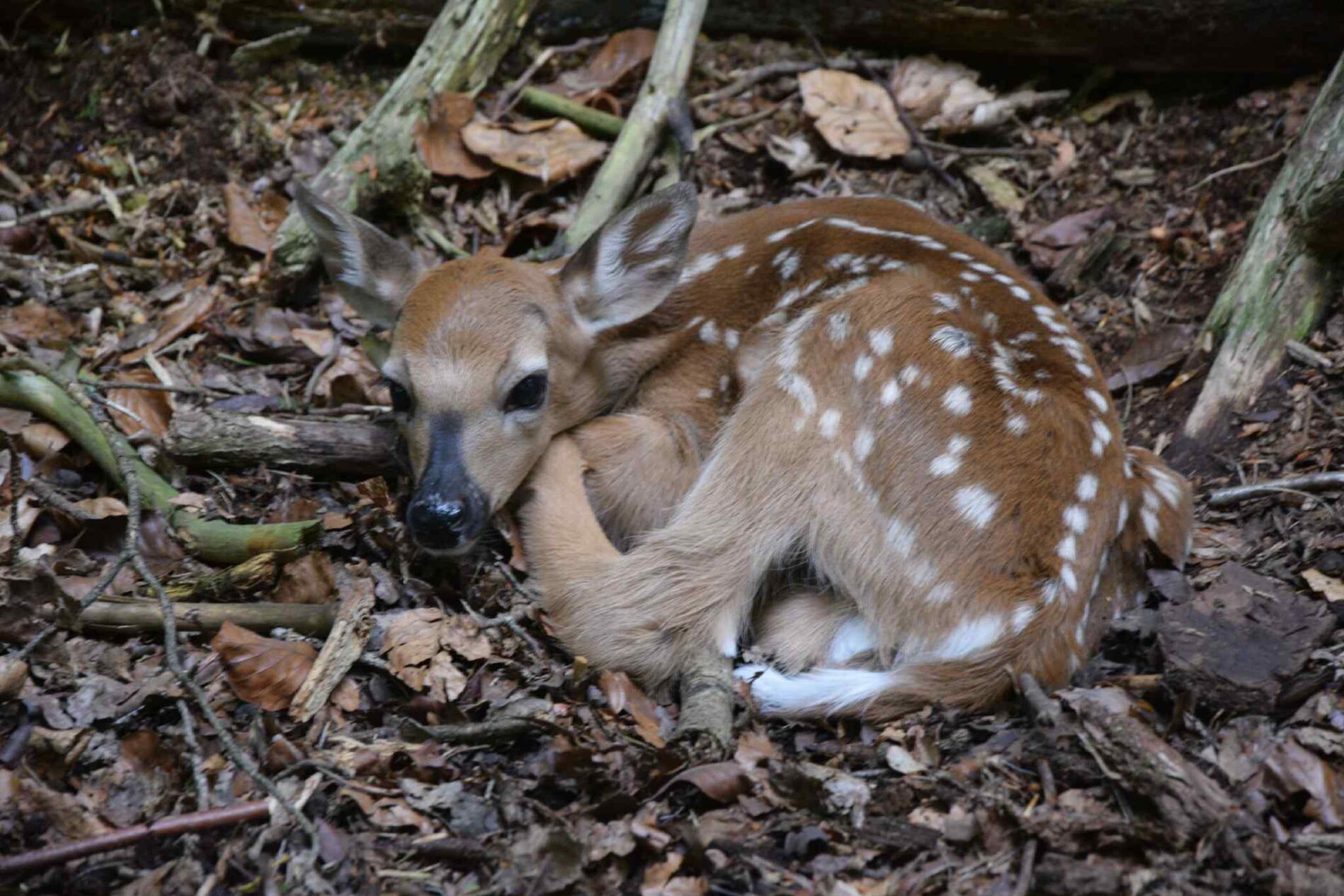
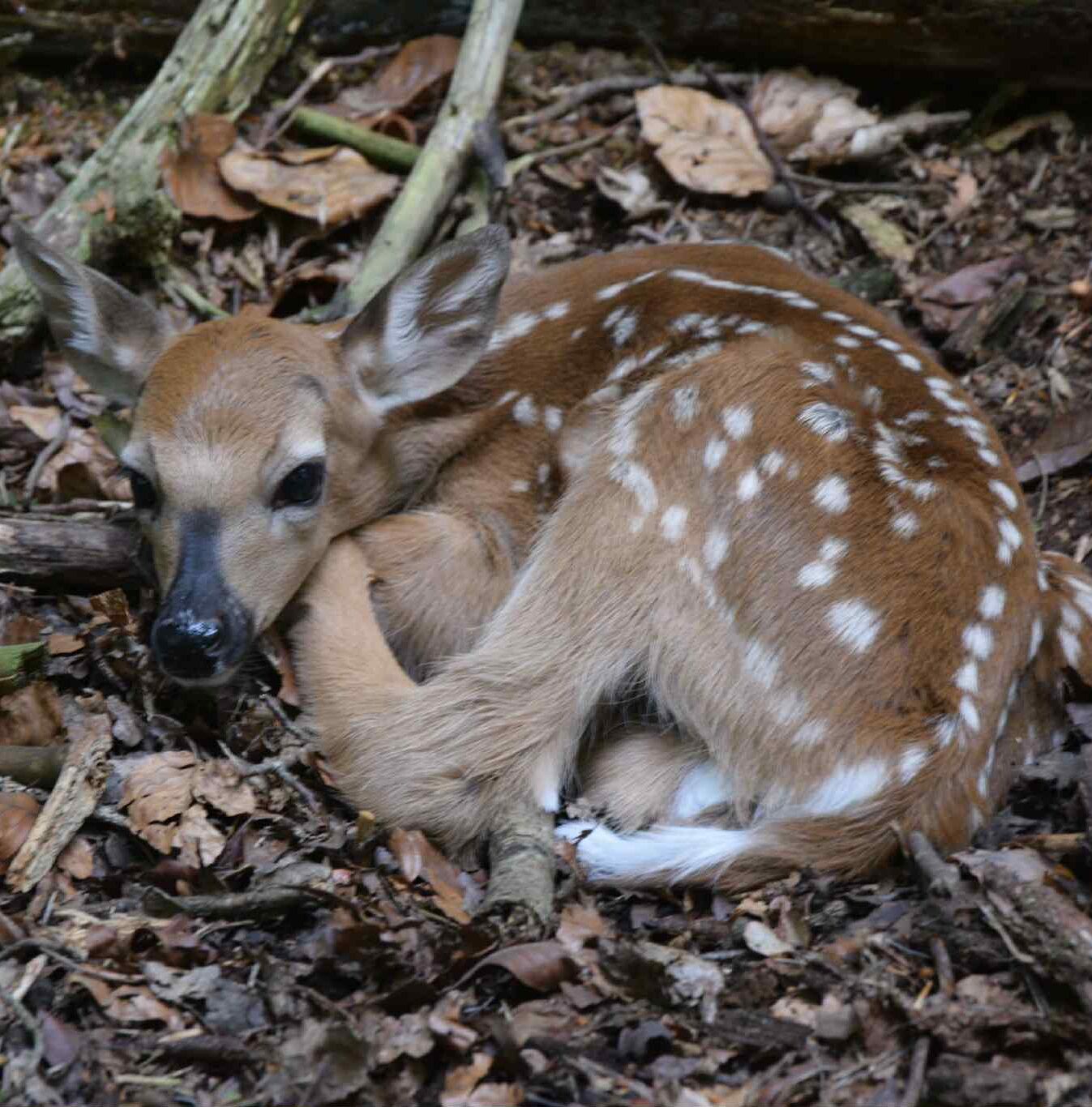
Our white-tailed deer
Length: 2 m – Height: 1 m – Weight: 40-90 kg – Longevity: 6-8 years – Class: Mammalia – Order: Cetartiodactyla – Family: Cervidae – Genus: Odocoileus – Species: Odocoileus virginianus – Habitat: Rocky mountains, forests, marshes, clearings – Social structure: Herd – Gestation: 7 months – Number of offspring: 1 – 3 – Diet: Herbivore IUCN conservation status: LC, least concern
ANECDOTE
The white-tailed deer is commonly referred to as “chevreuil” (roe deer) in Quebec, Louisiana and French-speaking regions of Canada.
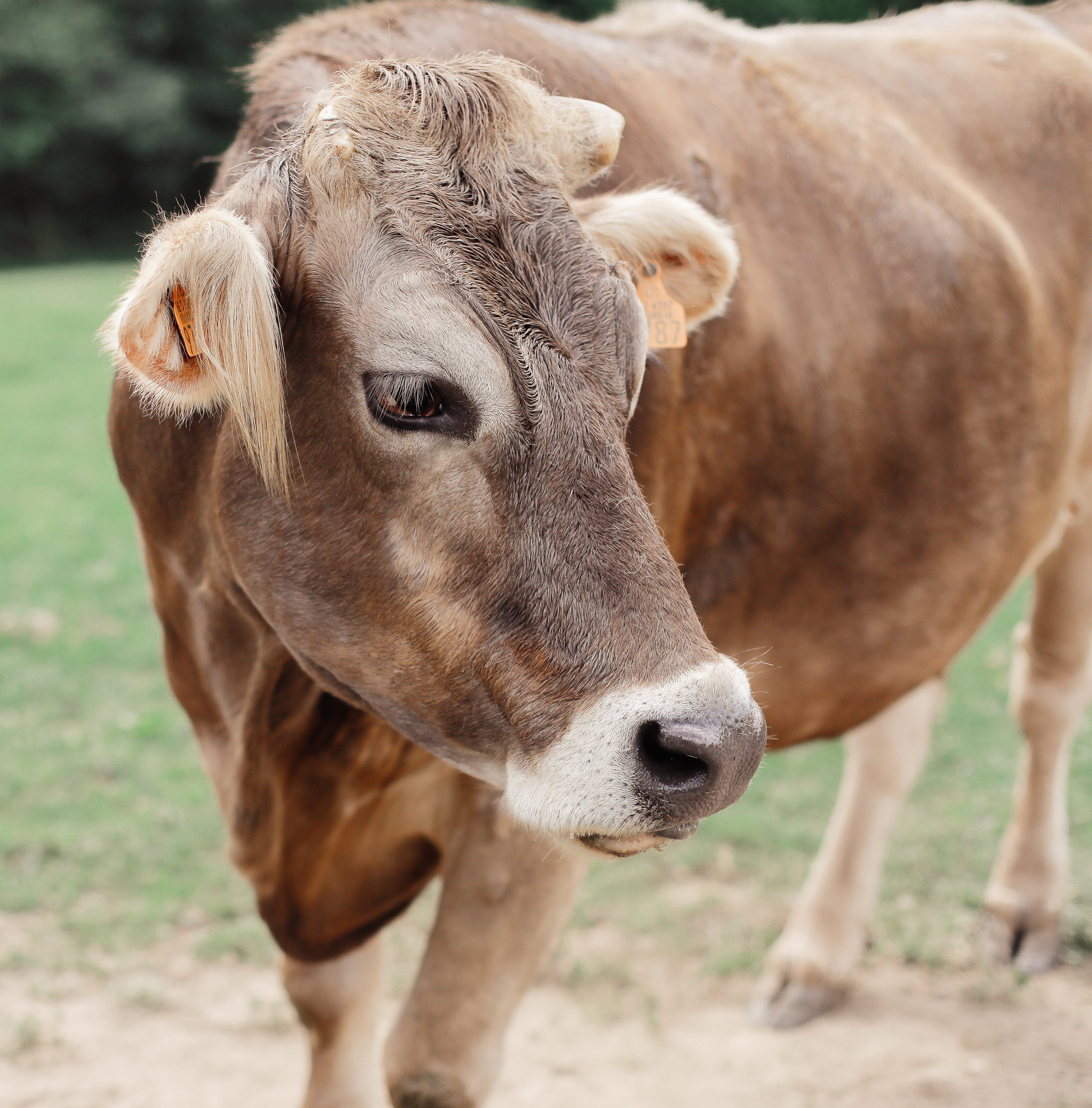
Aurélia
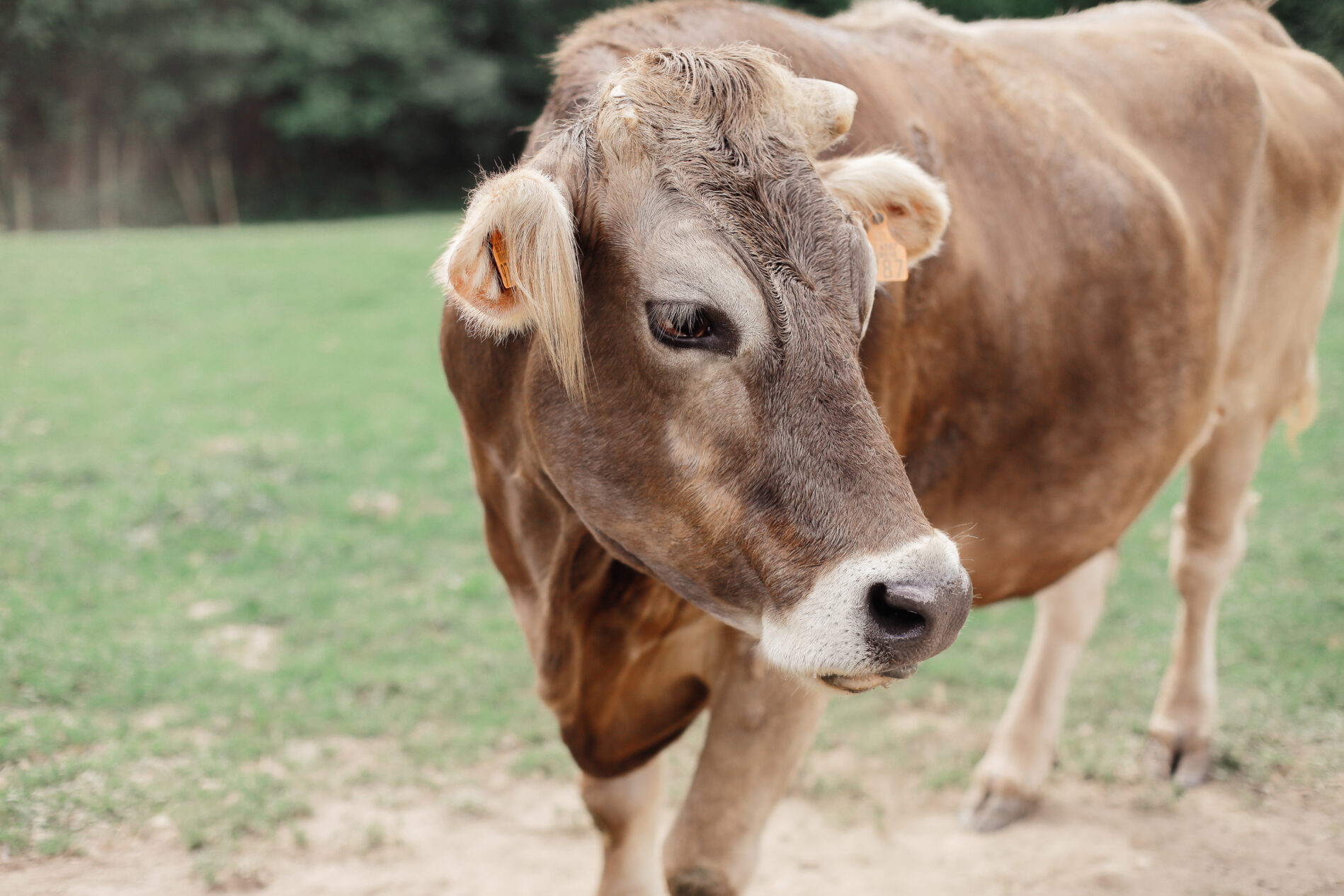
Our Swiss cows
Size: Height: 75 cm-1.1 m Length: 1.5-2.5 m – Weight: 500-1200 kg – Longevity: Up to 20 years – Class: Mammalia – Order: Artiodactyla – Family: Bovidae – Genus: Bos – Species: Bos taurus. – Gestation: 9 months – Number of offspring: – Diet: Herbivore.
ANECDOTE
Our cow is called Aurélia, she’s a Brown Swiss cow. That’s the “Milka” cow, well known thanks to the chocolate. The spotted cows that we’re used to seeing are called Holsteins. Like our fingerprints, each cow’s spots are unique.
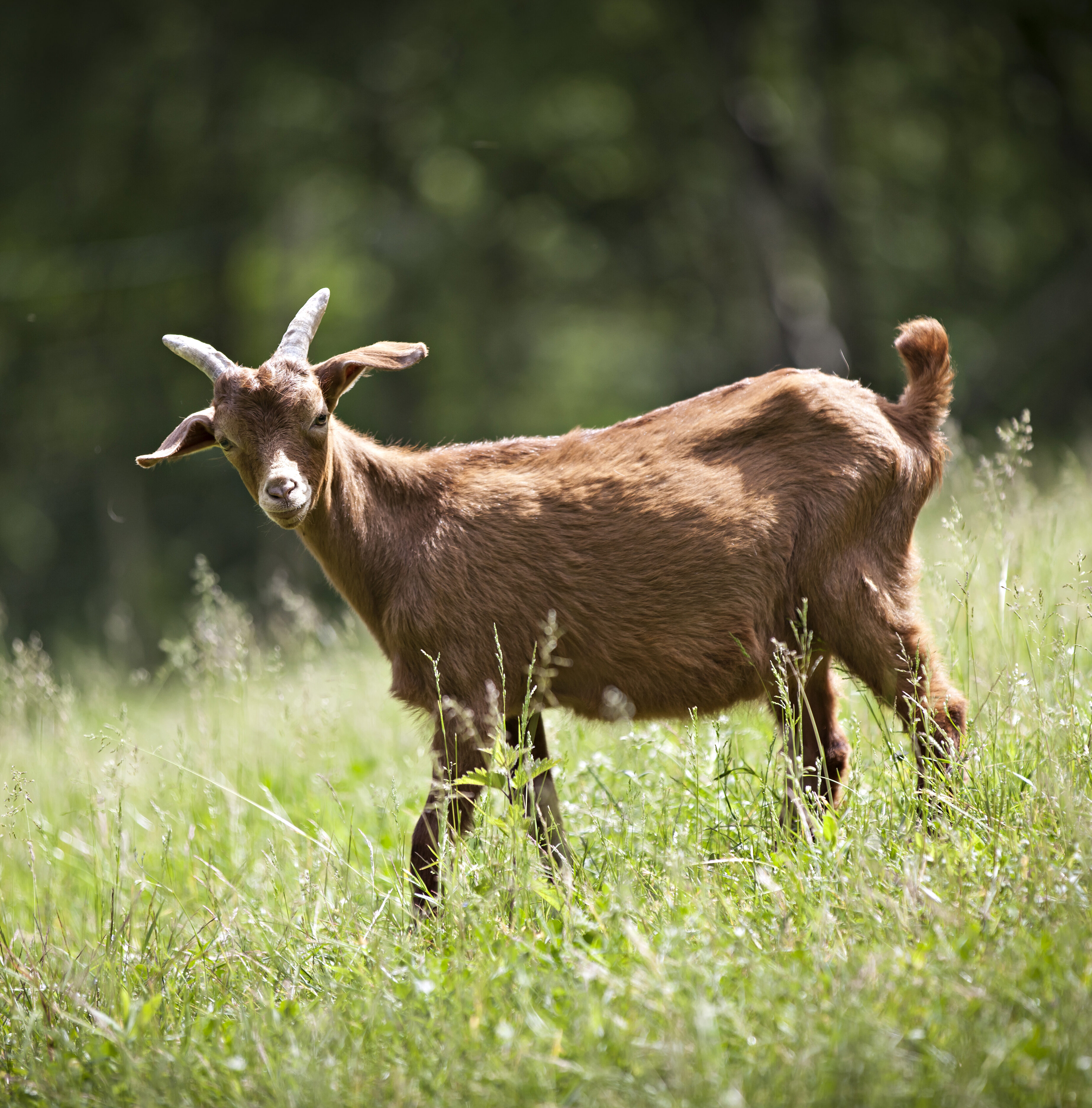
Anouk & Justine
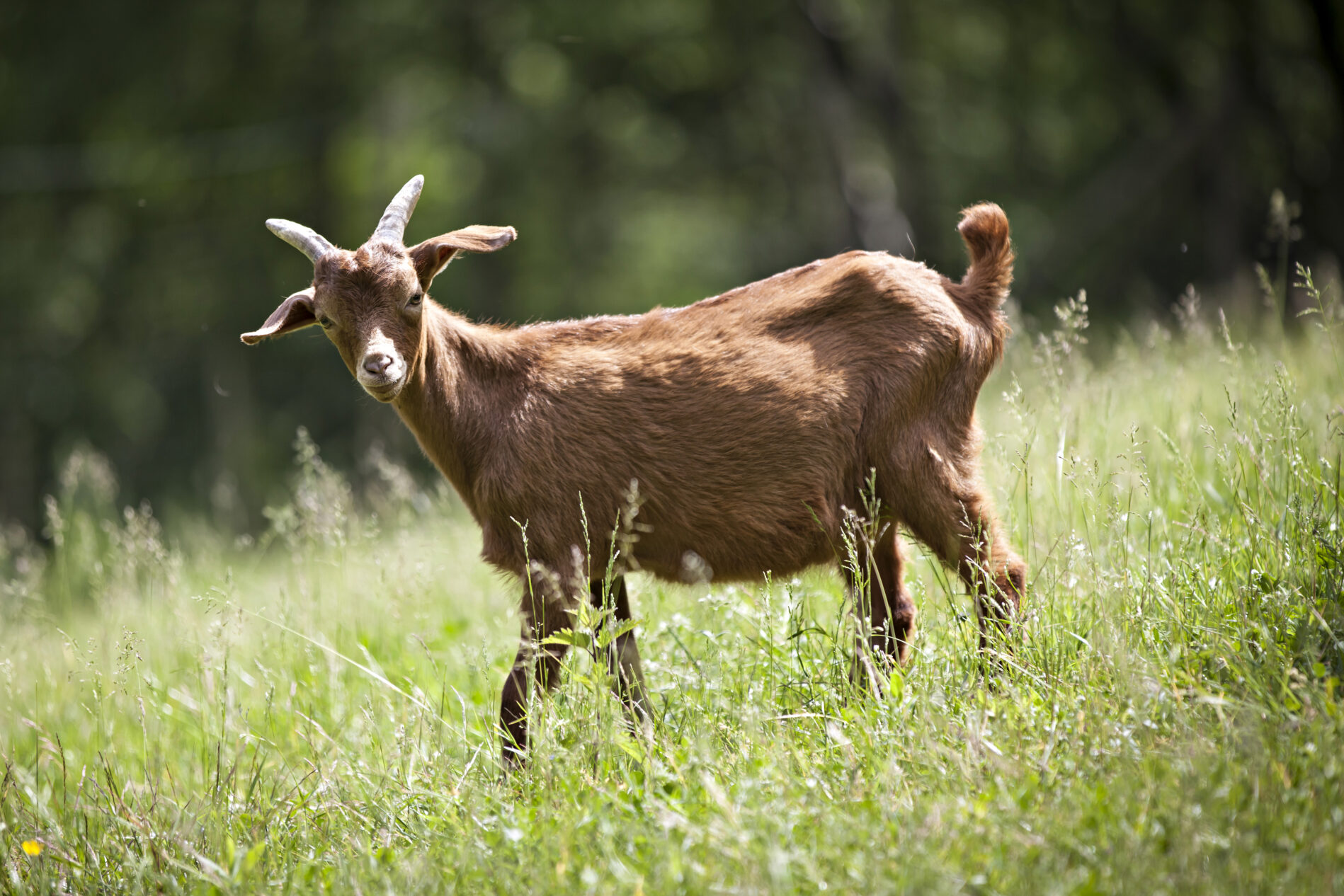
Our large goats
Size: Height: 40-90 cm Length: 50 cm-1 m – Weight: 10-80 kg – Longevity: Up to 14 years – Class: Mammalia – Order: Artyodactyles – Family: Bovidae – Genus: Capra – Species: Capra hircus – Gestation: 5 months – Number of offspring: 1-2 – Diet: Herbivore.
ANECDOTE
Researchers have discovered that goats have regional accents! Goat kids “learn” from those around them and adjust their bleating to sound like the others. Better still, when a goat kid is moved to a new herd, it changes its accent to that of the new herd.
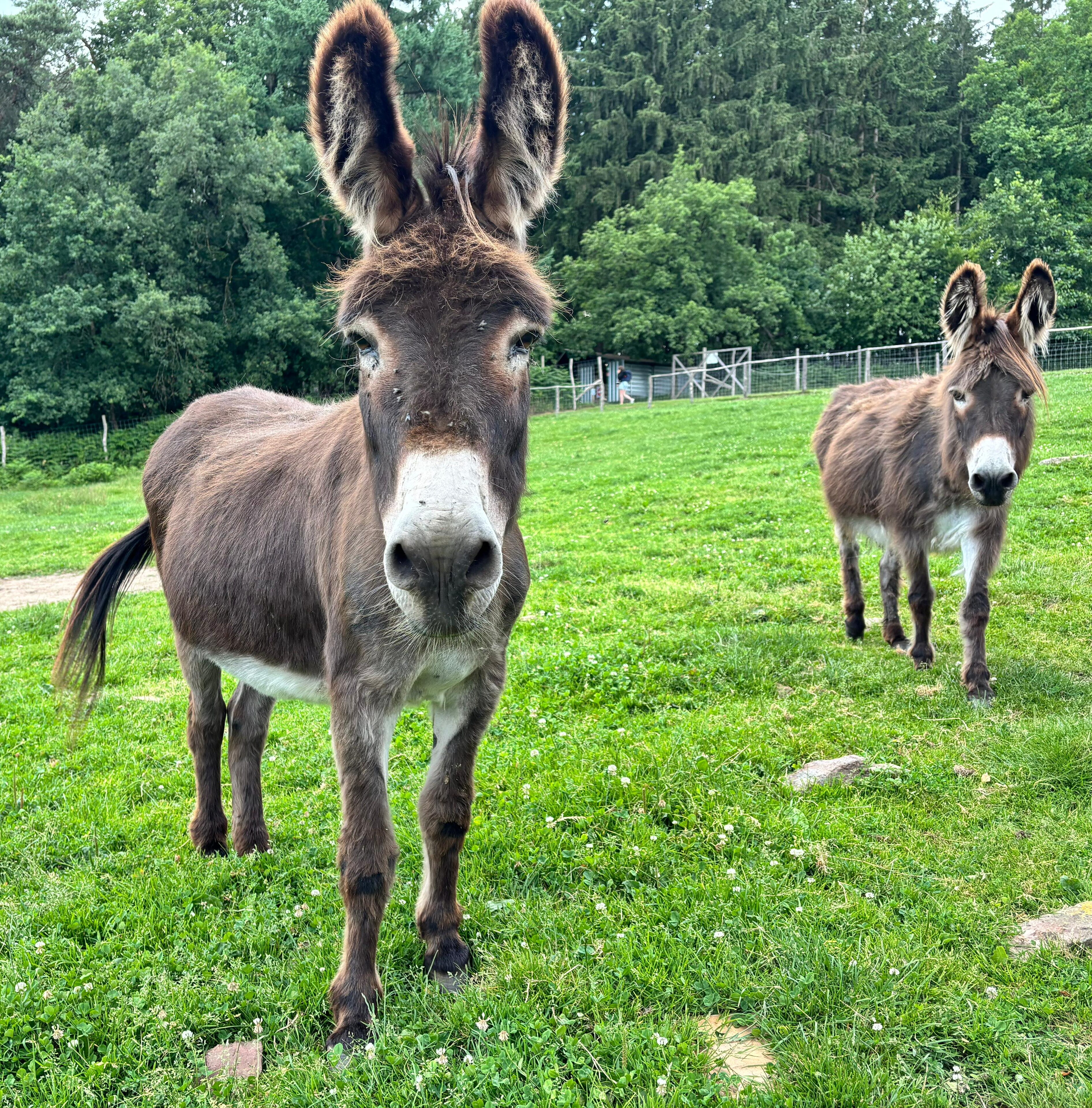
Fifi & Loulou
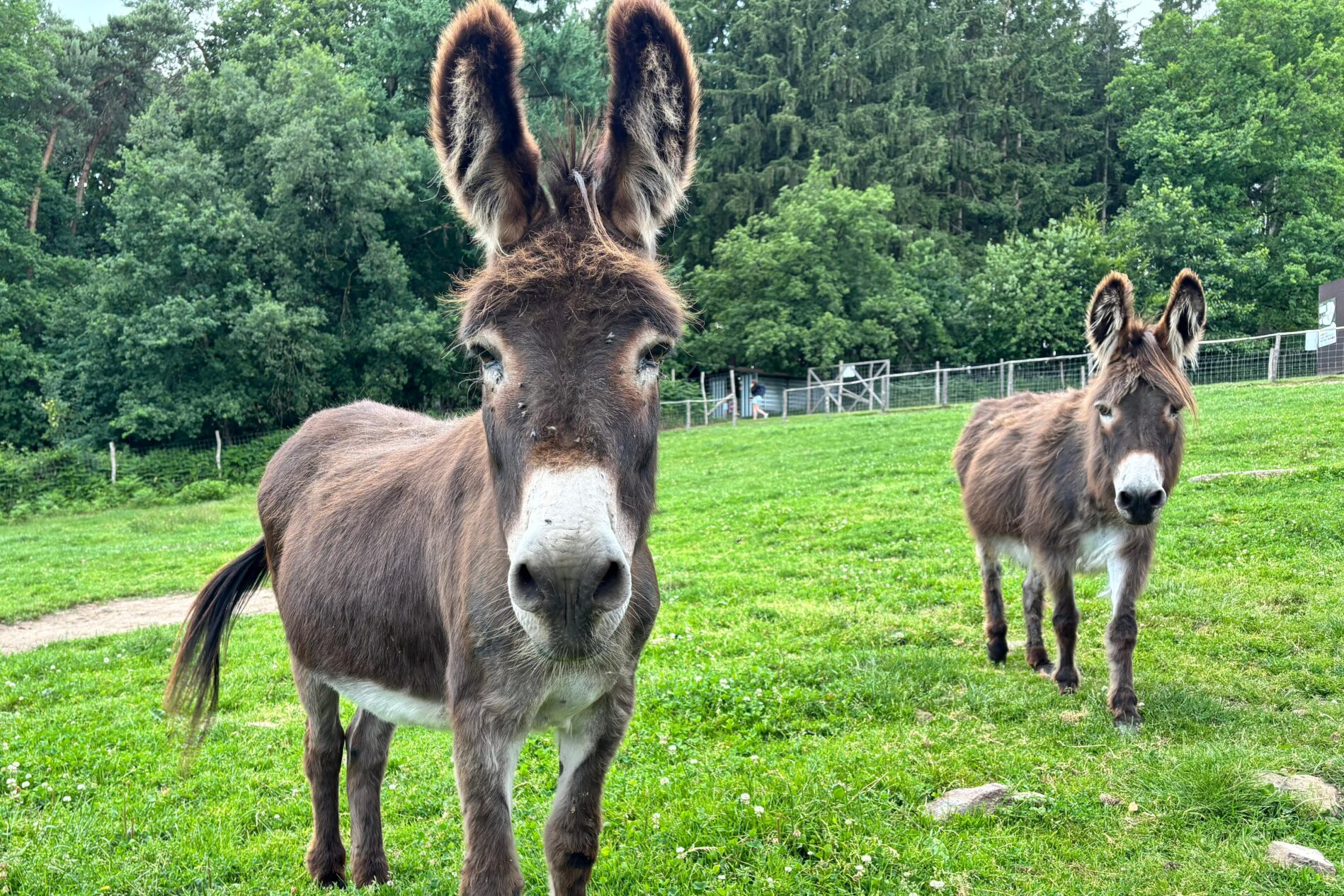
Our donkeys
Size: Height: 1.1-1.3 m Length: 1.2-1.7 m – Weight: 150-350 kg – Longevity: Up to 40 years – Class: Mammalia – Order: Perissodactyla – Family: Equidae – Genus: Equus – Species: Equus asinus – Gestation: 12 months – Number of offspring: 1 – Diet: Herbivore.
ANECDOTE
Donkeys can crossbreed with other equidea. A male donkey (jack) and a female horse (mare) produce a mule. A male horse (stallion) and a female donkey (jenny) produce a hinny. A donkey and a zebra produce a zonkey or zedonk. These crossbreeds are generally sterile.
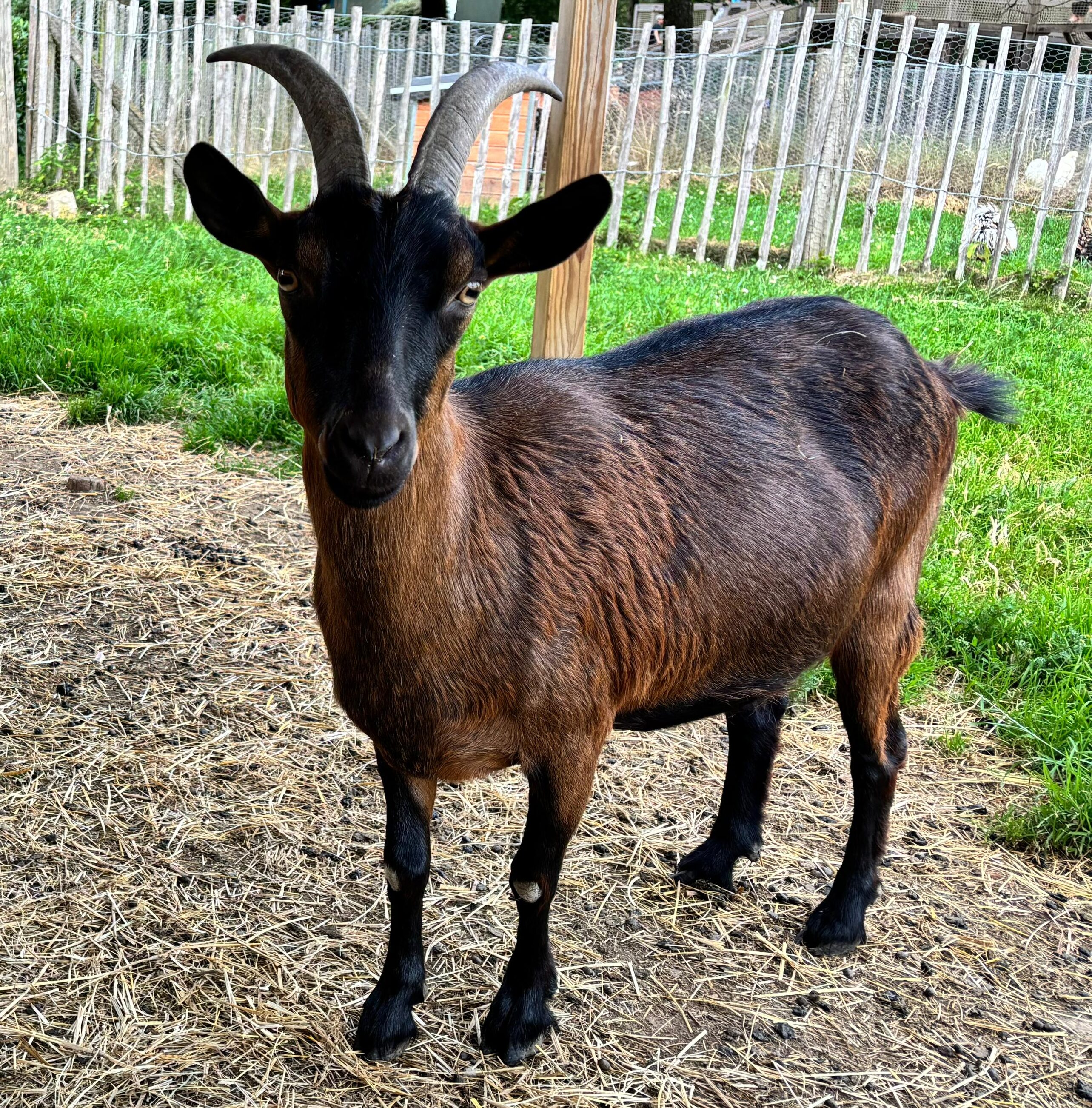
Agnès, Durum, Pita & Virginie
Our domestic goats
Size: Height: 40-90 cm Length: 50 cm-1 m – Weight: 10-80 kg – Longevity: Up to 14 years – Class: Mammalia – Order: Artyodactyles – Family: Bovidae – Genus: Capra – Species: Capra hircus – Gestation: 5 months – Number of offspring: 1-2 – Diet: Herbivore.
ANECDOTE
Researchers have discovered that goats have regional accents! Goat kids “learn” from those around them and adjust their bleating to sound like the others. Better still, when a goat kid is moved to a new herd, it changes its accent to that of the new herd.
our animals in their semi-free habitats! We have everything you need
for an


wolves